Balenciaga loves Substack so much that it has become the first fashion house to partner with it.
The house has been using the platform for some time: there it announced the arrival of Piccioli and also streams the fashion shows live.
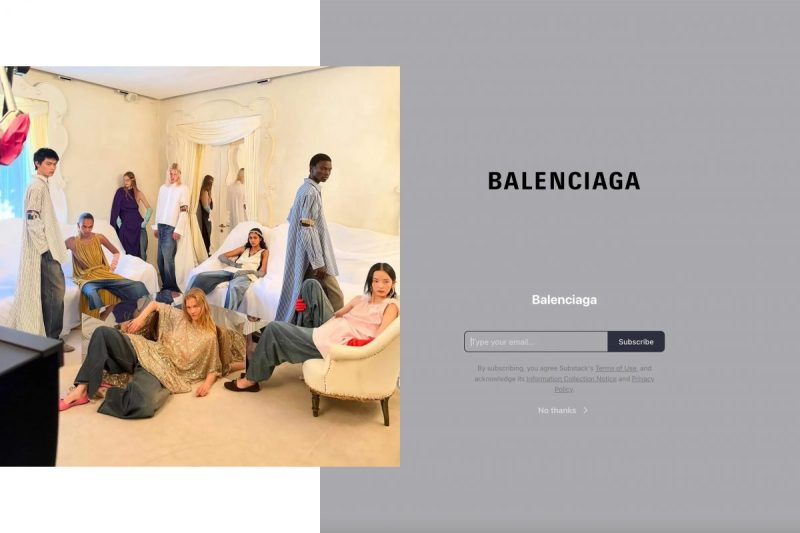
Balenciaga is officially the first high fashion house to become a partner of Substack with the aim of supporting independent authors and experimenting with new models of digital communication. For those who are not yet familiar with the medium, Substack is an online platform that allows anyone to create and publish newsletters, blogs, and podcasts, a platform that reached nearly 5 million subscribers last year, positioning itself as a democratic and free space for independent writing.
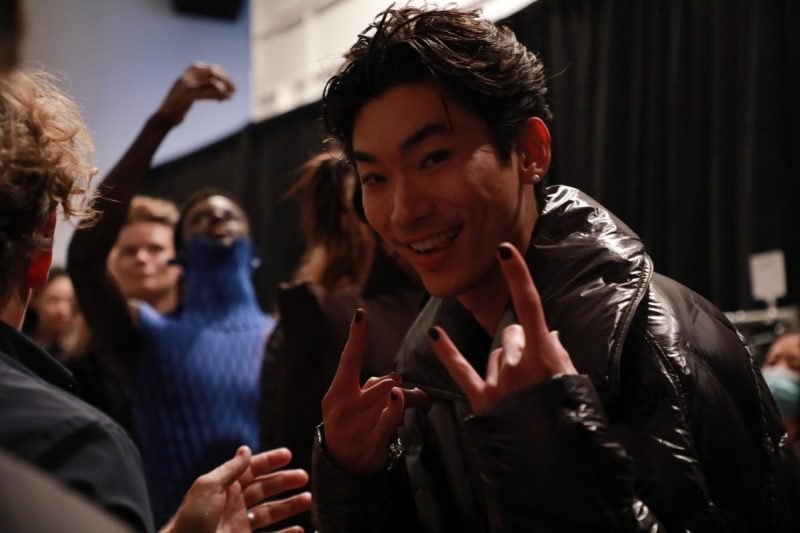
The house, already active on the platform since July 2025, was among the pioneers in the sector, being one of the first luxury brands to open a profile to diversify and deconstruct its communication – coinciding with the launch of this important editorial project, the brand opened a new official Instagram account called keeppprolling, a separate Instagram profile where scraps, spontaneous photos, production moments, and everything in between are shared. Over the months, the brand even streamed its fashion collections directly on Substack for its community, offering privileged and unfiltered access to its subscribers. And the brand’s designer, Pierpaolo Piccioli, contributed his part.
Having succeeded Demna at the helm of Balenciaga in May 2025, in recent months Piccioli had already shared through the house’s Substack profile a heartfelt personal note , “We exist in feeling, in recognition, in the memory of who we have been and in the imagination of who we will become. What brought me here has been a journey saturated with emotions, pushing me forward with force-not only teaching me, but revealing parts of myself I hardly knew. I embraced unpredictability, the endless days, and the act of working with the heart – letting it lead, learn, and act on its own.” Accompanying it were several photos taken behind the scenes of his highly anticipated debut at the helm of Balenciaga. A decidedly more intimate, transparent communication focused on the written word, establishing a new point of contact with a definitely younger generation. Balenciaga’s CEO, Gianfranco Gianangeli, emphasized how the partnership with the platform reflects the house’s historic propensity for innovation, positioning the brand as a true cultural catalyst capable of empowering independent thought and the creative freedom of authors. To officially celebrate this agreement, the fashion house organized an exclusive and intimate event within its flagship store in Cannes, choosing the days of the 73rd International Festival of Creativity Lions of Cannes as the backdrop, always considered the most important global meeting point for the world of technology, advertising, and creative communication. The meeting, moderated by Farrah Storr, a British journalist (former editor-in-chief of Elle) and international head of Substack, hosted a literary panel featuring French novelist and essayist Pauline Klein and renowned English fashion journalist Plum Sykes, a historical assistant to Anna Wintour, who some consider (wrongly, as she herself wrote in Vogue recently) the main inspiration for the character of Emily in The Devil Wears Prada. The two authors, contributors to the popular newsletters On va dire ça and P.S. by Plum Sykes, discussed how independent writing can today redefine our way of interpreting fashion, art, and society.
Ultimately, the project raises a bigger question about the moment the luxury world is experiencing. Today, fashion struggles to truly communicate with the end customer: Instagram feeds all look somewhat alike, algorithms decide what we should see, and the audience suffers from a clear attention crisis, feeling increasingly distant from classic fashion shows. In this scenario, Balenciaga’s approach could, perhaps, prove to be profoundly visionary.