
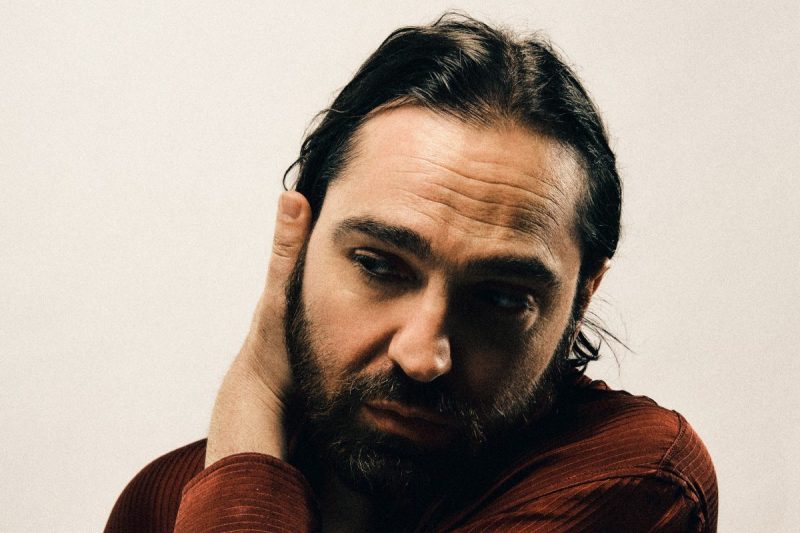
Dimartino wants to make music that talks about everything and is not afraid of anything
The Palermo of childhood, artists taking a stand, De André and De Gregori, Sanremo and "creative crises": we discussed this and much more with Dimartino, on the occasion of the release of his new album, The Unlikely Flood of Oreto.
Dimartino says that songs have a fortune: that of being able to talk about everything, even the most difficult and gruesome themes, using different images, on the thin border of poetry. His latest album, The Unlikely Flood of the Oreto, picks up a conversation left hanging seven years ago, before the collaboration with Colapesce: it is an album, he explains to me, that required a certain amount of time, that was born gradually, without haste and without any anxiety. The writing process is an intimate, healing process that puts the individual, their vision of the world, and their experiences at the center. Dimartino prefers to talk about reality, about what he knows; he does not use other people’s stories for his songs. When he finished The Unlikely Flood of the Oreto, he felt fulfilled, like a craftsman who finishes carving a piece of wood exactly as he had imagined. Perhaps there are imperfections, but they are imperfections that are not only easy to live with but are even easy to forgive. Dimartino knows he has had a chance that is more unique than rare: he was free to do what he wanted, how he wanted. And it is a good point from which to start again when making music.
ⓢ What do you remember about the Palermo of your childhood?
More than in Palermo, I grew up in Misilmeri, which is in the province. I spent my entire childhood and adolescence there; I stayed until I was 27, practically. Mine was a happy childhood; fortunately, I did not experience any dramas. And perhaps this allowed me to be quite free in my choices. I lived in a particular social context: between the late 1980s and the early 1990s, with the Maxi Trial, the Palermo province was very heated; a mafia war was underway to rebalance the distribution of power. Almost every week, a person was killed.
ⓢ How did this reflect on you?
On one hand, I lived in a happy family context; on the other hand, when I was outside the house, I noticed that the streets of the town breathed an air of death. I remember that as a child, when I went out on Saturdays with my friends, we would see groups of people gathered around white sheets laid on the ground, where there were huge stains of blood. This thing was a sort of catalyst. Those who write are crossed by the images they saw as children, and somehow try to rework them. Probably the same happened to me. I have always wanted to tell a harsh reality.
ⓢ However, it doesn’t seem to me that you have ever addressed the theme of death in a particularly vivid or direct way.
In fact, with my first band, the Famelica, we had started by writing songs about the mafia, and we toured social centers and the province. Then I realized that to talk about politics and legality, it was not necessary to be explicit; other images could also be used. And so, over time, my writing changed. Beyond this, in my other songs, there has never been the desire to denounce a system. But I think music also has this fortune, right? The ability to say things that have social significance using different, even poetic, elements.
ⓢ Do you think that those who make music, and more generally those who make art, cannot avoid taking a position? In a way, we return to the discussion about De Gregori’s position.
In my opinion, you cannot avoid taking a position, especially at this historical moment. You cannot not say that there is genocide in Palestine. You cannot be afraid to expose yourself, especially if you have a following like De Gregori’s. A song cannot change the fate of a war; we can agree on that. However, a singer who expresses their idea can convey messages of peace. Saying that Israel is destroying the lives of thousands of people does not seem to me a political judgment; it seems to me to acknowledge what is actually happening.
ⓢ Is fear that holds back worse than the apathy of those who do not take a position?
I don’t want to think that there is a fear that holds back because it risks not working anymore. That would mean we have reached a state of absurdity, without freedom. In my opinion, it is more a fear of having trouble with one’s fans, of not wanting to hear “just sing.” It is something that happens, right? As soon as you expose yourself on social media, you get attacked, as if a singer’s judgment were worth nothing, precisely because they are a singer. Things, in reality, are a bit more complex. We should give less weight to people’s comments on the Internet, especially when it comes to such themes.
ⓢ Returning to Palermo and the recording of the album. You also worked in Santo Stefano. What atmosphere was created in the studio?
I think every album has its time. I had not decided to release it now, and I had not decided to record the album when I recorded it. I was fortunate to have Roberto Cammarata with me, who is a friend of mine and who said: I have the studio; whenever you want, we can go. I had some pieces, yes, and I wanted to work on them. I entered the studio at the beginning of December, and already at that moment, more or less, we realized that the songs made sense. And so we moved forward. We stopped just for a week because the studio had already been booked. And we took exactly the time that this album needed. To tell you, I recorded the vocals calmly. I thought about it, and I worked on it even at night. The idea of having time to make an album allows you not to regret it.
ⓢ Is this freedom an exception in music?
The times of the record industry are usually two: Sanremo and summer songs. Having a record label like Dischi Numero Uno allowed me to make a free album. When I delivered the master, they immediately said yes, that it was fine. And there is a privilege in this; I have said it in other interviews. It is not something that everyone can do. If today you give an album without singles to a label, it is unlikely they will say they are interested. Obviously, I had already worked with Dischi Numero Uno with Lorenzo (Colapesce, ed. note), and so they wanted to continue a sort of path. And they wanted to do it despite the uniqueness of the album I was proposing. The album of a major follows precise steps: the single, the music video of the single, then Sanremo if there is Sanremo, and then the album release.
ⓢ Have you ever thought about going to Sanremo?
No, never.
ⓢ Does having this kind of freedom have any downsides?
In my case, no. Honestly, I didn’t think I would buy a house with this album. For me, it was just an act of freedom. The response we received was very good anyway: the vinyl sold out, and now they have to reprint it, which is no small thing. So it means it is working. There has been no downside to this album, none.
ⓢ In the interview that Francesco Raiola did for Fanpage you said that all albums are born from a crisis. What crisis did this album arise from?
You know, after years of making albums with another person, like those I made with Colapesce, going back to writing alone is a kind of trauma. What Colapesce and I did was born from an important emotional meeting that made us share everything. Alone, I had to face all the doubts I had left hanging seven years ago with the last album. And it is something that ends up putting you in crisis. You always ask yourself the same question.
ⓢ What?
“Who am I now? Am I the one recognized by the supermarket cashier? Am I the one from seven years ago, from Afrodite? Am I the same as the Famelica, when I played in my town?” Surely success produces a crisis: a crisis, mind you, that can be resolved. But for a singer-songwriter, facing oneself is not easy. Especially if you conceive writing the way I conceive it.
ⓢ And what way is that?
I always want to write true, real things. I don’t want to tell someone else’s life: I want to be there, in my songs. And this is something you can only do if you write alone. And even here, if you want, lies the crisis.
ⓢ Fabrizio De André or Franco Battiato?
Fabrizio De André.
ⓢ Why?
He was probably the artist from whom I learned a certain independence in writing. De André’s albums have always been completely distant from trends, and therefore totally dictated by his artistic needs. Battiato’s albums too, mind you. But in De André, I see a different independence and another type of refinement in the structure of the songs. De André was the greatest author we have had in Italy. Someone like him will not be born again. Not even someone like Battiato will be born again. But De André is practically impossible to replicate.
ⓢ I recycle a question I asked Pierpaolo Capovilla and ask you: can boredom be a creative engine?
For me, yes. The idea of having nothing in front of me, a completely empty space, gives me doubts that then push me to write.
ⓢ What makes a song a good song?
The melody. The lyrics are important, and it is right to consider them. But if the melody is good, even a bad lyric can work. I believe there is a huge difference between spoken words and sung words: I cannot read a song as if it were a poem, and I cannot even think that a song fulfills all the parameters of a poetic text. In a song, you are necessarily tied to musical, harmonic, and melodic criteria. And so the two forms, song and poetry, are two separate forms. Distinct. A song can convey a very high poetic sensation, but it will always depend on its musical structure. A poem, on the other hand, lives only from the word.
ⓢ Alberto Arbasino distinguished between young promise, usual jerk, and revered master. Have you encountered more usual jerks or revered masters in your career?
I would also add another category: the certified used ones. About ten years ago, a festival director introduced himself saying: I am a certified used one. The revered masters are rare, very rare. They are an exception. I believe I have encountered very few. Instead, look… I have really met many usual jerks (laughs, ed. note).
ⓢ One of the themes of The Unlikely Flood of the Oreto is anger. So I ask you: how important is it to get angry?
Ninety percent of the time, in my opinion, it is absolutely useless. I consider myself a fairly calm person. The idea of letting myself be possessed by anger over trivial matters seems absurd to me. For example: this thing I told you before, about the electronic signature, about how difficult it is to activate it… I was upset, yes, but it has already passed. I get angrier about politics… There you go, politics is a source of anger. But over the years, by getting angry, we are risking normalizing everything. We are getting used to it. And even my anger, if you want, is getting used to it. We scroll through TikTok: one second we see someone dancing, the next second Israel bombing Lebanon, the next who won, I don’t know, the Golden Globes. Our brain has become accustomed to anger. In my album, anger comes at the end because it coincides with the flood of the river. The Story of My Anger coincides with the story of the flood: it is a possibility.
ⓢ How did you feel when you listened to the album for the first time?
In general, when you close something, you have the feeling of having done your job. At least that is how I felt, as I leave many things hanging, many beginnings. From this point of view, I have a craftsman’s attitude. My father, you know, is a carpenter. And when he finished something, when he saw the finished object, there was a certain satisfaction in him. I feel a sense of fulfillment. In this album, compared to other albums I have made alone, I had fewer criticisms of myself. I felt quite comfortable listening to it again; I felt embarrassed just in a couple of places (laughs, ed. note).
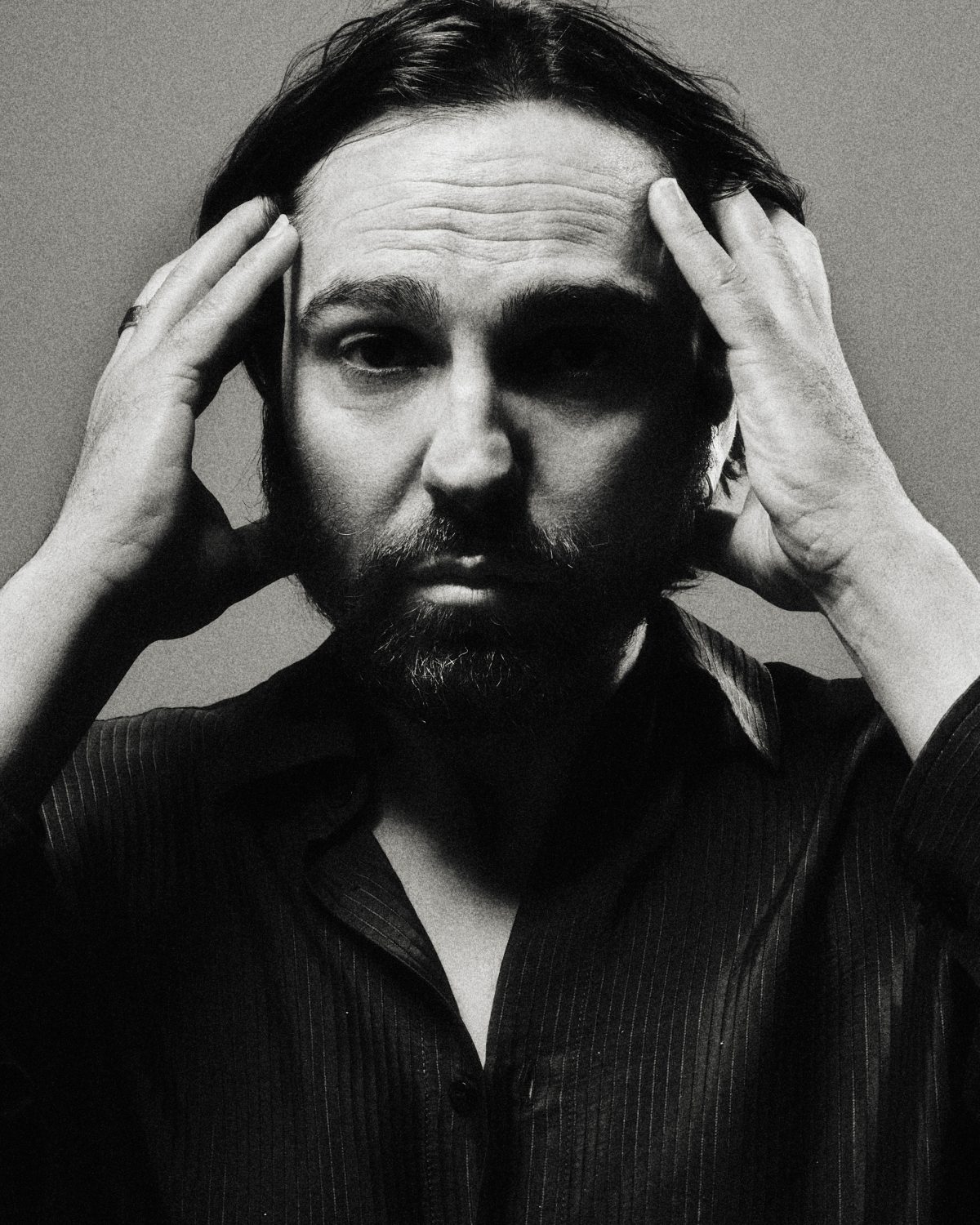
ⓢ I ask you one last thing, and it is the question you asked yourself a little while ago: who are you today?
I hope to never understand who I am. That would be the end of everything. Every morning we wake up different, and it doesn’t mean being moody. This is the question that keeps us going. Not discovering it is what fuels our curiosity. I think this is the meaning of research.
ⓢ What does “research” mean?
Research does not only mean finding a cool, beautiful, and contemporary idea. It also means understanding in which direction we think we are going. I absolutely do not renounce anything of the things I have done because I did them following a flow, without asking too many questions about profits or what people thought. I am following my path.
ⓢ When does one find an answer to this question?
Personally, I hope to understand who I am at the point of death. Not before.