If you want to transform your home into a liminal space, A24 has created the wallpaper for Backrooms
And it also costs relatively little: 60 dollars per roll. An acceptable amount to turn a home environment into a nightmare.
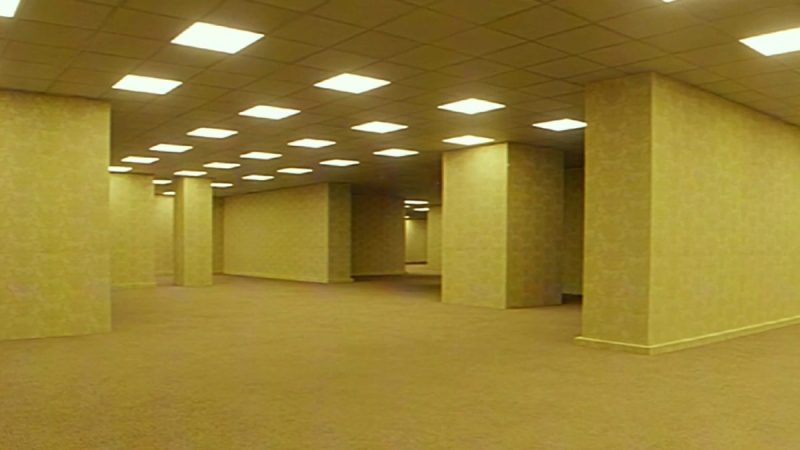
If you were told that you could take home a piece of internet nightmare for just 60 dollars, would you do it? The film production company A24 bets you would. On its store has indeed appeared the adhesive wallpaper of Backrooms: each panel (yellow, of course) is about 76 centimeters wide and is an almost perfect imitation of the wallpaper that covers the walls of the most famous liminal space on the internet and now also a box office hit. The monochromatic aesthetic of the web’s most famous urban legend. The psychological horror film Backrooms – we at Rivista Studio talked about it here and here – produced by A24 and released in theaters at the end of May 2026, has just shattered every previous record of the studio, surpassing 210 million dollars at the global box office in just a few days and transforming an internet phenomenon into an instant cult.
But to understand how a yellow geometric pattern became a cult object for decoration, we need to take a step back and explain what exactly the Backroomsare. The concept originated in 2019 from an anonymous post on the online board 4chan. A user posted a photo of an empty, bare room, lit by cold neon lights and covered with damp carpet and yellowish wallpaper, the same one that A24 now sells on its online store. The caption accompanying that photograph theorized for the first time the possibility of “glitching” out of reality, a phenomenon already widespread in the gaming community known in video game jargon as noclip, which is a trick that takes advantage of flaws or programming errors to “pass through” the boundaries of the video game itself, slipping into a kind of in-between space, a space without a purpose, lacking a true beginning and a true end. Liminal, indeed.
The imagery of the backrooms is based on the psychological concept of “liminal space,” that is, those transit places – hallways, waiting rooms, and closed shopping malls, just to name a few – that, when completely emptied of human presence, generate a deep sense of unease and isolation. The phenomenon went viral thanks to Kane Parsons – Elisa Giudici wrote about it for us – at the time a 17-year-old boy who posted short films in a found footage style made directly in his bedroom on YouTube. The incredible success of those shorts (millions and millions of views) caught Hollywood’s attention, particularly A24, which entrusted him with directing the feature film when he was not even 20 years old. As we know, Backrooms, the film, became a worldwide success: Parsons, at just twenty years old, became the youngest director in cinema history to top the American box office on opening weekend.
The myth of the backrooms is rich with fascinating curiosities, starting from the origin of the photo from which it all began, that published on 4chan, whose origins remained a mystery for five years. Only recently has the internet community managed to trace it back, discovering that the shot dates back to 2002 and shows a mundane furniture store under renovation in Oshkosh, Wisconsin. Now that atmosphere is accessible to everyone thanks to the shade of yellow chosen by A24 for its wallpaper, which exactly reflects the “faded canary yellow” of the backrooms, a tone instinctively associated with certain old and depressing offices from the 1980s in the USA. And now also to one of the biggest successes in recent cinema history.