Mamdani has managed to block the rent increase for almost half of New York’s homes for at least a year.
"A historic victory for the tenants of New York," the mayor commented on the decision, formalized by the vote of the Rent Guidelines Board.

But first we need to understand if these mines are there, because Iran might or might not have placed them.
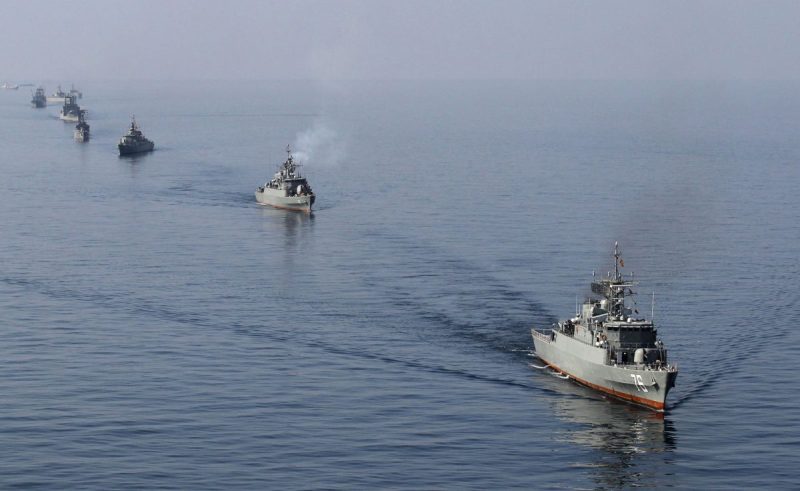
The ceasefire between Iran and the United States is good, as are the various peace meetings and summits in Switzerland, but for the energy market, the crisis in the Strait of Hormuz could remain such for at least another six months due to the mines scattered throughout that body of water. Moreover, so little is known about these mines that it is not even clear whether the Iranians have actually laid them. On one hand, dozens of ships have crossed the strait during the war without hitting mines, on the other hand, in March, the U.S. Central Command declared that it had attacked 16 Iranian minesweeper ships near the Strait of Hormuz, but the impact of such operations is uncertain. On Monday, June 15, as reported by the New York Times, Trump stated that the Strait was “already partially open and they are looking for a couple of mines.” He is also expected to ask European leaders for assistance in the clearance, saying it wouldn’t be bad to have “one or two ships from some country in that area.”
And this time the allies responded. Last month, Britain stated that it could deploy mine-detecting drones as part of an international mission to secure the Strait of Hormuz. On Monday, French President Emmanuel Macron said that France is ready to send mine-clearing ships within a few days of confirming a peace agreement. From Italy, the minesweepers Crotone and Rimini have already been in the area for several weeks, available for the international operation, ready to intervene for the clearance of the Strait. As reported by il Sole 24 ore, the cost of the entire mine-clearing operation is estimated to be around 40-60 million euros for 12 months of mission. Moreover, if the mission is coordinated only by European countries (with the participation of France, the United Kingdom, Belgium, the Netherlands, and Italy), it could represent a significant precedent for European operational autonomy in a theater where the United States has historically played a leading role.
According to estimates from U.S. intelligence, Iran has (had) 5,000 devices, ranging from rudimentary to highly advanced. Some are capable of detecting the noise of the mine-clearing equipment surrounding them, slipping deeper underwater to prevent the chains that bind them to the seabed from being cut. Others have “ship counters” that can be set to explode after a certain number of vessels have passed nearby, which can cause chaos in convoys. To flush them out and deactivate them, in recent years, navies around the world have adopted a variety of unmanned vehicles. Among these, the American diamond tips include the Common Unmanned Surface Vehicle, capable of dredging mines, and the Knifefish, designed to dive and observe closely with sonar.