I don’t know if you’ve ever met anyone who actually landed a job through LinkedIn, but if you have, well here I am: I’ve been hired through LinkedIn not once, but twice. The first time, I applied to a job posting and got hired as a social media analyst (two years later, I was a social media manager); the second time, a headhunter reached out to me and I was hired as a social media manager (and two years later, I was a social media analyst).
So, I’ve put in far too many years to really badmouth LinkedIn, but lately, this buttoned-up social network of suits, ties, and gleaming smiles, once built on the promise of “connecting the world’s professionals to make them more productive and successful,” has taken a decidedly weird and often cringe turn. The shift hasn’t gone unnoticed, especially in the Anglo-American press, which has been digging into the phenomenon: what was once a polished, essential platform for anyone working in digital or consulting now often feels like a brain-rot version of Facebook.
When social media feels like the office
The strangeness of LinkedIn and the secondhand embarrassment it often provokes comes largely from the fact that it’s a tightly closed ecosystem, where people speak the secret language of consultants and CEOs. It’s a language that feels completely opaque to outsiders, built mostly on buzzwords and Anglicisms that are meant to sound professional, but often function more as a coded way for insiders to recognize each other.
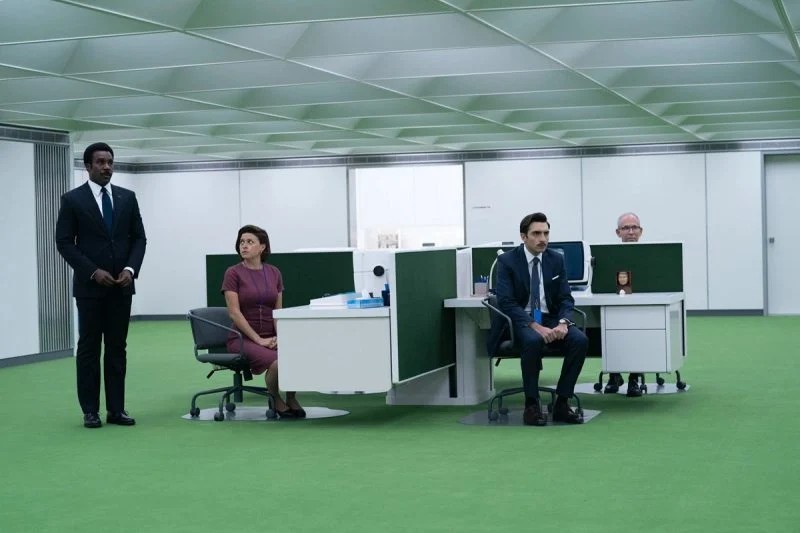
LinkedIn posts often mirror what already happens inside offices. Posting on LinkedIn carries the unmistakable smell of worn-out yellow-and-blue carpets curling at the edges, of anonymous office blocks on the outskirts of town and the traffic jams it takes to reach them, of cafeteria smells drifting through corridors around 11:30 in the morning, of bitter coffee, sweat-stained shirts under the arms, bulk-bought disinfectant, and barely contained frustration peeking through all the “kind regards” and “warmest regards.”
As with many social networks, LinkedIn seems to operate according to a kind of inverse logic. On Instagram, for instance, the more frequently influencers document their apparently seamless family happiness, the more one is gently reminded that appearances rarely tell the full story. LinkedIn, in its own way, invites a similar reading between the lines.
The more often users post photographs alongside their managers or teams, the more one senses the quiet strain of roles that may not be entirely as harmonious as they appear. The more prominently advanced degrees in business or management are displayed, the more one is inclined to wonder about the everyday realities of written communication behind them. And the more a company is described as a “Best Workplace,” the more it tends to evoke, for some readers at least, the familiar gap between institutional self-presentation and lived experience.
Senior executives, too, participate in this carefully curated language. The more visibly they emphasise inclusivity and progressive values, the more their posts tend to return to themes of presence, culture, and togetherness in the physical workplace, often accompanied by reflections on the supposed value of office life. These reflections, in turn, tend to circulate within a small but attentive ecosystem of responses—typically affirming, occasionally weary, and almost always professionally obliging.
At the upper end of corporate hierarchies, it is not uncommon for senior managers—often more generously rewarded than they are publicly inclined to admit—to delegate their LinkedIn presence to a social media manager working on relatively modest compensation.
The implicit ambition is often comparative rather than purely communicative. Success is measured less in clarity of expression than in follower counts and engagement rates, ideally exceeding those of a counterpart at a competing firm.
LINKEDINERS
The LinkedIn feed has long had a certain recognisable character, but at least until the years preceding the pandemic, it was still possible to encounter genuine job opportunities within it.
With the onset of the pandemic, however, the platform experienced a significant surge in growth, reaching approximately 850 million registered users and 58 million companies. At that point, it appeared to set its ambitions higher, positioning itself more explicitly as a hub for workplace culture and professional discourse.
In this context, LinkedIn also began investing in its “LinkedIn Influencer” programme, encouraging selected users to share professional experiences and broader reflections on themes ranging from business practice to what might loosely be described as techno-humanism.
The platform gradually reduced the visibility of external links, whose reach was effectively deprioritised in much the same way as had already happened on Facebook. As a result, many users who regularly publish substantive content have adapted by placing links in the first comment instead.
At the same time, the rise of long-form posts written by so-called “LinkedIn creators” helped accelerate what many now perceive as a broader wave of awkwardness on the platform. This evolution has been shaped by an algorithm that increasingly amplifies recurring aesthetic and thematic patterns, LinkedIn’s corporate analogue to TikTok’s “clean girl” trend, reinterpreted through the vocabulary of the metaverse, artificial intelligence, and other contemporary tech narratives.
In the context of artificial intelligence, it has become increasingly common to notice job postings, often from large and otherwise reputable companies, that remain open for months on end. The question naturally arises: why do some of these roles appear so difficult to fill?
According to industry insiders working in HR, one interpretation, though not always openly acknowledged, is that some listings may function less as immediate hiring pipelines and more as a way of gathering large volumes of CVs. These applications, in turn, are thought to contribute to the data ecosystems that underpin certain recruitment technologies and AI-driven screening tools.
At the same time, the selection process itself has increasingly shifted towards algorithmic systems, with artificial intelligence playing a growing role in the early stages of candidate filtering. In parallel, applicants have also adapted, often using AI tools to tailor and rewrite CVs in response to specific job descriptions.
The result is a system in which LinkedIn, and the broader recruitment ecosystem it feeds into, can feel like a vast circulation of texts that are increasingly mediated by machines on both ends—generated, optimised, and processed within an environment where direct human authorship and human readership are both becoming harder to locate.
CEOs, Micromanagers, and Interns
Reluctantly, one has to acknowledge that LinkedIn is no longer the social network where you could reliably find a job simply by knowing how to insert a line break within the same Excel cell.
Today, LinkedIn persistently sends out emails that tend to end up in spam folders, about as welcome as scam call-centre operators informing you that they have “received your CV.” Notifications arrive with reassuring regularity: twelve people have viewed your profile, your posts have been seen 245 times (“alright, but where is the job?”, many must reasonably wonder).
It remains, nonetheless, the virtual space most frequented by CEOs, middle managers, and interns alike—each, in their own way, navigating the shared aspiration of “changing the world,” or at the very least securing a permanent contract with a salary above €50.000.
It is also populated by acquaintances and former colleagues whose professional biographies often carry titles such as “Head of Something,” a small but meaningful marker of status in a landscape where career progression is as much about visibility as it is about substance. For some, LinkedIn offers a form of recognition that feels increasingly difficult to find elsewhere.
The platform rarely speaks directly about workplace mortality in any literal sense, yet it often reflects a quieter, more pervasive condition: that of professional exhaustion. It is a form of strain that tends to remain unspoken, perhaps because it is difficult to acknowledge even privately. The assumption that years of study, ambition, and geographical displacement should culminate in little more than digital visibility can be unsettling, and is therefore more often reframed as success than questioned outright.