Without even realizing it, Italy has made one of the largest reforestation efforts ever and has officially become a “forest nation.”
For the first time since the Middle Ages, there are more forests than agricultural fields in the area, says the National Union of Municipalities, Communities, and Mountain Entities.
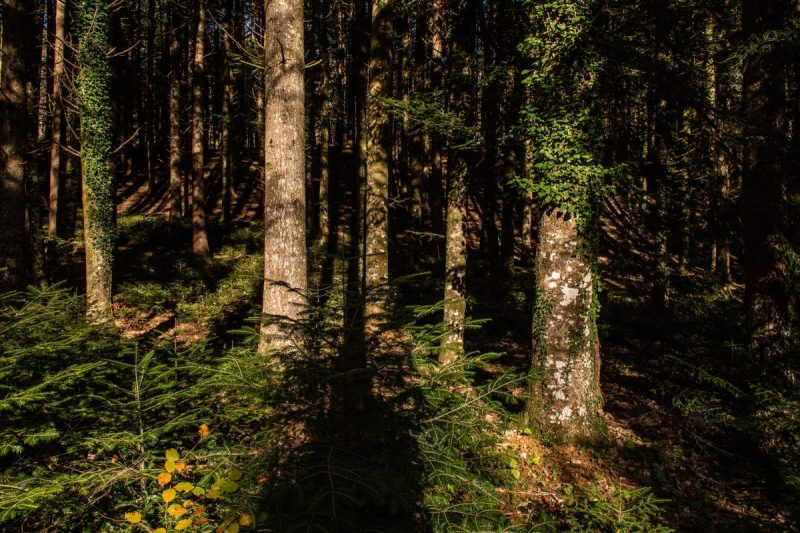
Without the Italians noticing, something has happened in Italy that hasn’t occurred since the Middle Ages: the percentage of land covered by forests has surpassed that used for agriculture. This is one of the most successful reforestation efforts of all time: 100 thousand square kilometers – that is, more than a third of our territory – covered by “wild” trees, which officially makes Italy a forest nation. “A profound change, occurred over the last few decades mainly due to the abandonment of agricultural land and marginal pastures and traditional crops that are no longer profitable, which has transformed the Italian landscape and the role that the forest plays in the territories,” says Uncem, the National Union of Municipalities, Communities, and Mountain Entities.
The milestone was officially reached in 2020, but only in recent weeks has the news become public following the publication of a report from UNCEM, indeed. Presented during the Legambiente campaign “Voler Bene all’Italia,” this is the first national survey analyzing forest presence Municipality by Municipality. Each local administration is thus assigned a Forest Index, which also measures the impact that forests have on the local economy and the well-being of the population. The first element that emerges from the UNCEM report is that, while it is true that Italy is now a forest nation, it is also true that the distribution of forests in the country is extremely unequal: 75 percent of forests are located in mountain municipalities, and about half of Italian municipalities are completely devoid of forested areas. “For about half of the nearly 7,900 Italian municipalities, forest presence is marginal or almost absent: the forest index is below 20 percent, and these territories, where over two-thirds of the Italian population lives, host less than 10 percent of the national forests,” the report states.
The study also debunks a rather persistent myth in the Italian public debate, namely that the existence of vast forest areas is synonymous with rural abandonment (the forest takes what humans abandon, essentially). Instead, there is a real economy around forests, as demonstrated by the case of Marcetelli, the most forested municipality in Italy. Air purification, groundwater recharge, protection against soil erosion, flood mitigation, carbon dioxide sequestration, timber and mushroom production: these are all the benefits that the forest provides to the community. Ecosystem services, they are called, which are worth a lot of money: for Mercetelli alone, we are talking about around 8 million euros a year, earned or saved, about 150 thousand euros a year per inhabitant in natural value for the community.