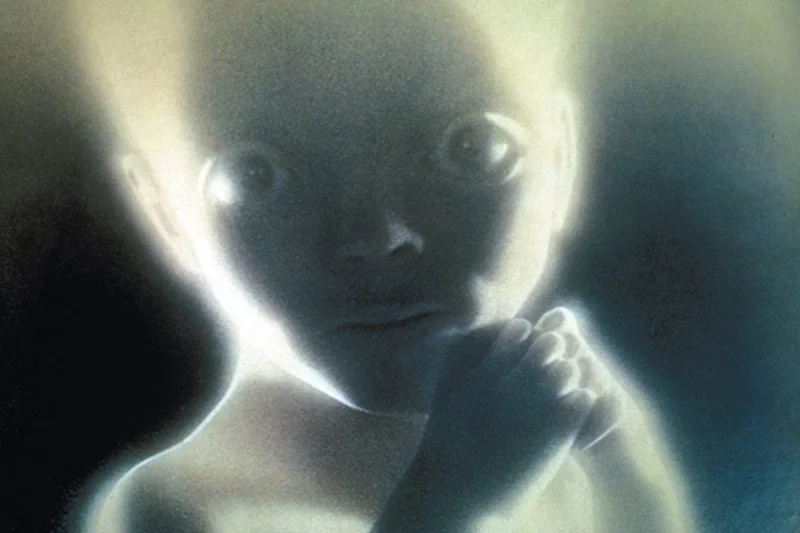
China sends embryo models into space to test whether human reproduction is possible beyond Earth
A necessary experiment to find out whether humanity’s dreams of galactic colonisation are truly within reach.

The researchers also note that the futures in which we manage to survive are not impossible, but they would require conditions that simply don’t exist on Earth today.
Since the invention of nuclear weapons, humanity has lived with the possibility of its own annihilation. And yet nuclear holocaust, we now learn from a scientific study, may not even be the worst-case scenario humans have chosen to test.
A team of researchers led by astrobiologist Celia Blanco at Spain’s Centre of Astrobiology has built a model imagining ten possible futures for human civilization over the next thousand years, combining variables such as resource consumption, institutional fragility, and government policy.
The main conclusion is terrifying in its simplicity: civilizations do not collapse because of catastrophes. They collapse because they consume more than they produce, slowly, gradually, until the structure can no longer hold. And that, in essence, is what we are already doing. Have been doing for some time.
According to the study, published in El País, scenarios in which human civilization regains stability do exist in the model. They are called “Golden Ages” and “Out of Eden,” but they are a minority, and Blanco does not consider them the most plausible.
“Not because they are impossible,” she explains, “but because they require conditions we do not see on Earth today: true post-scarcity, distributed global governance, and the absence of existential risks.”
At the opposite extreme are scenarios such as “Big Brother Is Watching You” and “The Sword of Damocles,” where concentrated power and political fragility trigger multiple collapses.
In between lies the majority of possible futures: civilizations that oscillate, that fall and rise again, spending long periods in states of stagnation before reorganizing themselves.
The variable that determines the difference between a civilization that persists and one that disappears is not the severity of the collapse, but the ability to rebuild. “A society that falls but rises quickly can persist indefinitely,” Blanco explains. “One that experiences a relatively minor collapse but loses the capacity to rebuild may disappear.”
Preserved knowledge, surviving infrastructure, time for reorganization: these are the tools that matter. And they are all levers we can act on now, before everything goes to even greater pieces than it is already going to.