China sends embryo models into space to test whether human reproduction is possible beyond Earth
A necessary experiment to find out whether humanity’s dreams of galactic colonisation are truly within reach.
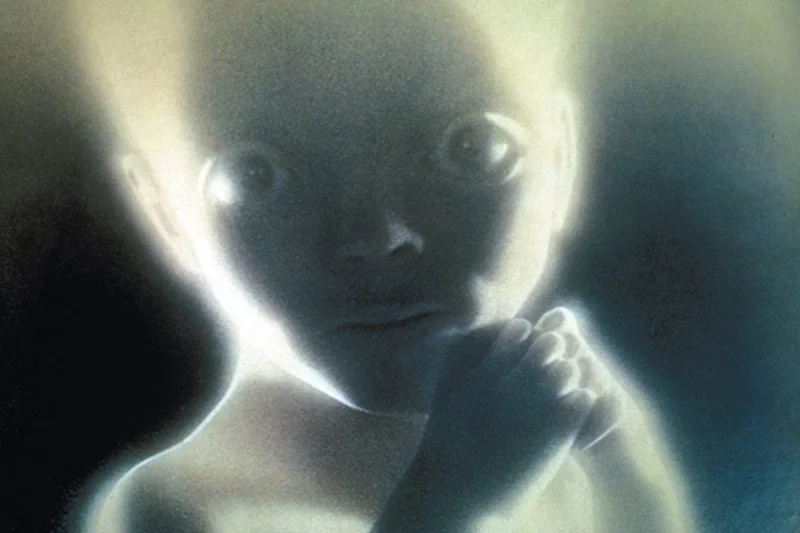
Colonising the Moon or Mars is one of humanity’s great dreams — or at least the dream of Elon Musk and Jeff Bezos, if we’re being precise — but it runs up against a fundamental biological limit (fortunately): we still don’t know whether human beings can actually reproduce anywhere other than Earth.
To start probing that question, on May 10 China launched an experiment aboard its Tiangong space station, sending into orbit embryo-like models grown from human stem cells. The samples travelled aboard the Tianzhou-10 cargo spacecraft and spent five days in microgravity, simulating the earliest stages of cellular development.
Researchers at the Chinese Academy of Sciences are studying how the absence of gravity affects embryonic development. To do so, they used two distinct models: the first was cultivated on uterine cells to replicate implantation in the womb; the second was placed inside a microfluidic chip to observe the moment cells begin to differentiate and form future tissues and organs.
The project’s lead scientist, Yu Leqian, to pre-empt ethical objections, clarified that these are not actual human embryos and therefore cannot develop into a human being.
While in space, the samples grew inside sterile, isolated chambers for five days. Back on Earth, scientists monitored an identical control group in parallel. The idea is to compare the two sets in order to isolate the environmental factors that disrupt cellular growth in space — and ultimately reduce risks for astronauts on future long-duration missions.
The orbital window being simulated corresponds to days 14 to 21 after fertilisation, a critical phase in which organs begin to take shape and any anomaly can permanently affect foetal development.
Although no attempts at conception in space have ever been made, historical data suggests that the cosmos is a hostile environment for life. Radiation and microgravity can damage DNA and alter cell division.
Understanding these mechanisms in depth is the only way to design effective countermeasures before we can even begin to imagine a future generation born among the stars.
