Due to the climate crisis, the world’s most famous tree, the old oak of Sherwood Forest, has died.
The oak tree, which had been growing for at least a thousand years, this year did not produce any leaves due to the increasingly frequent heatwaves and excessive human interventions.
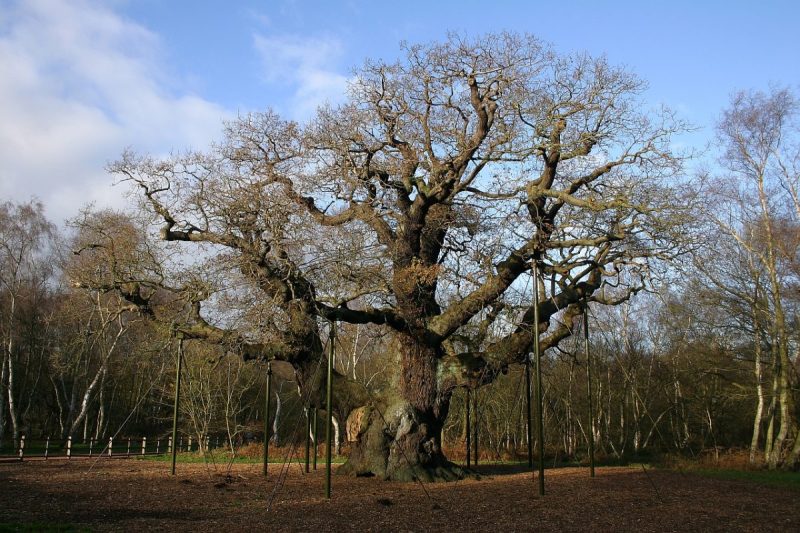
Franco Tufano, in the Disney Robin Hood film from 1973, sang “Robin Hood and Little John go through the forest…”. That forest was Sherwood, in Nottinghamshire, and surely Robin Hood and Little John, between one adventure and another, must have visited the most famous tree in England and probably the world: Major, the old oak. Today, Robin Hood and Little John could no longer make that visit: due to the climate crisis, the Major oak, a tree that had lived there for a thousand years, has died. This year the tree did not produce any leaves, after suffering stress caused by a series of hot and dry summers.
As the Guardian writes, it was not just the relentless passage of time that decreed the end of the oak, but a lethal mix of climate changes and an excess of human love. On one hand, the recent droughts and the historic heatwave of 2022 – during which the area recorded even 40 °C – dealt a severe blow to the tree; on the other hand, human interventions compromised its resilience. In addition to soil compaction caused by crowds of tourists, the good intentions of the past have proven fatal. Interventions such as the metal chains installed since 1904, cavities filled with concrete in the 1960s, lead and fiberglass coverings have subjected the structure to unnatural stress. These artificial supports prevented the tree from following its physiological aging process, which involves losing branches to “retreat into the trunk” and reduce the need for water and nutrients.
The disappearance of the Major Oak (named so in 1790, in honor of the historian Hayman Rooke) tells the now dramatic fragility of Britain’s tree heritage. England holds a unique treasure composed of 114 living ancient oaks with a circumference greater than nine meters, while the rest of Europe counts only 98 in total. Defined by environmentalists as the “white rhinos of the United Kingdom,” these natural monuments now require a completely new conservative approach. The death of the giant of Sherwood remains a future memory not only as a piece of history that is lost but as a stern reminder of how human attempts to force nature increasingly end up accelerating its decline.