FIFA wants to cover all brand logos with which it has no commercial agreements in the World Cup stadiums, but there are too many of these logos and it is not succeeding.
And where it succeeded, it achieved a decent comic effect, as in the case of the white cloth placed to cover the Levi's logo at Levi’s Stadium in Santa Clara.
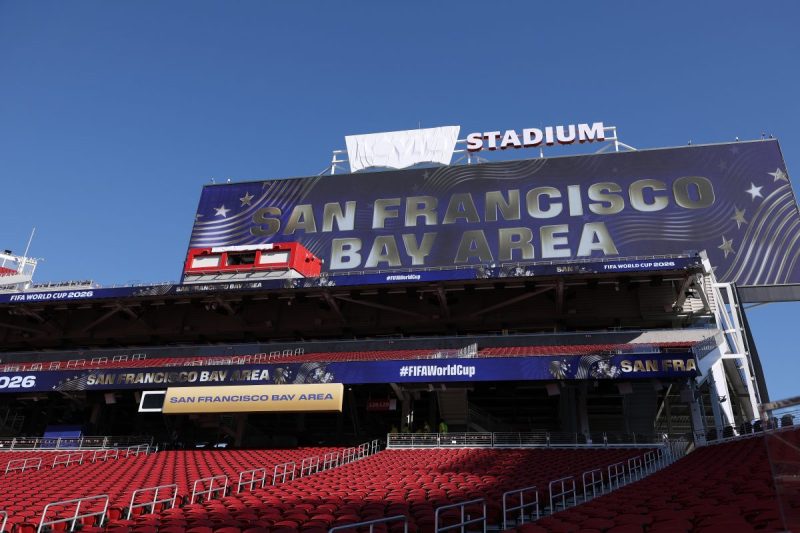
In North American stadiums, there is an ongoing effort to cover brand logos, revealing how obsessive and at times ridiculous FIFA’s hunt for unofficial logos has become. For those following the 2026 World Cup, especially for those attending matches in the stadium, it is impossible not to notice the signs of this “war on signage.”It all stems from the clean stadiumspolicy, a rule imposed by Zurich that requires stadium operators hosting World Cup matches to erase any trace of existing sponsors in the venue, to protect the exclusivity of the tournament’s official partners. As revealed by some public documents from The Athletic, the contracts signed by the stadiums are extremely strict and prohibit any form of advertising, marketing, or commercial presence that is not approved by FIFA. The ban applies to billboards, seats, clocks, staff uniforms, accreditation passes, fences, and even the airspace above the stadium. However, “sterilizing” hyper-branded stadiums like those in the United States and Canada overnight is proving to be an impossible task.
To start with, almost all venues had to change their names, temporarily renamed after the host city, as in the case of the former Levi’s Stadium in Santa Clara, now called San Francisco Bay Area Stadium (even on Google Maps). Right here, just before the kickoff of the World Cup’s opening match, fans noticed that the gigantic Levi’s sign on the stadium’s facade had been covered with a huge white tarp. Such a makeshift patch that the bat-wing silhouette of the brand was still clearly visible, even from a distance. Levi’s took it with humor and quickly modified the logo it uses on its social profiles, replacing the old one with a new one, covered by a white sheet. The brand published a video on TikTok, a variation of the trend nobody’s gonna know, they’re gonna know (nobody will notice, but they will), poking fun at FIFA’s attempt at “erasure”.
In Atlanta, local committees had to plead with FIFA to leave the enormous Mercedes-Benz star on the stadium roof, explaining that dismantling it would seriously jeopardize the integrity of the structure. But the real masterpiece was accomplished by FIFA in New York. The most observant fans quickly noticed that the letters of the MetLife Stadium sign are still very visible behind the panels installed to hide them. And if you look even closer, the MetLife name even appears on each of the over 80,000 cup holders attached to the seats. FIFA had requested that they be covered one by one, but the stadium operator refused due to the high costs that would have to be incurred to carry out this task.