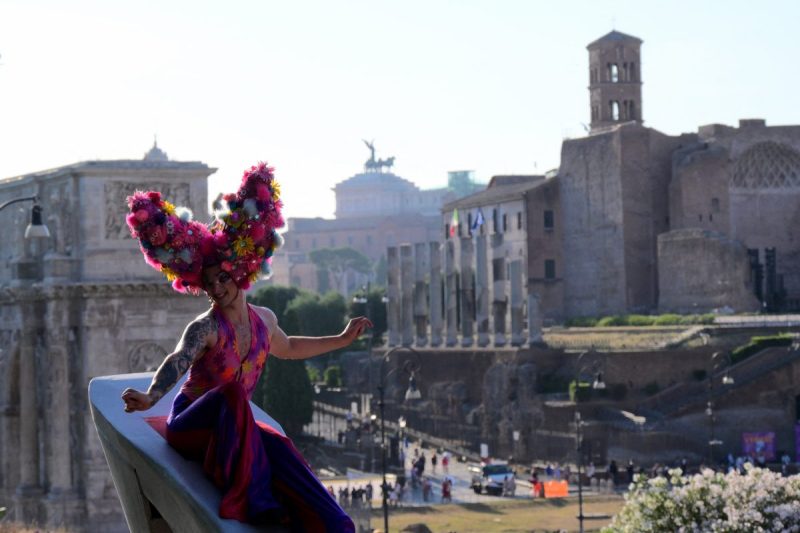
No pride in genocide. The signs are raised here and there in the Roma Pride parade, but they have become smaller. There is no chorus accompanying them, and there is a lack of speeches in the rainbow parade, which is more subdued than in recent years. Just last year, it was enough to look around to find Giorgia Meloni everywhere, invoked as the main antagonist of the rainbow square, the personification of everything that Pride has always sought to counter.
This year, even the Prime Minister has disappeared from the signs, erased from the public debate as well as from international politics, despite the float that opens the parade, with the slogan “The Republic belongs to those who inhabit it,” connecting to the 80th anniversary of the Republic and to those roots that are the antidote to the anti-democracy of a country that continues to favor some over others. It is now unclear whether this poison has disappeared or become a chronic illness. The word fascism appears very little, replaced by the English term fascism, which will make the slogans more international in the era of No King squares, but seems to dilute a struggle that is at the foundation of the Italian Constitution.
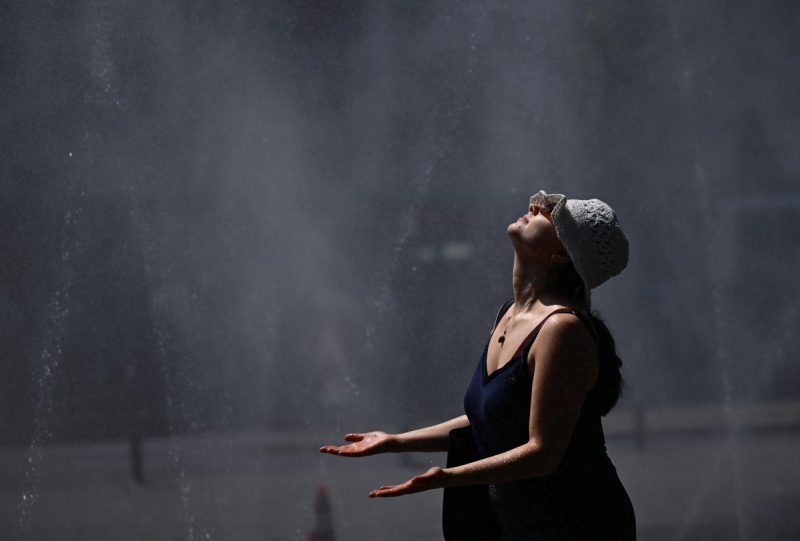
The most bitter aspect of this Pride is the feeling that the emergency has vanished from the spaces: when the parade begins to depart, Piazza della Repubblica is not as crowded as in previous years. The festive atmosphere around the Naiadi fountain is tempered, as the scorching sun disperses the crowd that gathers under the porticoes of the exedras. The turnout does not reach a million; several thousand people are counted in the parade, but along the Umbertine buildings of Via Cavour and Merulana, the flow of people is not so dense. Basilio holds a cardboard sign: “Gays have all the rights has become the new slogan of homophobes,” the most sophisticated sign in a Roma Pride where words have been replaced by music, and songs from the pop repertoire have taken over from speeches. There is a lack of the reclamation of words used to attack and defused with humor, which has always been the weapon of the queer minority. On the thirty floats that parade, people dance, and there is a DJ at the console, but no one takes a megaphone to remind that the Constitution is that document which increasingly includes rights to oppose the rigid “Zingaretti” dictionary (the mistake is his, not mine) wielded by Vannacci like a Tablet of the sacred law. The strongest provocation comes from the Gender X float, with images of Trump, Musk, Netanyahu, Rowling, and Bongiorno displayed upside down. They were also present last year, but perhaps today they stand out in a square where even Palestinian flags are counted, and the intersectional struggle that safeguards every pride is delegated to a time to come.
Even peace is reduced to a symbol covered in flowers, colorful, enormous like the red shoe from The Devil Wears Prada, hoisted on a float that looks more like the scenic backdrop of a play whose political act is unclear. Politics is, in fact, absent; at most, a few center-left representatives are encountered along the route, such as Schlein, Fratoianni, and Magi. The fire of the controversies that erupted in the past days over the absence of Keshet, the LGBTQIA+ association of the Italian Jewish community, is extinguished when a small parade arrives, and in response, a few pro-Pal signs are raised. The Pride marches on, but the diplomatic crisis between the United States and Italy, reduced to the end of a love story between Trump and Meloni, erases all other crises, primarily that of rights and its cultural and social implications. A Pride should remind us of the instrumentalizations and manipulations that society continues to make on the concept of gender, as Mario Colamarino, President of the Mario Mieli Circle and spokesperson for Roma Pride, reminded the day before: “The LGBTQIA+ community is not included within the rights framework of this country. We do not have the same dignity, the same equality. This for us is an open wound.”
The square has responded less than usual. This chronic wound seems to be addressed by the Pride ambassadors, Levante, Francesca Michielin, and Margherita Vicario, who at the press conference the day before presented themselves as vestals of the Republic: “I always have the feeling that the LGBTQIA+ community suffers from a sort of geolocation. As if outside of Rome and Milan, it is invisible to the rest of the country,” said Levante, leaving to Francesca Michielin the hardest political jab: “What Vannacci says is not based on any real data. All nonsense, I can’t find another term,” she said referring to the words of the leader of Futuro Nazionale about the fact that gays have the same rights as everyone else, as if this were enough to extinguish the discrimination that data still confirms today. Vannacci is today the hostile force of this Roma Pride, also due to a sort of sinister timing that afflicts those who use important themes to assert their relevance. Thus, the general who from his book The World Upside Downhas built his political fortune on the simple equation: homosexual equals not normal. He repeated it on La7 with Lilli Gruber and provocatively asked an audience last year if those who parade at Pride could be sent to the front. The response signs in the parade are few: Better a day as bisexual than a hundred as Vannacci, but no real political cry rises from the square.
Rather, it is the characters from the manga world that speak: Mazinga, Sailor Moon, One Piece become the symbol of the marginalized who will save the world. Because the fight for rights is still long, and battles will need to be fought. But not today, when among the arches of the Colosseum at dusk, the usual Rihanna echoes, comforting: “We found love in a hopeless place.”