Books of the Month
What we read in June in the editorial office.

Just last weekend there were half a dozen concert cancellations and festivals that were called off. Some may never return.
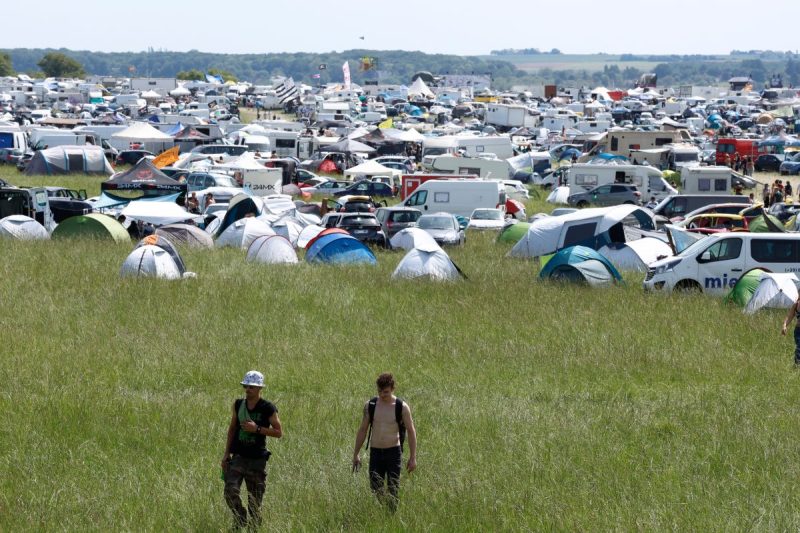
The weekend of June 25-28, while a heat dome held Europe hostage bringing record temperatures, anyone planning to attend Defqon.1 (a dance music festival with 50,000 attendees each year in Biddinghuizen, Netherlands) was evacuated late Thursday evening, with tens of thousands of participants already camped on site since the morning. “The unthinkable has happened,” wrote the organizer Q-Dance, expressing being “absolutely shocked that we had to ask those who traveled – some from the United States, Australia – to go home while the festival was fully operational and ready to welcome them.”
Holger Schmidt, Secretary General of the European Festivals Association, which brings together 136 events in over 30 countries, said he could not recall a heatwave even comparable to what we have experienced in these two weeks. Schmidt added that “the fact that almost the entire continent has been affected by the same extreme conditions is, in my opinion, unprecedented.” The Defqon.1 was not the only festival or music event canceled over the past weekend: Katy Perry’s concert near Brussels was canceled due to severe thunderstorms, and the B-52’s set at the French festival in Tilloloy was called off just minutes before the performance, with scaffolding collapsing on stage destroying keyboards and sound equipment.
Visualizza questo post su Instagram
The list of festivals affected by extreme weather events these days, as reported by Nme, is long: Garorock and Couleur Café in France, Paradise City in Belgium, Concert at Sea and Scandal in the Netherlands, with artists like Tom Odell, Kaytranada, Major Lazer, and Anderson Paak involved in the disruptions. In France, authorities banned the consumption of alcohol in public spaces during the Fête de la Musique, as hospitals, already under great strain, could not handle another wave of heat-related illnesses. In England, June temperature records were broken for three consecutive days, with 37.3 degrees recorded in Suffolk on Friday. Temperatures that, had Glastonbury not taken its traditional break this year, the audience would have had to face in Somerset as well. Organizers of concerts and festivals that took place despite the extreme weather conditions had to adapt on the fly: more water distributed to participants, more shaded areas, more medical staff ready to act. It is not the isolated bad weather that festivals are generally accustomed to and can simply address by postponing or canceling a few concerts: it is an emergency affecting an entire continent that no operational plan had anticipated (nor could have anticipated).
John Rostron, CEO of the Association of Independent Festivals in the UK, highlighted what makes this cancellation crisis different from a single unfortunate weekend: festivals plan budgets and logistical needs a year in advance, and a year ago no one anticipated an event of this scale. “This is the new normal. These record temperatures will be surpassed again and again” said Rostron. Beyond the disappointment and frustration of the audience, the damage is primarily economic and hits independent festival organizers much harder. For large events, with wide profit margins and management possibilities, a canceled concert or edition is a serious but solvable problem; for independent festivals, which already operate on tight budgets and thin margins, any setback risks being the end of the road. And, considering that the climate crisis will certainly not end this summer, getting back on that road could be truly impossible.