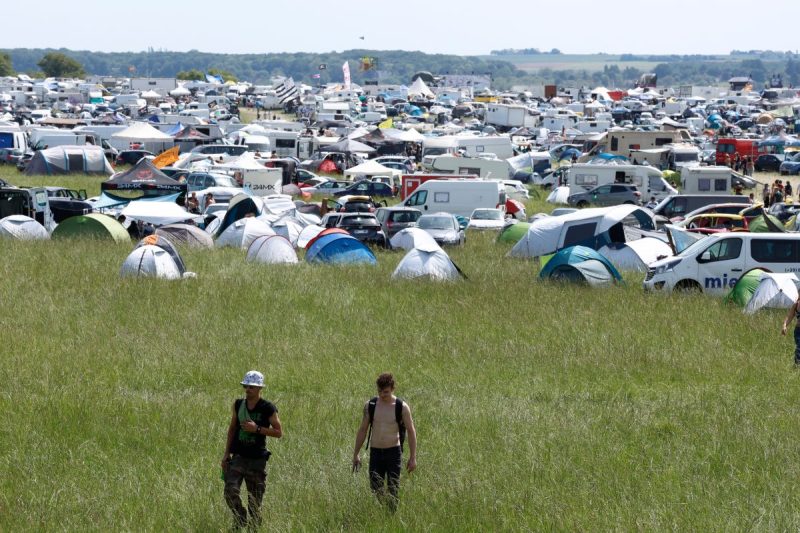
The heatwave has been a disaster for independent music festivals, which were already struggling.
Just last weekend there were half a dozen concert cancellations and festivals that were called off. Some may never return.

The Irish trio has arrived in Italy for a tour that will take them from Milan to Bari. Before the evening at Magnolia, we met Naoise Ó Cairealláin, known as Móglaí Bap, to talk about Gaelic, West Belfast, Keir Starmer, and the Irish woman who tried to kill Mussolini.
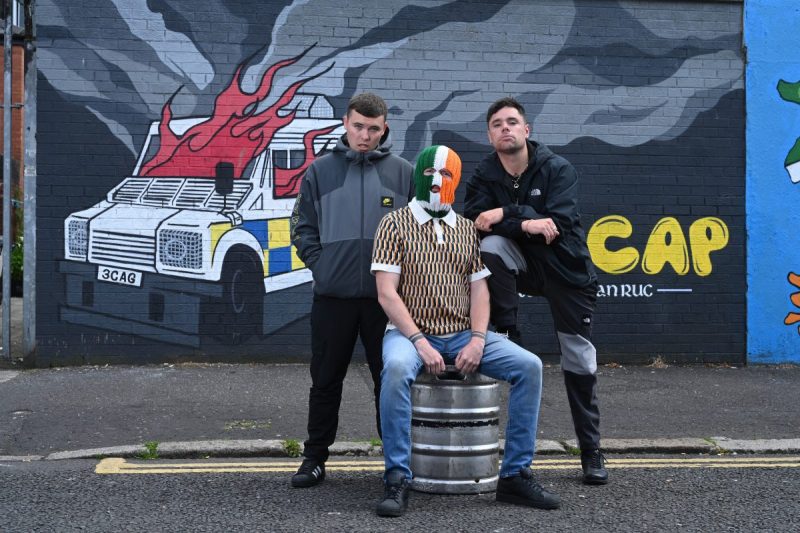
Kneecap have finally arrived in Italy, with a highly anticipated summer tour across the country. We have already talked about them on other occasions here on Rivista Studio: we were captivated the first time by the stubbornness with which they made theIrish language (Gaeilge) an essential condition, by the way they insisted on speaking on the most important stages in the world in the exact same manner they spoke in their neighborhood in West Belfast. Now Kneecap, still fresh from the success of their new album FENIAN, are arriving at Italian festivals: you may have already seen videos and photos from the first stop in Segrate, at Unaltrofestival, on social media. Now they are expected at the Sequoie Music Park in Bologna, in the Cavea of theAuditorium Parco della Musica in Rome and at theEremo Club in Molfetta (Bari). What follows is the chat we had with Naoise Ó Cairealláin, stage name Móglaí Bap, backstage just before the concert in Milan.
ⓢ Before becoming Kneecap, you were just three friends hanging out in West Belfast. What was the moment you realized that this friendship could turn into a musical project?
Well, we were in Belfast, it was 2017. Nine years ago, crazy! I lived with Mo Chara, we lived together, partied together. So I think Kneecap was born because there was this new identity that me and him were part of, that of young people who speak Irish and live their city as it is. It’s something that I think wasn’t represented in the music of the time… People didn’t know that young people spoke Irish in the city of Belfast. They speak Irish in rural areas, in the countryside, but in the city it’s quite a new thing. So Kneecap was born from here: us having fun with this language, speaking Irish together. There wasn’t much contemporary music doing what we wanted to do, so partly it all happened because we wanted more of that stuff. And the only way to get more music like we wanted was to make it ourselves. So we did it for fun and then it took off, and fortunately now we are where we are.
ⓢ Your sound is a mix of old-school hip-hop, rave culture, and anger. How does your creative process work? And how do you manage to balance your three different creative visions?
When you are with someone all the time, a kind of synchronicity develops. It’s something that leads to a relationship that isn’t even based on words. This synchronicity, how can I explain it to you… When you’re with someone all the time, you develop a bit of the same mindset: your biological clock syncs up, you start to speak in the same way, even your physical bodies end up looking a bit alike. Often we all have an idea at the same moment, it happens that I have an idea and the others have an idea, and then we find out that we all had more or less the same idea. It’s because we spend so much time together, we have the same inputs, so we end up having the same outputs. ⓢ Sare you always together? Apart from work, also in private life?
Always together, we are friends.
ⓢ For a long time, the Irish language has been perceived outside of Ireland as something academic or traditional. You have brought it to clubs and the global stage. What made you decide to use Gaelic? Weren’t you afraid it might come off as incomprehensible and therefore inaccessible to the audience?
Most people… there are only about 120,000 people who speak it daily in Ireland. More people understand it, but only 120,000 speak it every day. Obviously, there has been such a long process of colonization, there was so much shame and negative feelings towards the language, that’s why people stopped speaking it, because they were told they were backward, that if you spoke it you were uncivilized. Young people speak it a bit more now, there’s less shame about it, less embarrassment given that we are so close to England, and to that Western culture, to that English sphere of influence, to that English world, to that English and American pop music. When I was a kid we always looked to America or England for music, but now that we are older… Now people know what America is like. American culture is quite empty, I think people are looking more inward, I don’t know if I explain myself. Towards their own culture, and the Irish language can give Irish people more substance than anything America has to offer, pop culture or otherwise. So, back to Gaelic. More people are speaking it and there is still a long way to go, but when my parents were young there were no Irish language schools in the North, because it was basically illegal. So you couldn’t learn it, you couldn’t go to a school that was entirely in Irish, there wasn’t one before 1972. So my parents, my parents’ friends, helped to start the schools. I grew up speaking Irish. Mo Chara, for example, went to the Irish language school but no one in his family speaks Irish, because his parents weren’t given the opportunity to learn Irish. So the new generations are simply having the opportunities. For instance, the largest Irish language school in Ireland is now in Belfast, when there wasn’t one just 40 years ago. Did you know that in secondary school they only started speaking Gaelic in 1991?
ⓢ In Belfast, politics is everywhere. Would it have been possible for you to make music without talking about politics, borders, and identity, or is music automatically a political act for a boy from West Belfast?
Of course you can make music without doing politics, there is a lot of music that doesn’t talk about politics. But I think what is political for one person isn’t political for another person, it’s subjective, you know. To be clear: the way we see identity or the way we use the Irish language is a fact that people see as political. But it really isn’t. It shouldn’t be. It’s just a language. It’s the national language of that country. Then the three of us have the awareness that you can’t separate people and politics or music and politics, and that’s where our music comes from, that is our certainty. I think mainstream music and mainstream art always try to keep politics away because they don’t want people to have this awareness, that is, that politics is a part of everyday life, because then people, by approaching politics, might start to see change. And demand it. It’s a bit like when the NWA were on the scene, or any other political band: that was a bigger threat to mainstream culture than music about violence or hedonism or whatever. You don’t really see music like what the NWA made anymore, in fact. I think the majors are shifting towards pop culture, that is, towards materialism. We, for our part, have understood that if you don’t get involved in politics, politics will still deal with you, it will still screw you over, so you might as well have a political awareness. That way we can contribute to changing things.
ⓢ In the new album, you directly attack Keir Starmer, calling him a “shipper of genocide” due to military support for Israel. In light of what is happening in Gaza, solidarity with Palestine is the only possible stance for you. When London’s politics tries to censor or obstruct you, how do you handle this clash?
I think being Irish and having the British government trying to label us as terrorists… This has been happening for a long time in Ireland: the people we know, our relatives, members of our community, have been incarcerated or labeled as terrorists in the past. There is a long history about this in Ireland. You know, what we went through, Mo Chara specifically (accused of terrorism for publicly praising Hezbollah, waving its flag during a concert in London in 2024; an accusation that the British judiciary dismissed, ed. note), was ugly, but I don’t know if you’re aware of the Palestine Action(a British pro-Palestine organization that aims to end the world’s complicity with “Israel’s genocidal and apartheid regime,” listed by the British government as a terrorist organization under the Terrorism Act of 2000, ed. note) and what they did recently: four guys just 22 years old broke into a weapons manufacturer’s headquarters and received sentences of six to eight years in prison. The exact same thing has been happening in Ireland for a long time, now it’s happening in England because I think it’s a bit like… You see, in the end, the terror that these countries perpetuate abroad, eventually that terror inevitably spills over at home, within national borders. It’s a bit like America, think about how they bring terror to Iran or this or that place in the world. Now they find it at home, the terror, now they have ICE. The same goes for England: they did it in Ireland but now they are doing it at home. Fortunately, we have good management, good friends, a great family, that has helped us get through all the troubles with England.
ⓢ Right now, Ireland is at the center of the global music scene, with rap, rock, and folk. Why do you think the whole world is so fascinated by the sound and stories coming from Ireland at this historical moment?
I think there is a growing self-esteem, a growing confidence in Ireland, something that probably started to exist a while ago. But for a long time we always looked to America, to England, as I said before, for recognition of our own culture. Since we suffered from this lack of confidence, we always sought it abroad. But in the last 20 years we have been looking more and more “inward” for this recognition, we are seeking approval from the Irish, we are creating culture and art for our people, for the sake of our culture rather than for export abroad. In my opinion, this is what attracts people, this confidence draws them in. And also the variety, because it’s not just us but also the Fontaines, the Mary Wallopers, the Gurriers, there are so many different bands and genres that bring everyone together. Ireland is truly fascinating at this moment. And I think it has everything to do with the confidence of the Irish. This is my theory.
ⓢ Your latest album features an incredible collaboration with Kae Tempest. How did this connection come about and how was it to blend your style with such a powerful and poetic voice?
It happened because we were working with Dan Carey, the producer who has worked with Kae in the past. We wanted to make a song a bit different from our usual and we wanted to do it with a special singer. We won’t perform it live until I can get Kae to sing it, by the way, because I want the first time we play it to be with Kae there. I think that’s Kae’s world, a more emotional world. When I had the idea to make this song I went to Dan and we worked together on the music. Sometimes things happen in a sort of natural progression and Kae… was just there. It was perfect. It was really strong. That’s how the collaboration with Kae came about: she was in the studio and did the verse. It was beautiful to see someone become vulnerable while singing, in a small space like a studio, then. It was a great privilege.
ⓢ You started with just a spray can and a microphone, now you have a global audience. What advice would you give to kids today who want to start making music?
Your mental health will definitely be tested if you make music. In Irish, we have this proverb: «Tús máith, leath na hoibre», (literally translated: the beginning is half the work, ed. note). So don’t start thinking about the end before you even begin, think that the moment you start you are already halfway there. If you intend to do something, don’t think too much about it. Just start making music. You just have to… you just have to try, you know? Do it because you want to do it, because it’s fun for you. You have to get over that fear you feel when you think about the finished product. If you think too much, you just get nervous.
ⓢ You are finally bringing your live show to Italy, Unaltro festival, Sequoie Music Park in Bologna, then you will head to Rome, Molfetta, and Bari. What do you expect from the Italian audience?
I think the audience will be fantastic. I believe that Italy, much like Ireland, has a strong social consciousness: politics here is an important part of music. There are also famous historical episodes that link our countries, like that of the Irish woman (Violet Gibson, ed. note) who tried to kill Mussolini, the one who shot him. If you go looking for information about her, you find out that she wasn’t a political activist, I believe she was just a Catholic and did everything on her own, because she was a bit crazy. She tried but didn’t succeed… In the end, Mussolini was caught anyway, though. But you were saying about the audience: I expect a really wild audience, a crazy energy, like a political rally, with lots of mosh pits and a real frenzy under the stage. We’ll see soon.