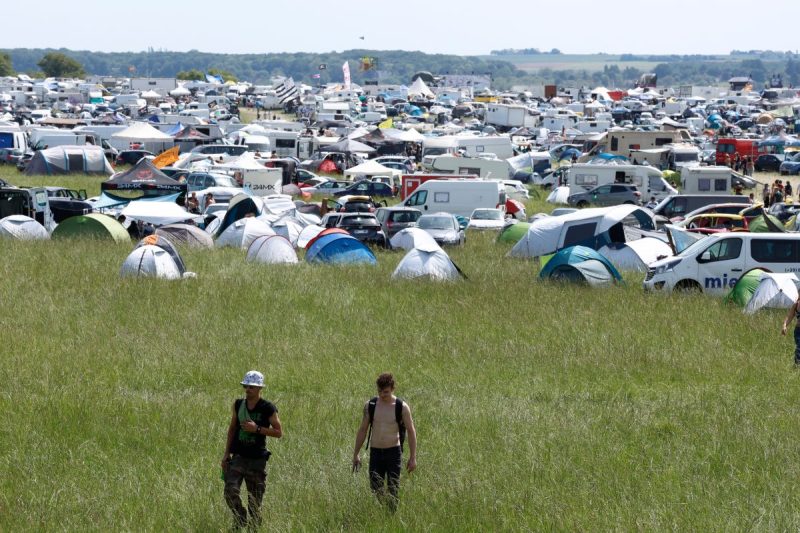
The heatwave has been a disaster for independent music festivals, which were already struggling.
Just last weekend there were half a dozen concert cancellations and festivals that were called off. Some may never return.

White Magic is the title of his new album. Dark Reflection, that’s the title of the story he wrote for Supergirl. He told us about both in this interview, where we also talked about loneliness, AI, politics, and fantasy.
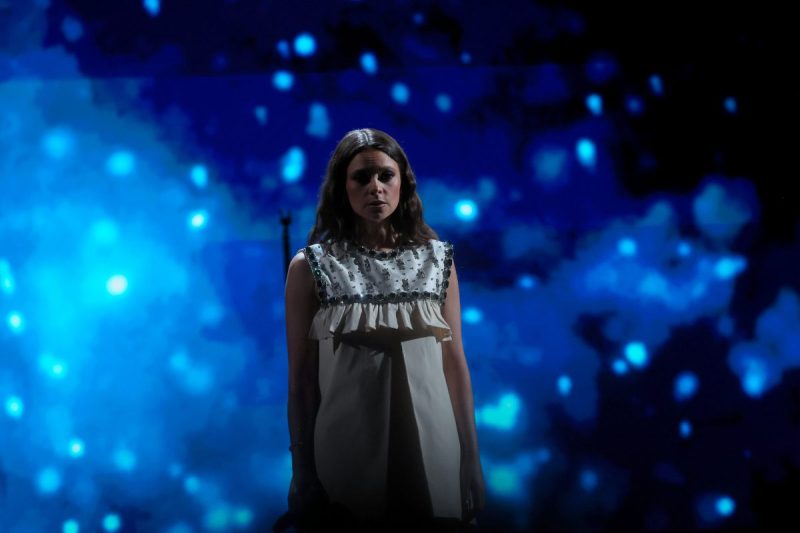
Francesca Michielin says that after working on Magia Bianca, her latest album, she realized how important it is to take one’s time and not rush. She decided to write these songs with the aim of creating something precise: a collective ritual and a space to be together. She hopes her music speaks to people’s hearts and not just their minds. She studied, prepared, and ended up living with herself for entire months, forced into a sometimes suffocating solitude. The story she wrote for Supergirl, included in the anthology Supergirl – Il Mondo, scripted by Irene Marchesini, illustrated by Federica Croci, published by Panini Comics and also available in a special volume, was the response to another need: to explore the superhero theme from a different, more human perspective.
Dark Reflection is set in Lecce, Italy, where Kara/Supergirl has moved to study. We never see her in costume (except, of course, in the cover image). What we read is solely her voice, lost in a continuous debate between the person she is and the one others expect her to be. It is not a story that rewrites the canon or the character: it is an intimate, delicate story made of doubts and solitude. The beauty, says Francesca, lies where there is resistance, where kindness and empathy are respected and present; it lies, then, in the awareness of the other and not just of oneself.
ⓢ Why did you decide to talk about the relationship between the two identities of the character for this Supergirl story?
If I think back to my relationship with superheroes, I understand that what I have always liked most is the way their humanity was told. It’s an even broader discussion, because it also concerns the majokko manga, of which I am a big fan. When we talk about superheroes, Spider-Man comes to mind, who is probably my favorite. Talking about the person, their fragility, and what brings them closer to everyone else, as in the case of Peter Parker, has always struck me. So I didn’t want to talk so much about the aspect of invincibility, powers, or extraordinary abilities, but rather about the more human and uncertain aspect.
ⓢ In the case of Supergirl, how does this translate?
In the case of Supergirl, I decided to start from here. It’s a theme that is close to my heart, and Supergirl, who is part of an imaginary loaded with invincibility, can almost be seen, as an alien, as a non-human. We placed her within a smaller, almost provincial reality, which allowed her to reflect on herself and the expectations placed upon her; and perhaps, it allowed her to admit that she can’t always measure up. In short, we tried to go beyond the usual path.
ⓢ Did you look at any comics before writing this story?
To be honest, no. I didn’t want to be too influenced. I wanted to write my own story, without trying to quote or refer to other things. I studied, yes, the basis of the DC universe imagery, with Superman and Supergirl, just to have a clearer and more precise idea. For the rest, I sought my own path.
ⓢ What did you try to avoid?
I didn’t want to do a homework assignment. And I didn’t want to be overwhelmed by anxiety either. I know very well that I am an outsider in the comic book world – I am a reader and a fan, but I don’t make comics – and so I tried to imagine a story that I, as a reader, would enjoy reading. Something that perhaps I hadn’t read, that I hadn’t found yet, but that could represent a point of contact for other readers as well, those occasional ones, not necessarily fans of Supergirl or DC. Then, of course, there was teamwork: I wrote about ten pages of subject, but the screenplay was handled by Irene Marchesini, while the drawings were done by Federica Croci. I was very descriptive, and I tried to add a slightly more technical element.
ⓢ In what sense?
I started from a question: what is it that, in 2026, should not be missing from the suit of a kryptonian, who actually feeds on solar energy? And at the beginning, in my subject, I talked about photovoltaic nanofibers, which are a tiny technology similar to solar panels: they allow for the collection and accumulation of solar energy. I did various research for this story; I had fun imagining more aspects.
ⓢ Did you use this story to try to talk about yourself as well?
Honestly, no (laughs, ed. note). I am in a phase of my life where I feel quite resolved as an artist. I can’t tell you if it’s due to age or the fact that I’ve become an aunt, but every time I see children or young people, especially at my signings, who tell me: I was born the year you won X-Factor, I grew up with your music, I end up questioning my role.
ⓢ And what do you answer yourself?
That my task is to make songs capable of inspiring others. I have stopped pouring myself and my life into what I write; it’s something I no longer enjoy doing, and I respect it, of course. Right now, I don’t feel the need for it. With my songs, I try to speak to those who follow me – so also to those children and young people I mentioned earlier – and, in my small way, to inspire them.
ⓢ What is the responsibility of those who make music? Is art always political?
I believe that everything, in the end, is political: even how we dress, even the shopping we do, even the way we work and our lifestyle. You cannot imagine yourself as strangers to politics if you move within a public context. Elisa, many years ago, told me: in life, you can choose to do your job with white magic or black magic; you can choose to do things with a mission and a goal or for economic opportunism. We all have to make a living, of course. And we have to live with dignity. But when you have a microphone in hand, when you enjoy a certain visibility and exposure, you cannot deny yourself the possibility and, in some ways, the duty to express yourself.
ⓢ White magic and black magic also return, as we know, in the latest album. Did it all start with Elisa?
Actually, it’s something that came back to my mind after finishing the album. Sometimes it goes like that, right? We work and act independently, only to remember, in the end, that we had already talked about that thing or that idea with someone else. I did Magia Bianca in a rush: I was overwhelmed by the writing, and I didn’t stop for a moment. Elisa and her words came back to my mind only shortly before the album’s release. Everything we feel ends up having an impact on us at an unconscious level, even if we think little about it. Then, over time, it finds its way to resurface.
ⓢ White magic and black magic represent the two extremes. And what about red magic?
White magic is magic understood as a community ritual, aimed at the good of others; witches, before being witches, were healers, women who worked for others. Black magic, on the other hand, is linked to everything that is not intended for the common good, but we can also give it other meanings. Red magic is the magic of love, of everything that has to do with passion. And then there’s green magic that could be linked to herbalism.
ⓢ So you’ve become an expert, then.
I had to and wanted to study. One thing I don’t love is citationism for its own sake and this habit of talking about things randomly, just because it’s cool. To make an album that talks about witches, magic, and the Middle Ages, I had to be aware of what I was saying.
ⓢ However, there are also references in this album: I think, for example, of the choirs that recall Kate Bush.
We’re talking about the music I listened to and loved as a child, and apart from Kate Bush, there’s all that music from the eighties that I heard thanks to my father and mother. And there’s also the music I listened to thanks to my brother, who is ten years older than me. All that somewhat experimental reflection that was present in the eighties, between music and cinema, is very present in this album. I thought of Labyrinth, of The NeverEnding Story , and also of Fantaghirò: that dreamlike dimension that was felt between the late eighties and early nineties, which invited you to escape. And I thought of Dragonheart and A Knight’s Tale, which ended up influencing the imagination of many people.
ⓢ Are you also a fantasy reader?
As a child, yes, I was obsessed with fantasy. I read Tolkien, I read The Chronicles of Narnia; of course, I read Harry Potter. Then there was the dragon phase, with Eragon and Christopher Paolini. I read Fairy Oak, and when I was younger, I picked up Nina – The Girl of the Sixth Moon. I have always been a big fan of those books, which I then abandoned. I let myself be convinced by this idea that, as you grow up, you have to change your reading, that you have to read more serious things. But the truth is that in those books, in my opinion, there is everything: they can teach you how to live and recognize different ideals.
ⓢ Are you superstitious?
I am only to a certain extent. With superstition, you risk losing yourself.
ⓢ Do you have a ritual, a routine, before going on stage?
Before going on stage, no, but there are moments when I sense that something is wrong, that there are energies I don’t like, and then I put some coarse salt in my pocket and then throw it away (laughs, ed. note).
ⓢ Does this album actually represent a new beginning?
Yes, it does. And it does because it’s a way of making music that I didn’t have before. More than new, it’s a kind of reconnection with the me from a long time ago, with the me who watched Magica Doremi, who read The Black Book of Witch Salamandra, who rewatched A Knight’s Talea thousand times. It’s as if I reconnected with that Francesca and made the album I dreamed of making as a child. So it’s new, yes, but it’s also deeply coherent with who I am.
ⓢ Aside from magic, in the most classic sense, it seems to me that a certain paganism also returns in this album, with a more universal and secular vision of miracles.
In my opinion, the theme is that we, as a society and culture, must not lose everything that is unfathomable. Even the Greeks, who had a culture deeply influenced by philosophical thought, valued oracles, what lived beyond, and ultimately referred to something higher. Regardless of what one believes, magic has to do with the immaterial, it tries to recover that irrational part that celebrates the same communities. For this album, I also delved into the sabbats, how they originated and how they resist today.
ⓢ And what did you understand?
In Germany, they celebrate Walpurgis Night, and it is celebrated to honor the sense of community. On February 3rd, fruit is blessed with Saint Blaise, the protector of the throat, and it’s a custom that doesn’t only refer to Christianity but to a much older tradition. The truth is that we need it: we need more in our lives. The witch has great respect for nature and the cyclicality of the season. These are things we have lost, but that are now returning – I’m not referring to magic or spells; I’m talking about that dynamic of community and sharing, of respect and awareness, which we are increasingly asked to abandon. Today, only one thing matters: profit.
ⓢ Where does beauty lie?
Beauty, in my opinion, lies in resisting with kindness and empathy, reconnecting with this dynamic of respect and dialogue, expressing the utmost gratitude for the talent we have been given. Beauty is as much a piece of bread as it is a painting: they both derive from the same concept of craftsmanship, of putting one’s talent to use in harmony with what surrounds us.
ⓢ How difficult is it today to find this beauty?
Very. We are frantic, we have lost that idea of slowness and craftsmanship that I believe is fundamental. Where there is resistance, however, there is always beauty.
ⓢ Who was the first person you played Magia Biancafor?
David Kosten (laughs, ed. note). It was very nice. During the making of this project, I was very jealous. Not having management anymore, working without a real filter, I wanted to avoid too many opinions, because they can be almost dangerous. I relied on him, who is a producer I greatly respect and with whom I also had the honor of working. For me, having his approval was important.
ⓢ How many times have you listened to this album again?
Well, during the production and mixing phase, I was very attentive, but at a certain point, I let the songs go, I didn’t listen to them again; during the mastering phase, for instance, I only intervened in exceptional cases. Otherwise, I risked ending up in a wrong loop. I’ve been in these songs for months; other people haven’t. I can’t stay in them too long anymore.
ⓢ How do you know when a song is finished?
You just know. There’s a thesis, an antithesis, and a synthesis. The thesis is the instinctive part, what your gut tells you. The antithesis is the technical part. The synthesis, on the other hand, is a combination of things: of awareness, of commitments, of what you’ve done. And if I feel comfortable with the synthesis, if my gut tells me again that it’s okay, I close the song and move on.
ⓢ Is the head or the gut more important?
In my opinion, the gut. My mom always tells me that there’s a type of music that you listen to with your heart and a type of music that you listen to with your head, and even though I studied music and appreciate more structured things, I think music should always reach the heart.
ⓢ What is the first memory from your childhood that comes to mind?
Perhaps it’s the day I started to have a memory, when I asked my dad to go to Monte Carlo because I wanted to do the same lap that Formula 1 drivers did. And after driving the city circuit, I remember we went to the oceanographic museum: I have always loved sharks and whales. And I remember being impressed and that my dad, on the way home, bought me the LEGO great white shark.
ⓢ What was your biggest fear as a child?
Not finding my place. I felt like I wanted to give a lot, but I didn’t know if to the world, if to those around me, whether what I wanted to give would interest them. I am happy for all the things that happened to me because in the end, I managed to find my place.
ⓢ Does imposter syndrome ever go away?
I suffered a lot, believe me. I worked on it in therapy, and now, more or less, I would say I have overcome it.
ⓢ What was it like to flip through your Supergirl story for the first time?
I had absolutely no idea what to expect. Besides sublimating my idea, I found a touching and delicate drawing style. I really liked how Federica developed the images. Having read manga for a lifetime, I was truly moved by something like this.
ⓢ I’ll pick up on something you said earlier: the importance of craftsmanship. So why did you use AI for the visuals of Magia Bianca?
Not all the videos are made like that, with AI. I want to specify that. But I also want to say another thing: I don’t think AI is a tool to be demonized per se, especially in a historical moment like this, where artistic ambition is not protected. My project has always been very complicated, and it’s not at all certain that you can have the necessary economic resources to, for example, shoot a music video for every song. The fundamental thing is that there is respect for the people involved. The cover of my album is a painting; we made a music video with a significant budget and involving many people. We’re not talking about an album made with AI. There are just elements that, honestly, I wouldn’t have been able to develop otherwise, not having the necessary resources – I repeat. You have to be clear about what you do. We didn’t delegate anything to anyone; we sought external help. The bulk was done with professionals and active involvement.
ⓢ At some point, do you get used to the adrenaline you feel just before going on stage?
The day I get used to it, I will stop making music. For me, maintaining this emotion, with this density, is essential. If I make music, it’s because I would like to leave something important, mine, intense, to others. What I feel has a relative value. I don’t want to make my music only subjective; I want to let myself be lived by others while I’m on stage, and it’s essential that everyone feels involved.
ⓢ What does it mean to “live an artist”?
It means that an artist should not put themselves on a pedestal above the audience, but be at the same level as them, if not even below. And this, of course, has nothing to do with private life.
ⓢ What kind of solitude is felt when one is at the desk, alone, working on an album like this?
It’s a solitude that can sometimes be exhausting, because you are tormented by doubts, you feel overwhelmed twenty-four hours a day. You reach the point where you think you’re wasting time even when you take a shower. I’ve learned to trust the process: one way or another, the album and the music find their time and form. The answers and ideas come to you with the passing days; you can’t expect too much from yourself. Certainly, you can’t expect it immediately.
ⓢ How important is it to gain experience, and thus try, suffer, and make mistakes, in order to make music?
I think it’s fundamental. The role of art, if we speak generally, is that of catharsis, of trying to give a collective dimension to the individual experience. With music, you can create a bridge with others, to rework together what you have lived. And that’s the beauty, if you will, of teamwork. You have to live many experiences to be able to share them later. But without rushing. When I close this chapter, I won’t have the anxiety to immediately open another. I don’t think it makes sense to work like that.
ⓢ What have you learned about yourself while working on Magia Bianca?
I’ve learned that I am much stronger than I thought. Now I feel more centered. I was insecure about my abilities before this album, and now I am happy because I felt genuine enthusiasm again entering a recording studio. At one point, I thought I had no talent for music anymore and that I had to do something completely different. With this album, however, I understood that we all need to allow ourselves the luxury of finding our time and our space, to tell what only we can tell. If you find your story, there’s nothing that can stop you.
ⓢ What period was it when you thought you had lost any talent?
It’s a thought that comes and goes. There are moments when I feel more secure and others when I feel less secure. After this album, I understood that I managed to tell what I wanted in exactly the way I wanted to do it. And that’s very gratifying. I don’t want to say that it’s necessary to live every album as if it were the last, but in this case, I took the satisfaction of making exactly the album I had in mind and that I have always dreamed of. After such an experience, I feel much less pressure.
ⓢ After such an important chapter, after all this work, how difficult is it to move on and let go of these songs?
It certainly won’t be easy. But it was such a beautiful journey that it’s right to enjoy this moment of sharing with people. It’s part of the game, after all. And I’ve learned that everyone must respect their story and not rush. There’s no need to be overwhelmed by the anxiety of what to do next. When there is more, when the next project comes, it will be a natural process.
ⓢ In your opinion, what is the best song from Magia Bianca to dance to alone?
The Song of the Anguane.
ⓢ And a song to listen to on the beach, with others?
Always The Song of the Anguane (laughs, ed. note).
ⓢ And after a love story ends?
Feral Girl.
ⓢ What is the right song to find hope and look to the future?
Witch Commands.
On June 29th, at 6 PM, Dark Reflection will be presented at the Mondadori in Duomo, Milan, by Francesca Michielin, Irene Marchesini, and Federica Croci and will be available in a hardcover volume, with interviews and special content. Preorders are already available. Online, the dates of the summer tour have been published, covering a good part of the peninsula, the theater tour (Trento, Venice, Turin, Ancona, Florence, Bari, Bologna, Trieste, Padua, Rome, Milan, and Naples), and the signings for Magia Bianca.