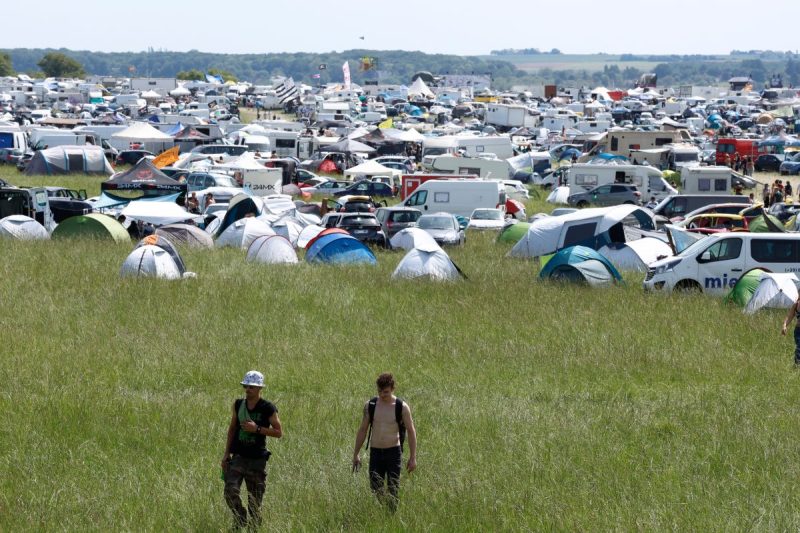
The heatwave has been a disaster for independent music festivals, which were already struggling.
Just last weekend there were half a dozen concert cancellations and festivals that were called off. Some may never return.

With Disclosure Day, the director returns to one of the favorite themes of his career. No, it's not about how to save the Earth from aliens. It's about how to save it from human beings.
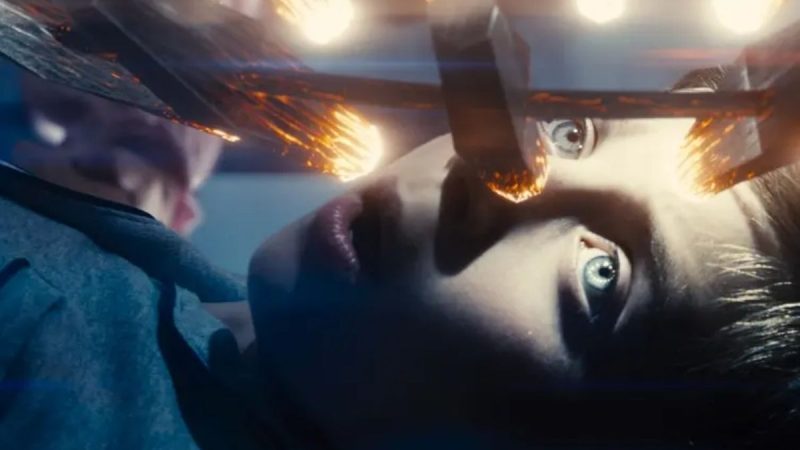
A few days after its release, following the excellent worldwide box office result (94 million dollars overall in the first weekend) and especially with a clear mind: this is the best way to talk about Disclosure Day, from a cinematic point of view but also to analyze the impact the film has had on the audience.
Let’s start from this point. As always happens, the debate is divided between masterpiece and the failure of a filmmaker now out of ideas. Of course, things are not like that, but this tendency is also the reason – perhaps the primary one – why what Disclosure Day tells, and the way it is told, is today more important than ever. Individualism and arrogance are among the great evils of our time, and indeed the landscape in which the protagonists of Disclosure Day move is that of a world that is about to end at our hands. In the background, a global military escalation, rising panic, while secretly trying to avoid a revelation that could upset political, social, and religious balances. In fact, to reset everything and start over. Provided that we learn to listen.
Disclosure Day is not one of Spielberg’s best films, this is undeniable. It would certainly be the best film of the life of 95 percent of living directors at this moment. But it is not Spielberg’s best. It is a film that one must largely surrender to, avoiding dwelling on certain narrative emphases that he would probably have avoided in the past, on junctions that must be taken for granted by suspending disbelief. I have the feeling that this is called cinema, and that there are few people more competent than Steven Spielberg in managing time and space in a screenplay. Or David Koepp, to whom Spielberg entrusted the script based on a subject written by the director himself. These licenses are functional to accompany a direction and editing of great dynamism, which do not weigh down even one of the 145 minutes of the film. Let’s pause for a moment on Koepp, who has been defined in recent days by many as a terrible screenwriter, to whom a restraining order should be imposed, I even happened to read, judgments of unheard-of violence. Just to recap: Koepp wrote Death Becomes Her, Jurassic Park, Carlito’s Way, Live Free or Die Hard, Mission: Impossible, Panic Room. You decide.
In short, there may be a bit of naivety in the storytelling, in what is represented and how it is represented, this is certainly true, but everything that Spielberg presents us in Disclosure Day makes sense and has deeper keys of interpretation. It is a political work, first of all, based on the conviction that the democracy in which the Western world lives is fake, superficial, controlled by entities that do not allow real freedom. He has said and reiterated this throughout his career, but it was easier to label him as a feel-good director who makes American films, as happened to him after E.T., which is actually a very dark work. Franco La Polla understood this immediately, who in his Castoro on the director, and especially in the monograph published in 1995 by Lindau (a historic publishing house in Turin that published fundamental works of film history and criticism in the 1990s), perfectly understood the dark soul of his cinema.
A darkness that in Disclosure Day progressively lightens, until the final revelation, which is not a message of renewed trust and optimism. The whole film is a warning, its marked didacticism is made necessary by the awareness that for many people on this Earth it is necessary to use simple symbols to convey the message loud and clear to them as well. In simple words: the world is full of idiots, but instead of cutting them out, with the risk that they become the next Trump, let’s make ourselves look a little more foolish. Empathy and inclusivity, this is what Spielberg conveys to us, but not because it’s nice to be kinder and friends. Simply, because unity is strength against those powers that dominate the world. Do aliens exist and are they among us? Yes, very likely. But the biggest problem is feeling alien among us, for too long.Then there is everything else. The awareness of the existence of a brother from another planet, to quote John Sayles (which is always nice), would put humanity in front of significant questions. Because we have only managed to go to the Moon at most, and they have technologies so advanced that they can travel through deep space? But weren’t we made in the image and likeness of God? These are the intelligent questions. Then there are those that inevitably someone would ask. What are their energy sources? Can we exploit them? Can we bring democracy to their home to take it away from them?For over fifty years, Spielberg has been telling us one precise thing: humanity is awful and I have the proof. The Nazis killed six million Jews. And the people of Israel live with a single fixation: revenge, at any cost (watch Munich, a very painful work, in some ways even more than Schindler’s List). We have killed each other in two different world wars, in the first a horse tried to understand why, and of course found no answer, because there isn’t one. To be precise: the thoroughbred in War Horse is a metaphor for beauty violated by the madness of man. Didactic, of course. After all, it is based on a children’s novel, so they understand it right away. Then we grow up and forget everything.Just as it is easier to say that Steven Spielberg has lost his touch, instead of analyzing, perhaps digging even within ourselves. Disclosure Day is a magnificent and imperfect film, as much as it is shot with a mastery and clarity that few filmmakers in the world can afford. It is a very personal work, scattered with small autobiographical elements that show how rooted in him is the need, the hope of not being alone in the universe. Because here, at our home, not the Earth, but our very home, we are alone. And loneliness, as we know, generates monsters.