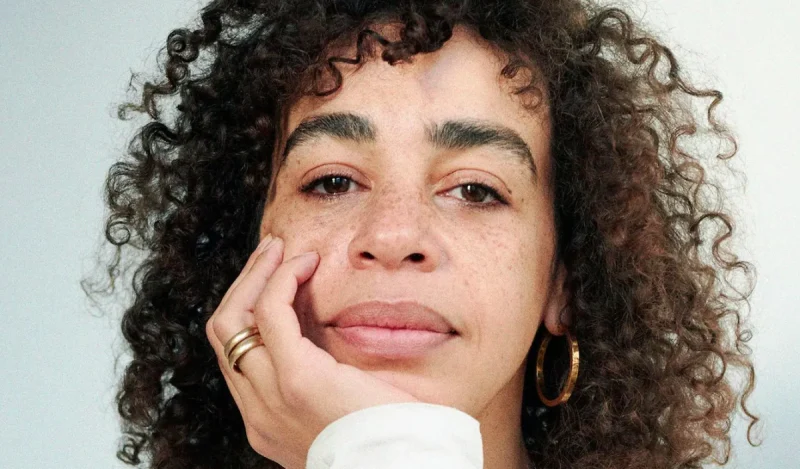
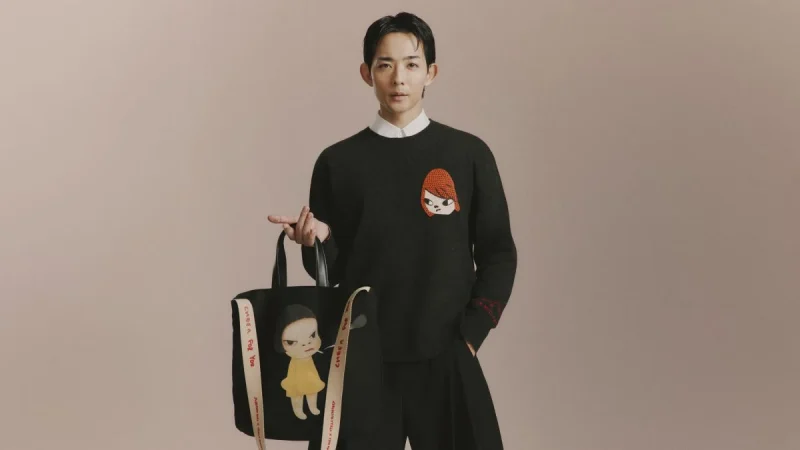
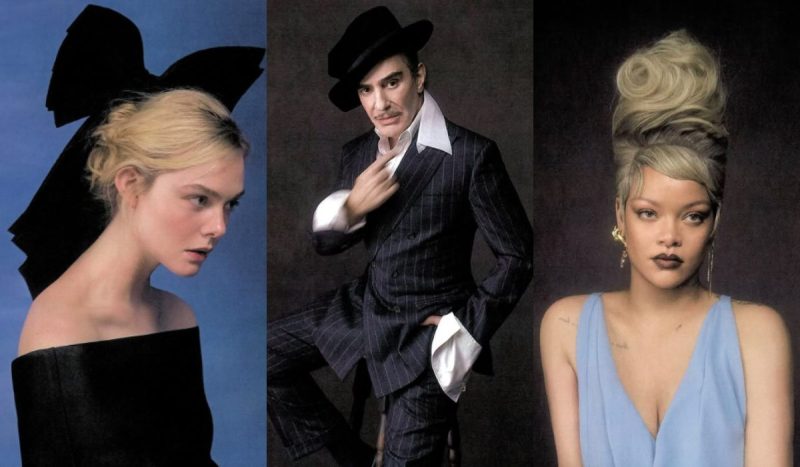
On 6 November, Kering appointed Martine Rose creative director of Balenciaga. She will enter the ateliers at the house’s historic address on Avenue George V for the first time on 16 November, with her debut collection scheduled for next February’s Paris Fashion Week. A woman designer of colour, like Grace Wales Bonner, appointed creative director of Hermès menswear in October 2025, Rose had been a name whispered in fashion circles for some time. Ever since Demna’s departure, her experience at the house and her close working relationship with the Georgian designer had made her seem a natural choice to provide a degree of continuity. Even so, Rose has never formally designed a womenswear collection, let alone presented couture at the head of a Maison.
Who Is Martine Rose: From London Rave Culture to Her Own Menswear Label
Martine Rose has never courted the limelight. Born in London in 1980 to Jamaican parents, she grew up with reggae and rock, the work of Hamnett and Gaultier, and the city’s rave scene, which she discovered alongside her cousins and sister. One of her favourite possessions, she has said, is still an acid house smiley T-shirt, given to her by a cousin in 1989 and forbidden by her mother. Her heroes were the Lo Lifes and Dapper Dan, figures from working-class neighbourhoods who turned the codes of luxury inside out. After a year at Camberwell College of Arts, she graduated in fashion design from Middlesex University in 2002. Five years later, she founded her eponymous menswear label, at a moment when men’s fashion was still largely in thrall to a rather conventional, dandyish idea of tailoring.
Subcultures, Outsiders and Unconventional Fashion Shows
She built her following slowly, around a strong sense of belonging. Her vocabulary draws on subcultures, music and the codes by which people recognise one another. In clothing, that means exaggerated proportions and fabrics rarely associated with menswear: fur, satin and Lurex. “Fashion is about outsiders, and I’ve always been drawn to outsiders, alternative people,” she told AnOther magazine in a 2020 interview. Her shows have taken place in a street market, a climbing gym, a dead-end street in Camden and, for autumn-winter 2020, her daughter’s primary school in Kentish Town. That collection brought together latex, over-the-knee cowboy boots, trench coats and knitwear reworked as scarves, alongside tailoring printed with the names of London neighbourhoods close to her heart: Clapham, Tottenham, Croydon and Tooting. Not quite the places fashion houses tend to advertise as their natural habitat.
Balenciaga, Nike and Craigslist: Martine Rose’s Collaborations
Between 2015 and 2018, Rose worked as a menswear consultant at Balenciaga, playing a part in the development of the brand’s identity under Demna Gvasalia, as he was still known in full. In 2018, she joined forces with Nike on a capsule collection comprising a tracksuit and a sneaker, both drawing on British and American sports culture. Asked by i-D about the decision to use a platform so far removed from the usual machinery of fashion marketing, she explained: “Craigslist felt like a natural extension of my work, which also involves finding interesting platforms and new ways of making my clothes available, making my events accessible. There’s an element of democracy to Craigslist that I find interesting and fresh.”
Pitti Uomo 2023 and the Beauty of Everyday Things
In January 2023, she was guest of honour at Pitti Uomo in Florence. She took over the city’s Mercato Nuovo with a tribute to Italo disco and a collection of clothes originally made for toys, enlarged to human scale. Many of the models were old friends and longstanding collaborators, her “London family”: a cast of faces with stories to tell, far removed from conventional ideas of beauty. Rose, and designers working in a similar vein, have helped widen those ideas, bringing them closer to the people we actually encounter in everyday life. The organisers of Pitti recalled that, at their first meeting, the conversation had been less about fashion than about family, schools and the weekly shop in working-class neighbourhoods. “I see the beauty of everyday things. I like layering, and I look for beauty in things where it’s easy not to find beauty, but rather ugliness,” she said.
By June that year, the company had twenty employees and around two hundred stockists. In December, Rose was named British Menswear Designer of the Year at the Fashion Awards.
The Martine Rose Style: Gender Fluidity and Signature Pieces
Though her work is exclusively menswear, the men in her collections bear little resemblance to the usual fashion ideal. The world of Martine Rose contains beer mats and football shirts (sometimes embroidered with her own name), alongside ruffled shirts and fur coats. In 2019, Vogue observed that the label’s defining features — cropped silhouettes, flared trousers, oversized denim and dropped shoulders — had become part of the wider fashion vocabulary, adopted by major houses from Louis Vuitton to Dior. The meeting of masculine and feminine is particularly evident in some of her most recognisable pieces. Take the reversible bomber from spring-summer 2014: plain black nylon on the outside, white lace lining on the inside. One is currently listed on eBay for around £885.
Fashion as a Political Statement
Gender fluidity is part of a wider commitment to making fashion political. Rose has repeatedly spoken about the rising cost of living in London and the politics surrounding Windrush and Brexit, which she believes have squeezed the communities that made the city what it is. Her interest in clothes is as much sociological and anthropological as it is aesthetic. “What people wear, how they choose to wear it, why, the communities they choose to belong to are still radical acts,” she said in an interview with Slam Jam, returning to the longstanding entanglement of fashion, politics, rebellion and youth movements.
Tottenham, Community and the Spring-Summer 2026 Collection
Community, always understood in its particular place, is as central to her work as subculture. Her studio is in Tottenham, where Chinese, African, Caribbean, South American, Turkish and Kurdish communities live alongside one another. She says all of this finds its way into her collections. One show was staged in a South American shopping and community centre where she regularly goes for lunch, bringing the fashion world into the part of London that had helped sustain her label. Her spring-summer 2026 collection was a love letter to the city: shrunken jackets, blazers and coats drawn in at the waist, inflated outerwear, socks attached to trousers and T-shirts that doubled as bags.
What to Expect from Martine Rose at Balenciaga
From 16 November, Rose will be working in a Maison unlike any of the places where she has shown her collections. She will bring those places with her. And, one hopes, a little of the fresh air the fashion world so badly needs.