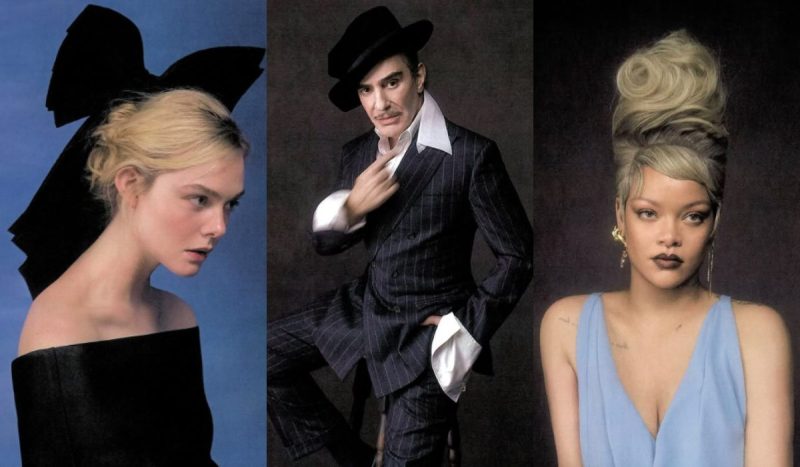
From celebrity covers to immersive installations, Hungarian photographer Szilveszter Makó has built a visual world that has become instantly recognisable. His success speaks to the power of a distinctive visual signature, but also to the delicate balance between recognisability, editorial identity and virality.
Szilveszter Makó’s Covers: From Rama Duwaji to Alicia Keys
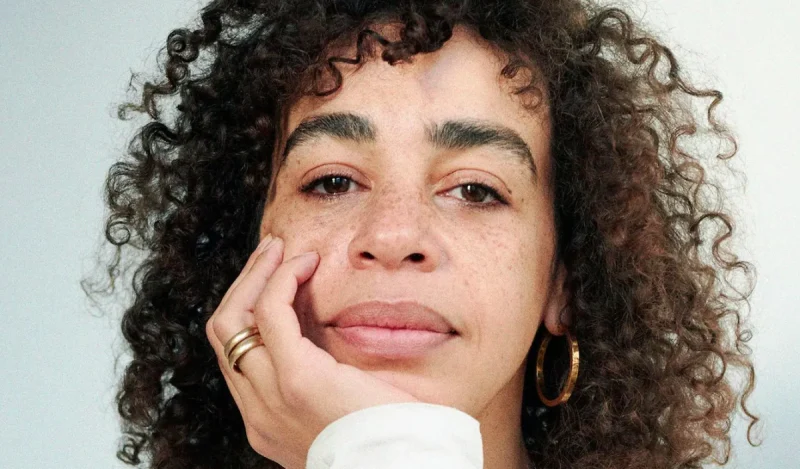
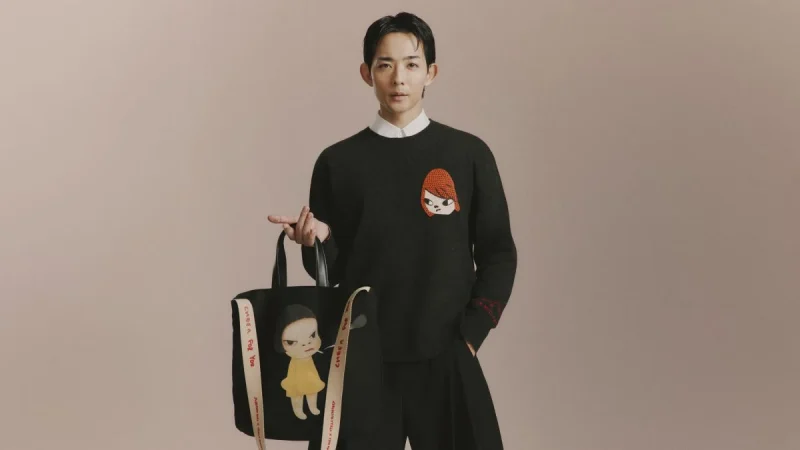
Anyone with even a passing interest in fashion will almost certainly have come across a cover by Szilveszter Makó. From Rama Duwaji, New York’s first lady, for The Cut, to Hunter Schafer for ELLE, Gigi Hadid for The Wall Street Journal Magazine and Jenna Ortega for Vogue US, his work has become a familiar presence across fashion publishing. His latest cover, at the time of writing, features Alicia Keys for Vogue Italia. Born and raised in Hungary, Makó has been taking photographs since his teens and is now based in Milan. His images exist somewhere between reality and artifice, drawing on Renaissance painting, surrealism, Dadaism and Eastern European folklore, alongside childhood memories and the visual culture of post-communist Hungary.
Bauhaus Ballet: Makó’s Immersive Installation at New York Fashion Week
His sets resemble miniature theatres. Painted backdrops, optical illusions, everyday objects, fabrics, flowers and animals come together in scenes where photography and painting are almost impossible to tell apart. His subjects often appear as dolls inside a box, one of the most distinctive motifs in his work. The effect is somewhere between the fairytale and the unsettling. At the most recent New York Fashion Week, Makó presented Bauhaus Ballet, an immersive installation spread across six rooms, bringing together photography, fashion, objects, set design and Hungarian folklore. Visitors could move through spaces that played with perspective and scale, stepping inside the artificial world of his photographs. The temporary installation turned his compositions into places to inhabit, with highly Instagrammable sets where visitors could take their own pictures in the Makó style, or at least give it a go.
The Debate: Are Makó’s Covers Too Similar?
That strong visual identity is part of what makes his work so appealing to magazines. It is also what has brought it under scrutiny. The debate gathered pace after several covers appeared in quick succession. Hunter Schafer for ELLE, Gigi Hadid for The Wall Street Journal Magazine and Jenna Ortega for Vogue US all attracted attention for their visual similarities. The most obvious example was a turquoise feathered Balenciaga dress worn by both Hadid and Ortega, prompting accusations that Makó was repeating himself. What tends to get lost in the discussion is that these are two separate creative processes: photography and styling. The latter is often shaped by commercial arrangements with fashion houses and their full-look requirements.
Diet Prada and Makó’s Reply: “Vision, Style and Direction”
The images also came under the scrutiny of Diet Prada, which published Makó’s response. He urged people to distinguish between “vision, style and direction”, explaining that his “box” is reconstructed around each person he photographs. The same dress, then, can produce an entirely different image depending on who wears it. Beyond the individual garment, there is a contradiction in the way we judge fashion imagery. Spend a little time in the fashion corners of TikTok or what used to be Twitter and it becomes fairly obvious. For years, we have complained about celebrity editorials in which subjects are photographed against anonymous backdrops, with little visual ambition and barely any creative direction. Now, when a photographer arrives with a recognisable point of view, something that sets his work apart from this kind of production, is he really to be criticised for being too consistent?
Photographers, Art Direction and the Changing Magazine Industry
There is a longer history here. Major fashion publications have traditionally built their visual identities around leading photographers, from Steven Meisel and Mario Testino to Annie Leibovitz at Condé Nast. Exclusive contracts often gave these photographers the time and continuity to experiment. But a magazine’s identity was never the responsibility of the person behind the camera alone. It also came from editorial direction: the decision to bring different photographers, settings and approaches to styling together, giving each cover its own character. Today, as Jill Demling, who oversaw the covers of American Vogue for almost twenty years, explained in a recent article by Amy Odell for Back Row, publications have fewer resources to sustain these arrangements. Celebrities, meanwhile, have gained greater influence over creative decisions and increasingly arrive with their own preferred collaborators. It is not just the budgets that have changed. The relationship between the people commissioning an editorial and those making it has changed, too.
Exclusivity and Etiquette: Who Is Responsible for Visual Identity?
With print publishing under pressure, and covers now judged within seconds on an Instagram or TikTok feed, Makó’s aesthetic offers an almost irresistible reason to stop scrolling. The problem is that the industry tends to return to whatever works, repeating it until the appeal wears thin, then blaming the artist for the resulting sameness. Page Six reported the view of an anonymous source who suggested that Makó needed to learn the “etiquette” of a business built on exclusivity, placing the responsibility on the photographer for working with several publications around the same time.
That argument puts the burden on a freelancer who, like so many others in the industry, is simply trying to make the most of opportunities to promote his work. Makó has also told Diet Prada that he often pays out of his own pocket to produce the covers everyone wants. If a publication wants exclusive access to a photographer, it should be prepared to pay for it. An independent artist cannot reasonably be expected to protect the visual identity of competing magazines, any more than a publication can outsource the whole of its visual identity to an external collaborator. That is where art direction comes in: an editorial vision capable of interpreting a photographer’s language and bringing it into dialogue with the magazine’s own.
The Curse of Overexposure: Makó, Anne Hathaway and Andrew Scott
In a recent article titled The Curse of Overexposure, the Financial Times compared Makó’s situation with that of actors such as Anne Hathaway, whose five films have been released this year, and Andrew Scott, who appeared in two films during the autumn season. The newspaper counted at least six covers by Makó in a single season, from Interview and Harper’s Bazaar to The Wall Street Journal Magazine and Vogue US, with another five reportedly in the pipeline at the time of publication. The risk is that familiarity starts to look like repetition, and that an artist who once created visual concepts becomes the concept being sold. There is also the industry’s endless search for the next big name, accompanied by the inevitable question: is this the new Paolo Roversi, or the successor to somebody else?
Talent as a Trend: What Comes Next for Szilveszter Makó
Talent is treated like a trend, something to be consumed. Attention settles on one artist, stays there until the market has had its fill, then moves on. All the while, the artist is expected to reinvent themselves at a speed that leaves little room for the slower business of creative exploration. The answer was never to have more Makós. It was to recognise that there is room for more artists with a strong sense of authorship, and that audiences are still hungry for different images, for individual visions with something to say. It will be interesting to see where Makó takes his work next, away from the expectations that have inevitably gathered around it. He put it best himself: “I’m evolving, just not as fast as you scroll.”