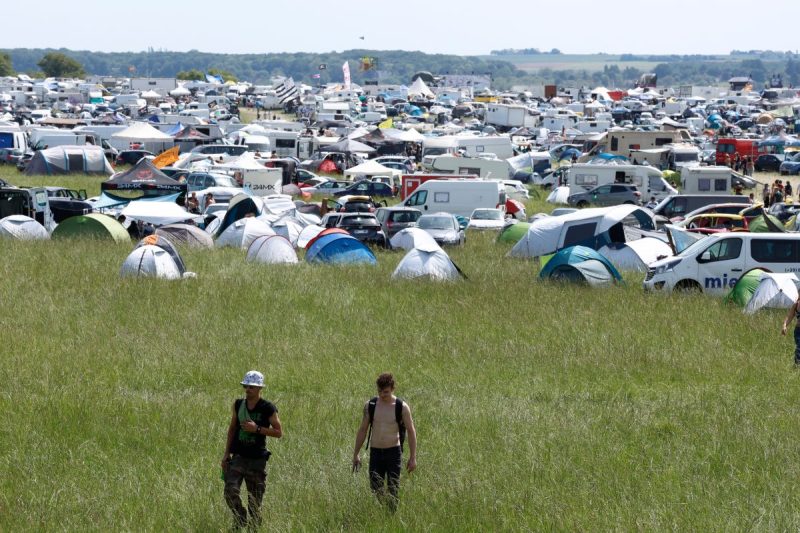
The heatwave has been a disaster for independent music festivals, which were already struggling.
Just last weekend there were half a dozen concert cancellations and festivals that were called off. Some may never return.

In recent weeks, we have witnessed an ongoing controversy: about Erri De Luca at Salerno Letteratura, about Eskol Nevo at Il Libro Possibile, regarding the antifascist declaration of Più Libri Più Liberi. Organizing literary festivals has always been challenging, but now it has become a nightmare.
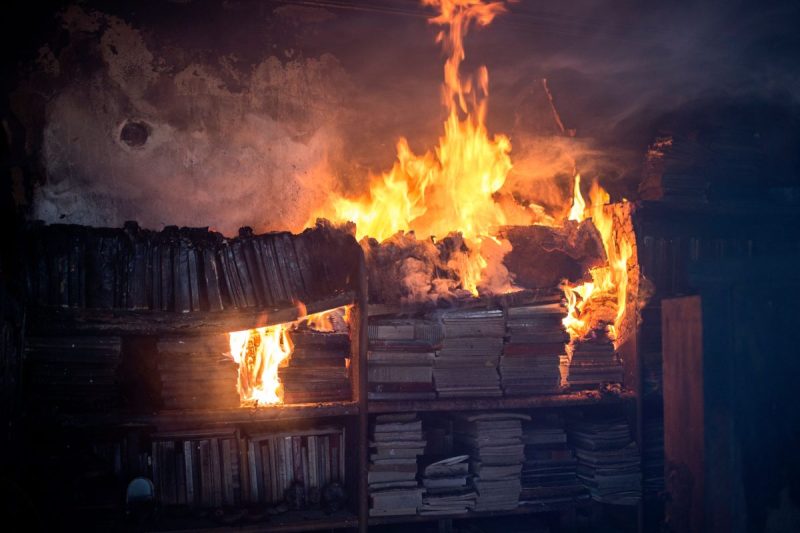
Organizing literary festivals has become a nightmare. Each list of invited authors to speak or present books is followed by a small blacklist. Above each of the posters for the thousand festivals across the peninsula – known or unknown, including the more prominent ones like the Turin Book Fair and Più libri più liberi in Rome – there should be a warning label reading FLAMMABLE MATERIAL.
It only takes a spark for the fire to ignite. Every year, Zerocalcare or other authors announce their participation and then withdraw due to political incompatibilities with stands or guests deemed unacceptable. This leads to heated statements, small boycotts, calls for resignations, and the signing event is canceled. To avoid finding themselves in this unpleasant situation every year, in anticipation of Più libri più liberi next December, the new governance of the small and medium publishing fair has decided to play it safe and avoid potentially incendiary situations. Heaven help us: even Giorgia Meloni herself intervened to denounce the climate of censorship (participants were asked to share constitutional values, i.e., the foundations). The festival’s statement replies that in light of the reactions, they will proceed with “further careful consideration for institutional respect”. We shall see.
Just in recent days, the Salerno Literature Festival caught fire due to statements made by writer Erri De Luca regarding the genocide in Gaza, which came just days before the festival itself began. De Luca was supposed to give the introductory lecture, a speech that sets the cultural and political atmosphere of the event. But his remarks, however well-known, caught the organizers off guard to the point that they preferred to move his intervention, to lighten his role, relocating it within the program of meetings. Gennaro Carillo, one of the organizers, clarifies that it should not be called censorship, but the introductory lecture is still canceled. At that point, De Luca announces that he will no longer participate for personal reasons. Thus, the meeting is also canceled. For days, the organizers find themselves navigating a media storm. Paolo Di Paolo, another organizer, is even mocked byRepubblica, a newspaper he has collaborated with for years, in an anonymous article. Friendly fire.
That debate has not yet cooled when, on the still smoldering ashes, a controversy erupts over another invitation to another festival. This time, the candidate for the pyre is Israeli writer Eskol Nevo, invited to the festival Il Libro Possibile held between Polignano and Vieste. There is a list of people who do not accept his presence because he is not critical enough of the Israeli government. As usual, social media goes into a frenzy, the poison spreads, and polarization is the new gunpowder. It seems like yesterday that there was discussion about the Venice Biennale, Russian artists, and controversial pavilions, about whether to go or not, boycotts, and censorship; it seems like yesterday that Chiara Valerio, leading the past editions of Più libri più liberi, found herself managing many small fires and then a combustion that ignites the entire program due to the presence of far-right publishers and Leonardo Caffo (the meeting is canceled) until the storm’s impact seems to engulf her. And here we are again, with petitions to remove scheduled meetings.
A few days ago, Andrea Colamedici wrote on social media that accepting to organize a cultural festival now means being a potential target. He said: “If the price for being in an exposed position is accepting that you could be overwhelmed at any moment, then that position will end up being taken mainly by those who can afford to not care”. He concluded: “We are essentially building a public sphere that selects people based on their ability to survive humiliation.”
Italy is an endless, gigantic literary festival, every village has its own program of meetings, every small square a panel, stages set up along the entire coastline of the peninsula, islands included, festivals in the Dolomites, mountains of books, mountains of talks, especially in summer. But the lists of invited and uninvited guests, selected meetings, and then canceled ones can suddenly become a powder keg. Festivals are places of ideas, places of doubts and reasoning, they are a paradise for those who cultivate reflections and reconsiderations. Organizers are human beings, and human beings should not be chosen based on the thickness of their armor, on how well they can withstand high temperatures, nor should individual writers be boycotted. For crimes and apologies for crimes, there are laws; the Constitution has already responded once and for all to fascism. In fact, if you look closely, what are all these literary festivals if not the faces with which the plurality desired by the Constitution manifests itself? And who are the festival organizers if not people who followed a dream and woke up in a nightmare?