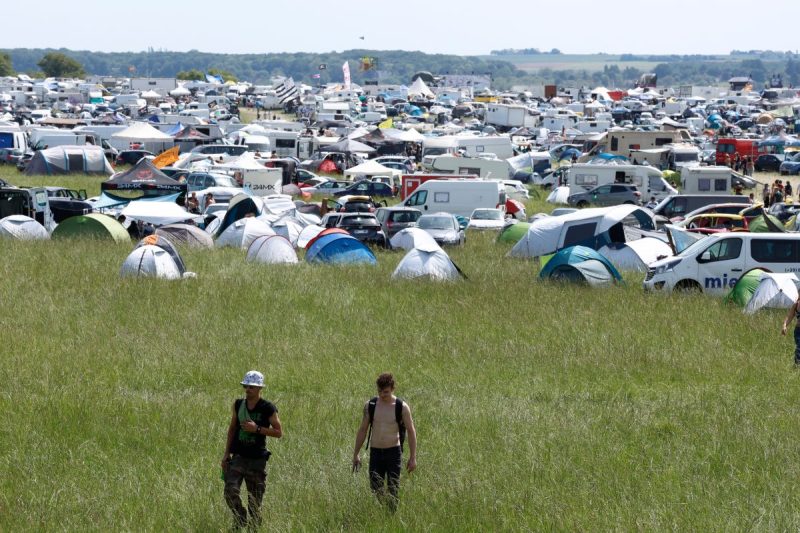
The heatwave has been a disaster for independent music festivals, which were already struggling.
Just last weekend there were half a dozen concert cancellations and festivals that were called off. Some may never return.

On the eve of the Italian minitour that will take him to Bologna, Rome, and Milan, we met Macbriare Samuel Lanyon DeMarco, known as Mac, to talk about guitars, chainsaws, gardens, and records.
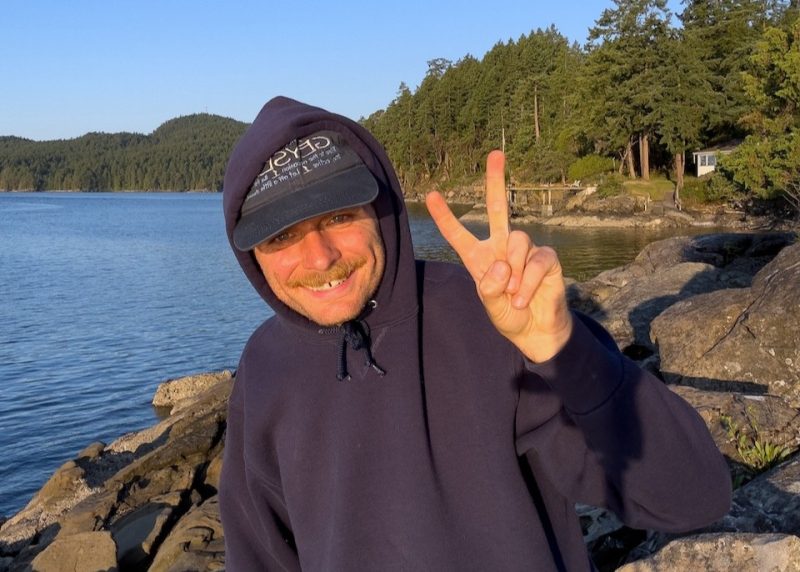
Mac DeMarco answers questions like he makes records: without too many formalities, following the thread of what feels true and that almost impressionistically imprints itself in his mind. We met him just before the Italian dates of the world tour (on June 27 in Bologna, on June 28 in Rome, and on June 30 in Milan) in support of Guitar. All correct, since his sixth studio album, released last year and recorded in his home in Los Angeles in just one month. He composed it mainly, he says, to satisfy the desire to go back on tour. In the meantime, he is seeking peace, also thanks to simple tasks like tidying up his garden with his brand new chainsaw.
ⓢ Your new album Guitar was written and recorded in a month, at home, alone. Do you think that time, space, and resource limitations are actually better creative conditions than having everything you want?
Yes, I think it’s sometimes necessary. Having a finite amount of time in that situation forces you to do something, you just have to make it work. In reality, no one was breathing down my neck, after all, I am the label myself, but in a way it forced me to finish what I was working on.
ⓢ Your records have a particularly relaxed, slightly out-of-tune, distorted sound. Is that something you seek, or does it just happen?
I think it’s fun, honestly. I’ve been doing things this way for so long that it’s just normal for me, I hardly notice it anymore. With this album, I wanted to say something simple, to let the sound and the words come out naturally and then keep what comes out. The more natural I feel about what I’m doing, the better I feel in the end.
ⓢ The album is called Guitar. Why is that?
Before recording, I imagined putting a lot of synth and a whole series of things, but at a certain point I realized that only one song had synth, “Shining.” And I thought: if I take it out from there too, the album only has guitars. So it became curious to call it that. Ironically, I even thought about not playing guitar during the concerts. But then I ended up playing it, so that plan didn’t work.
ⓢ So this record talks about your relationship with this instrument.
Yes, and it’s almost like a love letter. In my younger years, at the beginning of my career, playing acoustic guitar wasn’t considered cool, but I did it anyway. And I love it. The guitar is the most democratic instrument, everyone plays it a bit, knows how to make a song, maybe owns a really beaten-up one. So I wanted to celebrate it. This record works like when you repeat a word so many times that it stops making sense. That was the feeling, and it makes me love it even more.
ⓢ Of all the parts of being a musician—writing, recording, playing live—which is your favorite?
I love recording. Writing is perhaps the most challenging part. I mean, it’s not hard, but you feel it’s time to really get to work. The idea behind this album was that I wanted to go back on tour. I had been home for so long that I needed to find that balance between going, coming back, playing, recording. In fact, I love all these elements. I just met another musician at one of the tour stops who told me: we have the best job in the world, basically we make music and play it with our friends. And it’s true, it’s incredible.
ⓢ You have become a cult figure in independent music. People feel a very personal connection with you. Does it create pressure for you, how do you experience it?
It depends on where we are in the world, in some places it happens more than in others. But it has indeed become a huge thing, honestly my life has changed a lot. When people give weight to your music, everything changes, especially with young people. A lot has changed since I started playing, people come to concerts for different reasons, to participate in different ways, not just to listen to rock music. Many people get emotional with some of my songs. I don’t know them, and they don’t really know me. But they know me through my songs, and that’s something precious. It’s strange, but it’s also incredible. You can go talk to people after the show and feel that there’s something there. When someone says I know what you’re talking about in that song, I’ve lived it too, that’s a connection. It’s exciting, it’s crazy, it’s special. Sometimes I wonder what it would be like to have a different kind of relationship with the audience, like some other artists do. But what I have is beautiful, and I protect it.
ⓢ You’ve lived in many places, you’re Canadian and have lived in Montreal, then New York, Los Angeles. Do you think the place you live really changes who you are, or do you just carry yourself everywhere?
I’ve changed many places, often alone, and I think you carry yourself everywhere, there’s no escaping yourself. But it’s also true that a place can infect you, whether you like it or not. It’s hard to explain what makes a place “that place” or why certain places stick to you so much. What changes you are the people, the energy you breathe. When I moved to Los Angeles, they told me “here you are, now you will also make your Los Angeles record.” I don’t know if This Old Dog is, I had just arrived, but now that I’ve lived here for ten years maybe Guitar is also a product of my life in LA. It wasn’t intentional, but it just happens.
ⓢ How do you find Los Angeles? Do you consider it your city now?
Los Angeles is a very strange place. I love it in many ways but I find it complicated for just as many others. I have great friends there, and in a way, I’ve found a way to live in the city that works for me. But it can be very alienating. Very cold. So many strange people, so much loneliness, so much pain. But it has an energy. It’s a crazy place.
ⓢ From the outside, you seem like a normal person. Is that true? Do you really have a routine, little rituals that you love?
I try to pretend to be ordinary. I really love gardening, fixing plumbing, cutting my palm tree with the chainsaw. I like cleaning the yard with those leaf blower things. There’s a saying I heard once: when you think you’ve made it, you want to hire someone to do all those little things for you. But when you’ve really made it, you do them yourself. And I think that’s true. There’s something meditative about it, it makes me feel good. People think I’m sitting around writing songs or out doing concerts all the time, but doing those simple things grounds me and makes me feel good.
ⓢ Is there something you’re really good at, where you feel like a master?
Honestly, I think I’m very versatile, I’m not a standout in any specific thing, and that goes for music too. I can play many instruments well enough to get by, but I’m not a master. I know people who are masters of their instrument, and I can’t even imagine what that feels like. I think it applies to many areas of life as well, even for all those things I was talking about earlier: I do them, I enjoy them, but it’s not like I always know what I’m doing, I just do it the best way I know how and that’s it.
ⓢ And something you’ve accepted not to know how to do?
Cooking. I’m not a great cook, and partly it’s my partner’s fault, who cooks so well that I hardly ever need to do it. But if there’s an opportunity to cook, I try. I can make a few dishes, but even when I try, the people who know me laugh in my face, so for now, I don’t put too much effort into it.
ⓢ You said in an interview that Guitar is “the most authentic representation of where I find myself in life at this moment.” How is your life at this moment?
Serene with a touch of constant turmoil. That’s the honest version. I’m seeking peace, I’m really looking for it.
ⓢ Are the days when you talked about Salad days really gone?
Those that literally respond to the textbook definition of “salad days” may be over. But I think new doors always open in life, so there are new paths, opportunities that I live and embrace with the same fervor I lived those days.