The heatwave has been a disaster for independent music festivals, which were already struggling.
Just last weekend there were half a dozen concert cancellations and festivals that were called off. Some may never return.

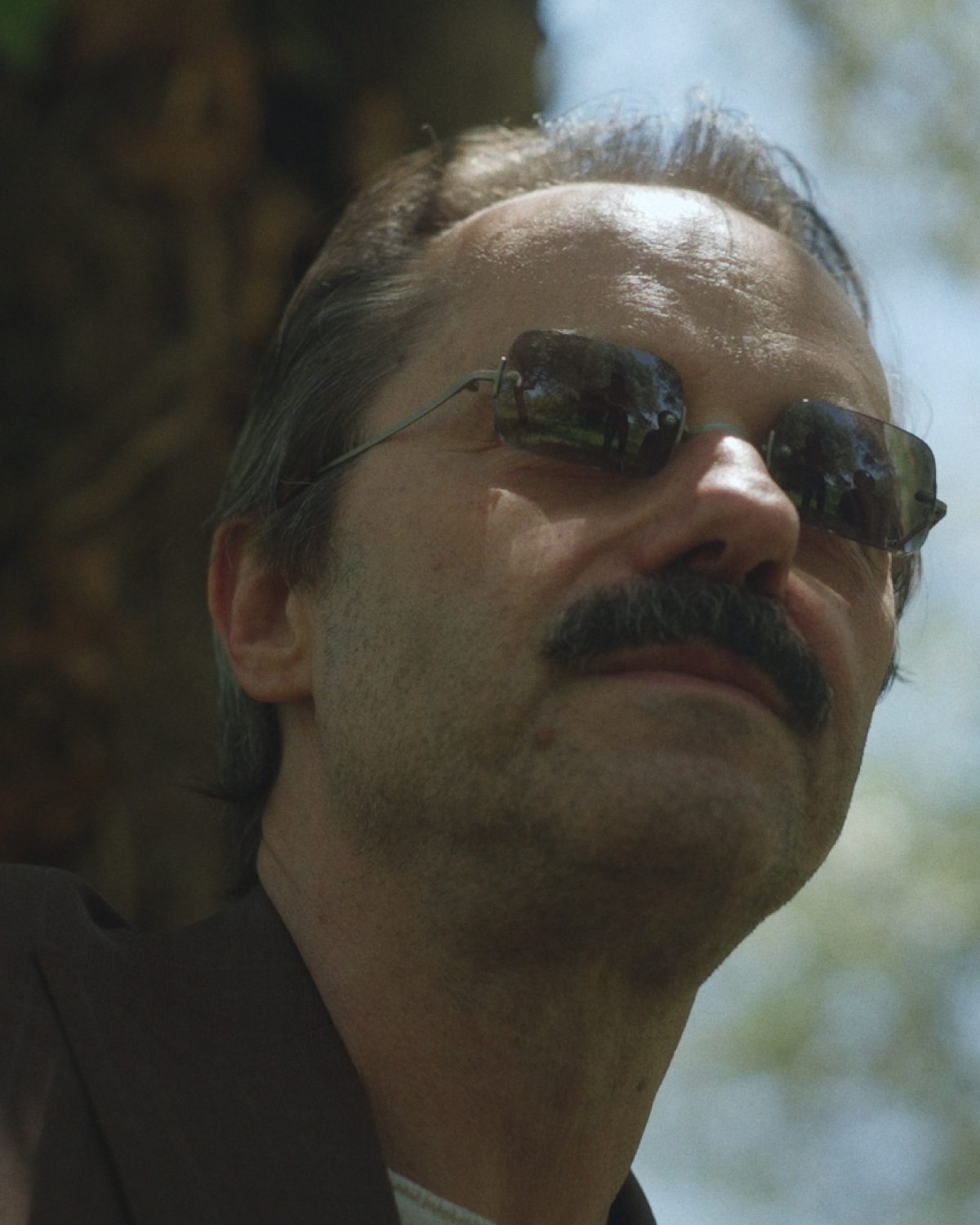
For our new digital cover, we met the star of the Italian film of the year. It was a long chat about cinema, art, politics, the direction of Francesco Sossai, and the poems of Pierpaolo Capovilla. And about Carlobianchi's mustache.
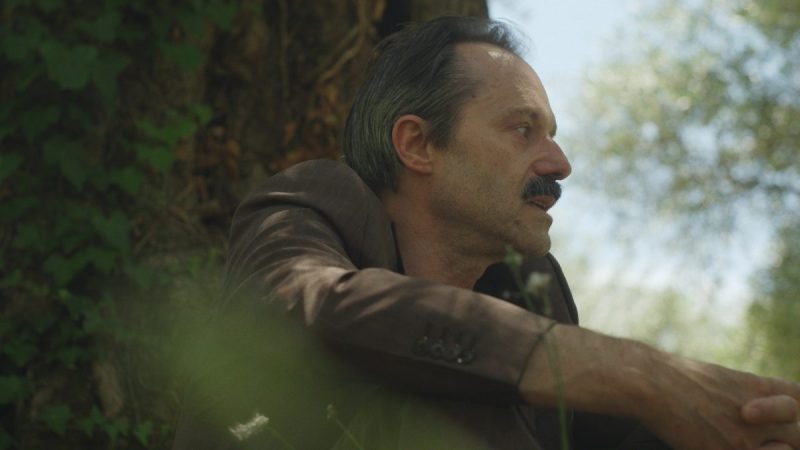
The concept that Sergio Romano often uses to explain himself is that of enchantment. He describes encounters with people he likes as “enchanting.” The way life sometimes unfolds as if driven by a narrative will, as if everyone were the protagonist of a story, makes him feel “enchanted.” It is always with this word that he recounts all the incredible things that have happened to him in the past year: the meeting with Francesco Sossai, the friendship with Pierpaolo Capovilla and Filippo Scotti (“my buddies,” he says), the packed theaters, the David di Donatello won for his portrayal of Carlobianchi. All of this, Sergio Romano explains to himself with this sort of “magic,” this mystical and benevolent energy that pervades his world. Only one thing, even after all this time, remains inexplicable to him: the success of the Città di pianura. That, he says, “remains a mystery.” We tried to solve this mystery in the conversation you are about to read.
Sergio Romano is the star of our new digital cover. You can also find this interview on our YouTube channel.
ⓢ Sergio, it has been a while since you won the David di Donatello for Best Leading Actor. What has stayed with you from that evening?
It left me a bit stunned, but also with this feeling of gratitude. Because it’s as if, all of a sudden, I saw my whole life in front of me. When I got on stage, I asked myself: what am I doing here? How did I get here? And it’s also a moving thing, I must say. I wanted to thank everyone and, of course, it was precisely the time I forgot to thank Pierpaolo (Capovilla,ed. note) and Filippo (Scotti, ed. note), who were my buddies for a month. With them, a collaboration was born, a friendship without competition. With Filippo, there was the wonder of meeting a younger man, mature, strong, a good actor, with whom there was a wonderful, rich dialogue. And in Pierpaolo, I found an artist who completely offered himself, even though acting is not his job. He gave himself as an artist, offering his vulnerability. And that’s not easy, it’s not taken for granted, it’s something you have to work on. He was wonderful, with those blue eyes and his presence, a poetic imperative over everything. It was a beautiful encounter. But we were saying… Ah, yes. What the David left me is, on one hand, this feeling of gratitude for the people who inspired me, who welcomed me. I received a lot of messages that I couldn’t respond to all, also because I try to respond personally, even on Instagram. I’m from the twentieth century, you know! I don’t like to say “thank you all, bye bye.” But it’s an immense job and I get lost. I also found people I hadn’t seen in a long time. And then, the other thing that the David left me is a greater sense of responsibility.
ⓢ In your acceptance speech, you said a phrase that many pondered in the hours following the ceremony. I quote it: “Our country needs to be told, to be seen, just as a child needs to be seen.” What does it mean for you to see and tell this country at this moment? What did you mean by that phrase?
Premise: when I got on stage, I didn’t understand anything anymore. I had prepared a little note, which I had in my pocket, but I didn’t pull it out, like an idiot. And I forgot to mention Filippo, Pierpaolo, as I told you. But there’s one thing I liked about that moment, something I needed to do: when at the beginning, brandishing the statuette, I shouted “Bocceeeee!” It was a kind of liberation because you have to celebrate a victory, also because it’s not just for you. Here’s something that struck me a lot: I realized that a victory is never just yours. There’s someone watching you, sharing your journey, and if you make it, they feel encouraged too. As for the phrase, that phrase… It appeared in my mind a few hours before the ceremony: our country needs to be told, it needs to be seen, just as a child needs to be seen. The child that exists in each of us needs to be seen because we need to reflect in the eyes of others. I meant to share with my colleagues, with the entire cinema world that was present there, a methodological suggestion, a question to ask ourselves and not a definition to give ourselves. I prefer to leave that question open. Among the many things we have to do, making cinema, doing the arts, dealing with the world of culture, we can ask ourselves this question: can we try to see, to care for our country as a child, to relate to it and then each try to give our own answer.
ⓢ And what answer have you given yourself?
Look, I read a short book by producer Carlo Crestodina not long ago. It’s called It’s a Challenge to Make Cinema and I found it interesting because it proposes an attitude, a way of questioning, especially from the producer’s point of view, what kind of cinema do I want to make, what do I want to tell. I believe we need to be together, to share, to tell each other, to engage in deep dialogue, not only in the world of cinema but in art, in theater, among all those who deal with representation, so to speak. Because that can be the basis for a renewal of our work, and also for a sharing with the world of politics that produces laws that allow for a profound improvement of the entire world of art and culture. Precisely because our country needs to be told like that child inside us, who needs to look at himself and reflect to understand who he is. This is a fundamental function of art and culture: that’s where we need to put money, that’s where we need to put attention, but for free and not for a return. And I believe that this gaze, the gaze of the child, is fundamental in every field, even in the political one. To understand what a child needs, you have to enter into a relationship, understand what he says even when he doesn’t speak, what he wants, what he needs. And consequently, this leads you to understand what you need. Also because, I dare say: then life ends. This opportunity comes only once, for eternity. So it makes sense to do everything possible to find an answer to this question: what do you do with it? What do we want to do with it?
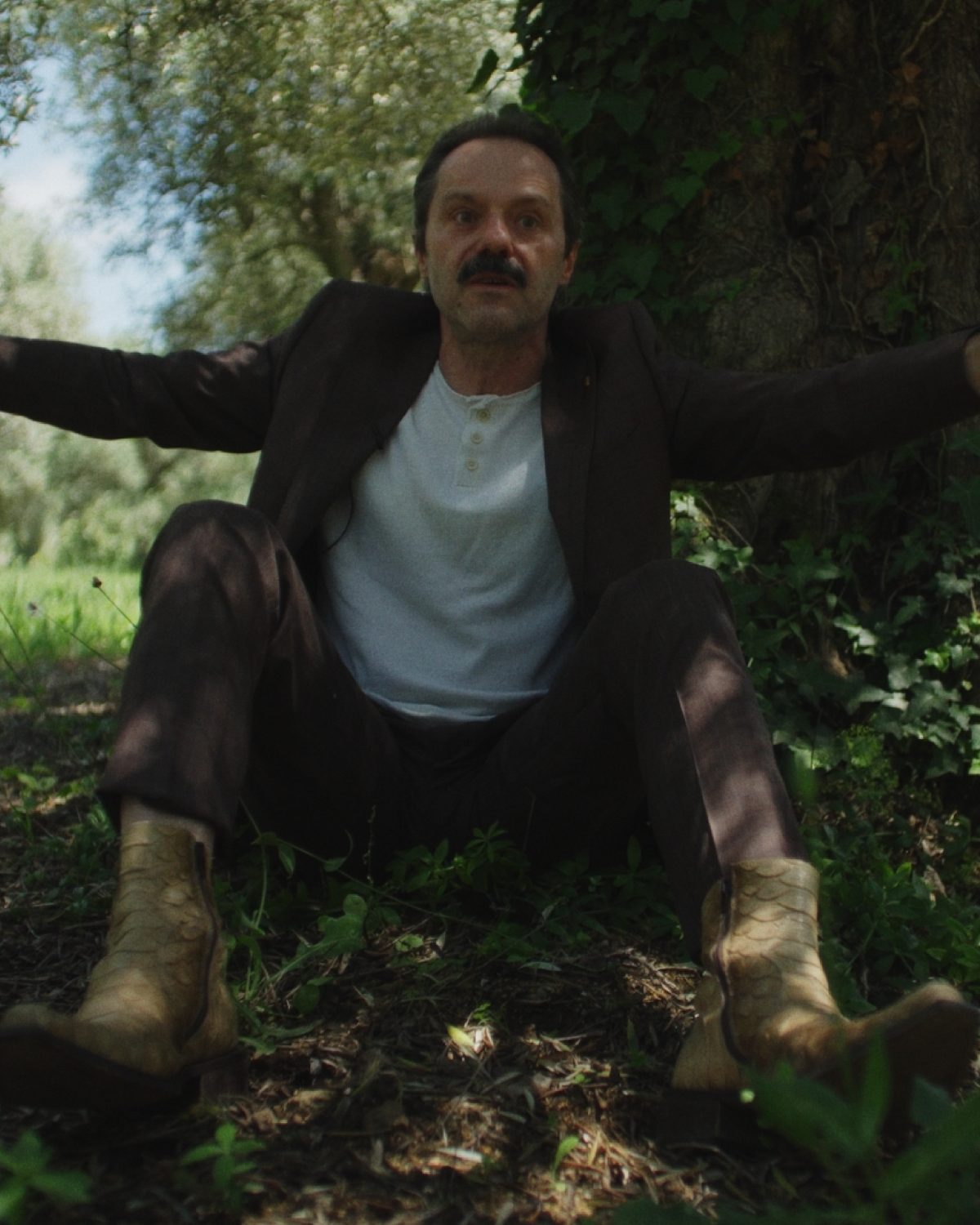
ⓢ You and Capovilla have become the dynamic duo of Italian cinema; before and during the David ceremony, you seemed very in sync, even though, if I may say, there is a certain distance between you in manners, tones, and character. When we interviewed Capovilla, he told us that to prepare to play Doriano and Carlo Bianchi, you had psychodynamic meetings, and that you had to learn to look each other in the eyes and recognize each other’s feelings without saying anything. I wanted to ask you: what was it like working with him? Did you become friends?
The encounter with Pierpaolo was enchanting. I found a man, an actor who offered himself to the work with generosity and without a safety net — and that’s not something to take for granted for an actor. He threw himself in with great generosity, offering parts of himself, playing in the situations we were in. With Pierpaolo, it was enchanting, I repeat. And then he is a sweet, kind person. He started with this passion for poetry, for Mayakovsky, and quoted these pieces from memory in a very effective, beautiful way. I remember one evening he sent me audio recordings of the entire script of theCittà di pianuraread by him: it was a way to share, to get closer to the material. It was wonderful. Did a friendship develop? Absolutely yes, and it has never been competitive. We always collaborated; we even had a moment, one morning, of a little spat, but that’s part of things. He is a man who offers himself in his sweetness, in his vulnerability. That’s not so common, not at all common. I still haven’t managed to go see one of his concerts, though. I like his songs, you know. But the idea of finding myself in all that pogo pogo… maybe I can’t handle it.
ⓢ How did you meet Francesco Sossai? What was your first encounter like? And when did you decide you wanted to make a film with him, a director that practically no one knew?
So, I have to start with Alessandro Roja. Alessandro Roja is making his first film as a director after a career as an actor. One of the characters in his film had been assigned to an actor, but there were difficulties with prior commitments, and that actor could no longer do the film. He, Alessandro, reopened the casting, I showed up for the audition, and that very morning he conveyed his enthusiasm for our meeting, and so we made the film. I remember that during the audition he was sitting under the table, but it didn’t bother me; on the contrary, I felt he was part of the moment. For me, that was an important sign, even if irrational. Because… what the hell does it mean, right? Someone sitting under the table while you’re auditioning. But I felt there was something between me and him. Anyway, in the meantime, Francesco had worked as an assistant on a series that Alessandro was shooting in Venice: they met, they encountered each other. Alessandro asked him about his projects, Francesco showed him his works, and of course, Alessandro said: where did this guy come from? Then Francesco came to Venice while I was also in Venice working. We met, he approached me and, with his Nordic modesty, told me, with a pale blush, that he liked what I had done with Alessandro. After that, months later, he called me and said: “Listen, we met in Venice, I wanted to propose this thing to you.” I received the script and the link to his two previous works, Altri cannibali and Il compleanno di Enrico. I read the script first, and already after the first pages, I understood that I would do it. As I continued to study it, more layers of meaning and infinite possibilities kept emerging. And then when I saw his other works, I had no doubt. In Altri cannibali there’s that wonderful scene, the one where the choir of alpine soldiers sings their love for the mountains… And you see the faces of these people. It’s a shot that moves from one face to another: that spoke to me, enchanted me.
ⓢ But in the end, have you managed to explain the success of the Città di pianura ?
It remains a mystery to me, honestly. How is it possible that people felt close to characters like Carlo Bianchi, like Doriano, to their friendship, to these places? I want to think that the theme of friendship is involved, and I believe it concerns each of us. Their friendship is non-judgmental and also very sweet: when they wake up in the morning after that night, two corpses, and Charlie White goes to finish his sleep by jumping into bed with Doriano… I believe that tells everything. But the success of the film… I don’t know, you should ask the people who saw it, not me. I hear around that this film has been very successful because it is “against,” meaning that people watching it wanted to give a sign against an establishment, against the usual ones who make the usual cinema. It seems to me a statement that takes away authenticity not so much from the Città di pianura but from the need that the people who watched it evidently expressed. It’s also true, however, that greater variety, greater differentiation in our cinema can only be beneficial. But I don’t want to digress; I want to return to your question. The success. Well, I believe it has a lot to do with the fact that friendship occupies a fundamental place in this film. It touches us all, right? The need to find true friendships in life. I believe there is an authenticity in certain things seen in the film. For example: the feeling of being lost like Giulio and finding mentors who help you grasp life. Perhaps it’s a question we all ask ourselves. I am an only child and felt the need to have an older brother who would help me perceive life, and I sought that in friendships. And then I believe that the other important thing about the Città di pianura is that it tells this sense of rebellion in the face of an annihilation that each of us experiences, I’m sure. You see, the problem is not being against the society we live in, but the fact that that society makes us feel this way. If people feel annihilated, exploited, robbed, if they feel they only have time to retire and die, if they suffer because we are full of diseases caused by the way we live… We probably need to take a “breath.” And even though these two, Carlobianchi and Doriano, are two scoundrels, they have been interpreted as two who at least rebelled. But in the affection that people felt for these two, I believe there is also a certain grace they have in facing things: they are kind, right? And that’s why they manage to see life as it is and accept it all.
ⓢ Speaking of authenticity, I believe that a large part of the credibility of the Città di pianura comes from the aesthetics you managed to give to the film. I think of certain details of the characters, for example, Doriano’s yellow shirt or Carlobianchi’s mustache, those peculiarities that remain so imprinted in the mind that it’s then impossible to imagine those characters without those “touches.” How much did you contribute to this aesthetic part of the work? And who decided that Carlobianchi should have a mustache?
The look, the setting, the set design: I find they did a wonderful job. That house, the anodized aluminum, Charlie White’s house with that bed, those blankets… I recognize them; I almost recognize the smell, not because I had them, but because I come from a working-class family by history and tradition, and I often went to houses like that, of friends and relatives. The aesthetics of the film is all the offspring of Francesco’s gaze, and it always has been; it’s a fact naturally recognized by everyone who worked on it. He listened to all the people in charge of set design, makeup, costumes, but the final decision was always his. As for Charlie White’s mustache: there was a moment when I had a beard, then we cut it a bit more, and in the end, we arrived at the mustache; that was all that was missing. He looked at me and just said “Yes.” I agreed, I felt this character with a mustache. And then we did that desperate hair, and at that point, we all understood it was done. By the way, Doriano’s yellow shirt, that outfit of his, and then the “Ostia Venezia” t-shirt… These were all touches from Francesco. His inventions. And it worked the same way for the script, which we used as it was written, with very small adjustments that he always decided. Sometimes, dialogues he had written to be performed up close he later decided to shoot from 100 meters away, in a different environment, changing the dimensions. Everything was a consequence of his imprinting. And I must say that this made the difference, feeling next to a man capable of managing the set with wonderful naturalness, without stress, very chill. There were difficult moments in which he never made anything weigh on the set.
ⓢ From everything you’ve told me so far, it seems to me that you are not one of those who believes in the separation between art and politics. So I have to ask you this question, which is impossible not to ask an Italian actor at this moment: the discussion about the so-called crisis of Italian cinema, about parasitism, about money spent poorly. Why are we having this discussion? And how do you experience it?
I believe that on one hand, we are experiencing a situation of malaise among workers that concerns not only cinema but our entire country. I believe it’s important to create the best conditions for people to work at their best because that’s the only way to achieve quality results. Then, simply, I think cinema should be considered an enormous value that needs to be protected and promoted in every aspect, not just the economic one. Honestly, I don’t believe there is niche cinema: niche cinema exists because you put it in a niche. That’s why I don’t believe that money should only go to big productions, to those who earn the most, to those who already have it. On the contrary, culture should not be solely or primarily tied to economic return; this way of reasoning, this linking of economic discourse to all discussions, I don’t like. I think that regardless of the economy, seeing movie theaters becoming supermarkets is a disgrace. And this doesn’t happen because people don’t go to the cinema… By the way, I believe they don’t go to the cinema: you make them work 10 hours a day, you don’t create social relationships in cities, what do you expect to happen? I tell you: when I went around promoting Le città di pianura I saw cinemas where the passion of the people, the managers, and the audience is wonderful. They do screenings, they hold meetings, they believe in it, they enjoy it. All of this generates and provides enormous support for the life of a country; it needs to be valued, it needs to be supported. Then, yes, cinema has problems, of course it does. But all this obsession with box office and funding I believe is a kind of legacy of realpolitik, right? Since we live in a capitalist society, we have all accepted the fact that profit comes first. But honestly, I don’t think it’s in the general interest that a film is seen by many people for reasons and only for commercial issues. I believe that films should be evaluated qualitatively. Yes, I understand, it becomes difficult, but we need to start reasoning; there’s no other choice.
ⓢ One last question. Let’s pretend you had all the money, all the time, and all the resources in the world to do exactly what you want: a film as a protagonist, as a director, as a producer. What is your dream, if you had everything you need to realize it? Is there something you absolutely want to do in your life?
Perhaps I am not yet ready to answer. I know that I do not aspire to be a director: I like being an actor. I would probably also like to be a producer, just to direct, to try to propose something that feels closer to me. But at this moment, it’s still not clear to me. It’s a theme I’m still working on, which I feel the need to clarify for my own life reasons, so to speak. Now, what do I want to do? What is the perspective from here to twenty years? I don’t have this project clear. I’m sorry; I would only say things that come off a bit generic. I wouldn’t be sincere.