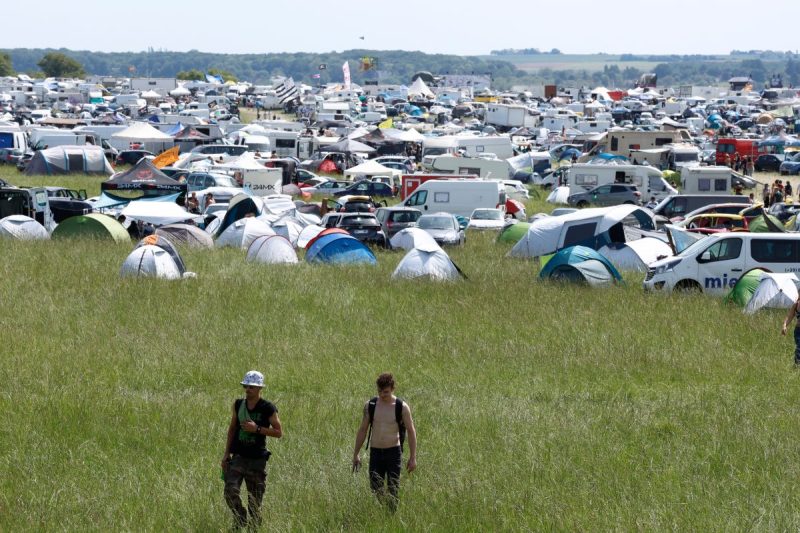
The heatwave has been a disaster for independent music festivals, which were already struggling.
Just last weekend there were half a dozen concert cancellations and festivals that were called off. Some may never return.

Future Days, the third work by the writer from Turin, is a grand yet intimate story about the value of friendship and how to maintain it through the decades. With an international pace.
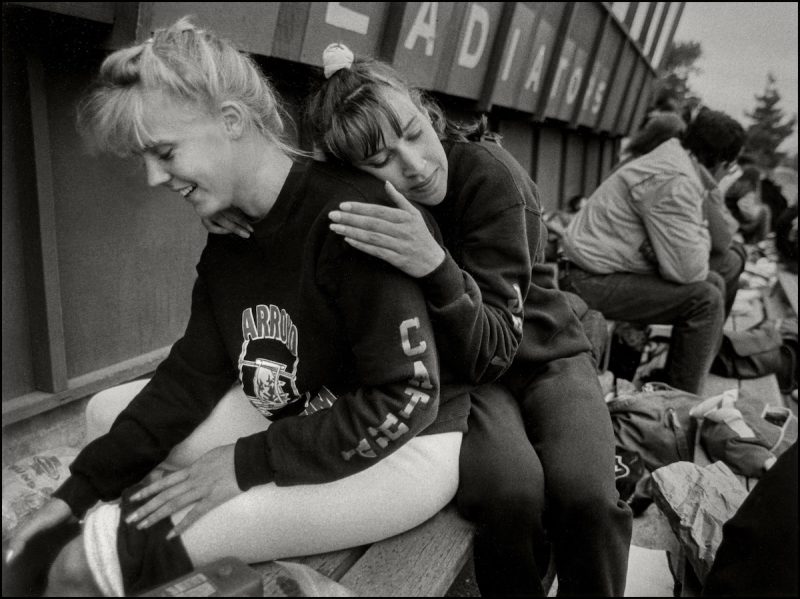
Italian literature seems to be in a happy moment: the last few years have brought a breath of lively, contemporary proposals, sometimes awarded in Italy, or finalists in some of the major prizes, and increasingly translated abroad, also there finalists in other awards, and able to enter into dialogue with international sensibilities. We had already written about this, in part, in an article called “The Italian novel has become expat“, where we gathered the voices of a series of writers who have set their works between Italy and the rest of the world, with protagonists moving along the lines traced by that Erasmus project that opened the doors of Europe to more than one generation. These are books that, starting from even intimate positions, linked to relationships, friendships, and loves, actually have a much broader ambition. That is, they do not view those friendships and loves through the peephole of the province, but place them on a stage that aspires to be universal, to speak, through those lives, of the changes in habits, customs, and feelings that are touching the lives of people all over the world. Following this path is also Future Days by Gabriella Dal Lago, her third novel, and first for Einaudi, of one of the most talented and ambitious writers we have today in Italy. Future Days is a story about looking back as thirty-somethings to see what we were as teenagers, a story of friendship between women, of relationships that, with difficulty, manage to span the decades of a life, and of how to keep them afloat despite the storms that the years bring with them.
ⓢ Let’s start with the generational word. Which is reductive, I realize. But let’s try to expand it, to make it positive. You, writing Future Days, intended to talk about, describe a specific generation of men and women who share common experiences, such as precarious work, geographical uprooting, and emotional precariousness?
That’s fine, I like it: let’s make it positive! I don’t know if I wanted to describe a generation, in the sense that I don’t know if what moved me was a kind of descriptive push, the intention to create a portrait and thus make a generation the object of the narrative, rather than the interest in making it the subject of a fictional narrative. It seems to me that it is in this sense that the word can be made positive: taking it as an element that positions us, rather than as a thematic lens. It seems to me that most of the time the term is used to talk about “a narrative that describes people aged 30-40.” I would like to use it from the other side, in a more “empowering” way: to use it to talk about a narrative that is conducted by people aged 30-40. It seems like a sophism, but in reality, it seems to me the key to inhabit the term, and not to be crushed by it.
ⓢ Future Days is primarily a novel about friendship. You take friendship seriously, as the most important of feelings, perhaps more important than love. What fascinates you so much?
That friendship radically structures our world and yet we pay little attention to it. And that this has protected it more from the projections and expectations and also from the stereotypes we have reserved for romantic and familial relationships: and that therefore for this reason it can be a ground today from which to learn new ways of weaving our networks of care and love, in a less hierarchical and more imaginative way. If you want the astrological answer: it’s because I’m an Aquarius.
ⓢ Both in this book and in the previous Hot Summer, you write choral novels. Yes, there is a protagonist, but there are so many figures surrounding her, that the feeling is always of being in a collective novel, and not in the classic novel where you follow the change of the heroine. Have you thought about this dimension of yours?
Yes, a lot. I think it’s a matter of positioning: a way of inhabiting the novel form that moves away from the protagonism of a character and her narrative arc, but opens up into other streams, which are like paths that unfold and create an intricate web. I don’t know, I never even think of talking about secondary characters, or supporting characters: I like this feeling of a swarm, of a choir indeed. And I like that there is a continuous questioning of the idea of objectivity, or truth: in this novel, for example, the first hundred or more pages are conducted by a third person totally leaning on a character, Irene, and the world that the reader sees is seen through her perspective, her eyes. And then, however, there is a break, and an entire part is seen from Ottavia’s perspective, and the world changes contours, right? One version fills the gaps left by the other and reshapes them. Which is a bit like what dialogues do, the encounters between characters: they transform, question, modify not only the course of the narrative but also its meaning.
ⓢ Thinking about a new form of the novel: does this have to do with it?
There is a beautiful collection of essays and interventions by Ursula K. Le Guin published by Sur in the translation by Veronica Raimo, called The Dreams Explain Themselves. Imagination, Utopia, Feminism: there are really enlightening passages in there, including one that says “I am slow to unlearn, but I adore my unteachers.” I grew up and formed myself reading and thinking of the novel as a kind of solid, monolithic, compact, and round form: then I met a lot of unteachers who with their work showed me that within the novel can also enter chit-chat, changes of direction, lies, reconsiderations, minimal and secret stories, and that structures can alternate and give way, and points of view can migrate and recombine. I am in a rather classic novel structure (even though I like to play with variations on the theme, in fact the four parts of the novel are each different from one another in the management of time, the form of the chapters, the rhythm, etc.), but I unlearn like this: multiplying the voices of the narrative, trying to make the writing of a novel resemble the unfolding of a party.
ⓢ A few months ago, on Studio, we wrote about a kind of “Italian expat novel,” very contemporary, all with protagonists scattered around the world. Even in Future Days the characters divide their lives around Europe. Is this a characteristic that a contemporary novel today cannot do without?
I don’t know if I feel like giving an answer that applies to the category “contemporary novel.” I place it within Future Days and in what I have done, and I tell you that, at the moment I decided to tell about characters who are people born in the nineties and lived in a middle-class urban context, it was impossible to think that none of these people had experienced uprooting. But it is precisely a kind of reality analysis that I do if I look around, if I look at my network of affections and acquaintances: people move, change homes, change places, organize parties to say goodbye and aperitifs when they pass through the city again for a few days. Let’s say it was a duty of realism to tell it.
ⓢ But where did the idea of Future Dayssprout from?
It seems to me an encounter of trajectories, of forces. There was, let’s say, a question of atmosphere that I wanted to immerse in a novel: that nostalgia that seems childish and at the same time very sweet that I feel every Christmas, when many people who are part of my daily life return from their families for the holidays, and other people, who are friends from the past, return to Turin from abroad. A kind of magic happens: that the emotional geography changes, and the spatial one too: that this shift creates social occasions that seem crystallized in a past time that is not even past, it is a kind of mythical time, in which space-time flattens and you are you, but you are also the you of your sixteen years, simultaneously. So there was this atmosphere, but I didn’t know well what to do with it, because there was no story, and I like to write plots, so I didn’t know what to do with it. Then I wrote a scene: it was the scene of two teenagers going to a party together, they are seventeen-eighteen years old, and one of them looks at her friend and realizes that what she feels for her is a feeling she doesn’t quite know how to name. Love? Attraction? Jealousy? Desire for possession? Desire for emulation? Does she want to hug her or eat her? But I didn’t want to write a novel about teenagers. So I left it there, to marinate. And then, a few months later, I thought of another party: the one that opens the novel, a party of thirty-year-olds who are also former high school classmates, and there was a bit of this comic and tragic tension together, this girl who wanders around her high school friend’s house who invited her, looking for clues to understand what her friend’s son’s name is, because she missed that information, she didn’t follow her on Instagram, she wasn’t paying attention, in short, she doesn’t know, but it seems super rude to admit it to her host. So I was there, fiddling with this idea and I said to myself: oh crap, but this is the present of the novel, and that other party is a flashback! And so I started.
ⓢ For you, the first translations have already arrived (it will be released in Great Britain, Spain, Brazil, the Netherlands, Hungary, Croatia). Is the Italian novel gaining European momentum? What do you think of this moment of apparent happiness regarding the consideration of our literature outside our borders?
I am happy about it. I think there is indeed a problem of representation of Italy outside of ourselves: that our institutional cultural policies and the push for the continuous touristification of this country and in general the fact that we coexist with a very cumbersome past has led to the construction of a postcard or somewhat museum-like image that has little to do with the place we live in, for better or for worse. For example, when I saw The Plain Cities the first thing I thought was: here is a film that tells an Italy that seems real to me! And it seems to me that this is what is happening with many contemporary Italian novels, and with the reason why they are appreciated outside our borders: they show a piece of us that makes us seem more three-dimensional even to ourselves. Which, let’s face it, does us a lot of good, to counter a mythical and stereotyped narrative of our past and our identity that is there to nourish the new and old right-wing movements.
ⓢ It seems to me that yours is also a novel that wants to engage in dialogue with other non-Italian novels. Is there this desire, on your part, to be “part of a group,” in a sense?
Yes, in the sense that I read those novels, they nourish me, they excite me: they build the cultural discourse that I frequent, and for me writing is precisely this, entering into contact with a cultural discourse, being part of it, reading novels to engage in dialogue with them, to start conversations and learn things and unlearn others. How boring is the myth of the solitary writer, who creates in a vacuum and makes his talent shine. When I write, I never want to feel alone.