The heatwave has been a disaster for independent music festivals, which were already struggling.
Just last weekend there were half a dozen concert cancellations and festivals that were called off. Some may never return.

An "alliance" to accomplish a feat deemed impossible: finally fulfilling the dream that Welles pursued his entire life.
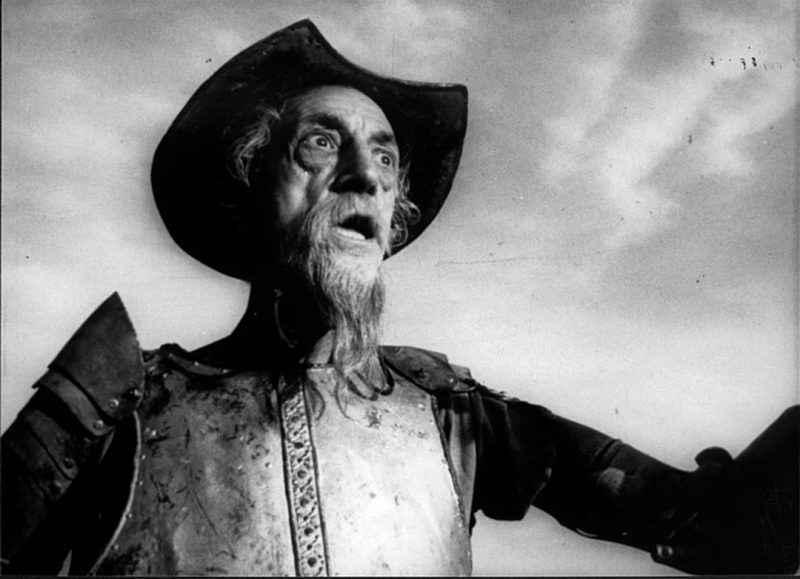
The Spanish Film Archive has announced the launch of a major international project, together with the Cinémathèque Française, the Italian National Film Archive, and the Filmmuseum in Munich, to reconstruct the legendary Don Quixote by Orson Welles, the legendary film that the director worked on continuously for thirty years, without ever managing to complete it. The four European institutions have joined forces to recover, “stitch together,” and digitize the approximately 70,000 meters of film scattered across various archives, with the aim of returning to the public the version of the film that is as close as possible to the director’s intentions.
The project, coordinated by film historian and former director of the Filmoteca de Catalunya Esteve Riambau, will take place between 2026 and 2027. During the coming months, technicians will study the very long original screenplay (2,000 pages) and digitize the visual materials, while in 2027 they will move on to the comparative analysis of all available sequences and their variants. Riambau clarified that artificial intelligence will not be used in the work and that the entire endeavor has an exclusively cultural purpose; none of the people and institutions involved intend to create a product for sale: the intent is to build an exhibition around the reconstructed film. The announcement of this project came from Bologna, from the Cinema Ritrovato, where Riambau explained that “We are not talking about a restoration; we are talking about the reconstruction of a film that changed ideas, materials, that incorporated and discarded… It is still early to know if we have everything or what we are missing”
The materials now available to historians and restorers come from various European institutions. The most important, about 50,000 meters of film, was recovered in 2017 by director Oja Kodar, Welles’ partner and collaborator for 24 years, who entrusted it to the Italian National Film Archive for digitization. The Cinémathèque Française has made available another 80 minutes of 35mm positives, while the Filmmuseum in Munich has provided various working copies, negatives, fragments, tapes, videos, and documents preserved in its archives. All these attentions and precautions serve to avoid making the same mistakes made by Welles’ friend and director Jesús Franco, who in 1992 attempted to reconstruct his own version of Don Quixote using the material he had available at the time, which was about 40,000 meters of film. The film, titled Don Quijote de Orson Welles, was presented at the Universal Exposition in Seville and was poorly received: Franco mixed original scenes from the film with new scenes shot by him and pieces of a documentary from Rai, without revealing to anyone that only part of the film was actually the Don Quijote de Orson Welles. The dubbing was also harshly criticized: the voice actors in the studio performed parts of the novel that did not always match the lip movements of the actors on set, making the viewing of the film a disorienting experience.
It is hoped, therefore, that this will be the right time and that Welles’ Don Quixote can finally find peace. It would be the fitting conclusion to one of the most incredible epics in the history of cinema, an endeavor that the director embarked on in 1957, which led him to live between Italy, Spain, and Mexico, making him one of the most disliked individuals by the Franco regime (Welles was a known supporter of the Spanish republicans). A dream that Welles pursued throughout his life and that also led him to deceive Rai: in order to find coverage that would allow him to go live in Spain and shoot his film, the director convinced the heads of the Italian state television that he wanted to make a documentary about Francoist Spain, titled Viaje por el país de Don Quijote (if there is one thing Welles never lacked, it was a fabulous sense of humor).