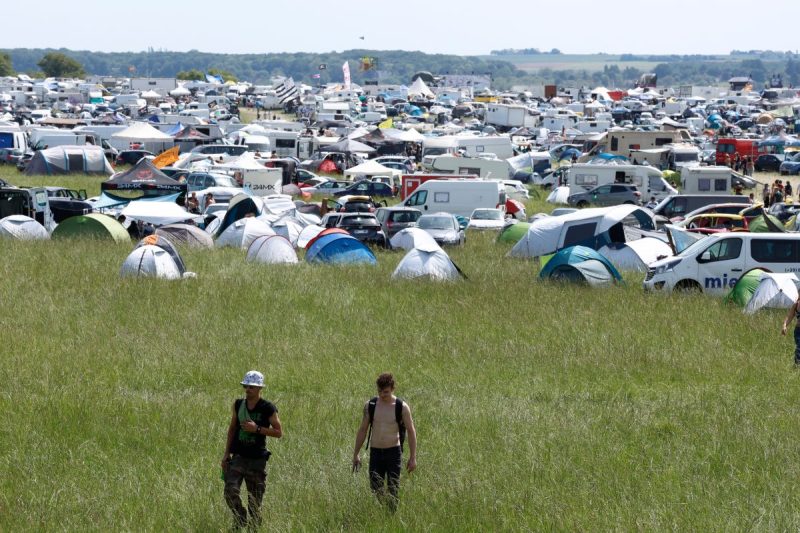
The heatwave has been a disaster for independent music festivals, which were already struggling.
Just last weekend there were half a dozen concert cancellations and festivals that were called off. Some may never return.

While alive, she took literature and dragged it out of the private sphere – onto TV, social media, and in speeches – contaminating it with everything that tradition considered impure. With the "Strega case," it happened again.
Michela Murgia, a woman buried on August 10, 2023, has disrupted the eightieth edition of the award: two statements from the Bellonci Foundation in three days, the literary world split into factions, a promotional tour randomly promoted nationally, the favorite forced to issue his apologies from his publisher’s press office. The dead, normally, cease to be a problem. Murgia continues to be one with a punctuality that says less and less about her and a lot about those who survive her — about a cultural world that, three years later, has still not decided to let this person live, or die, as she pleases.
There is a film genre that Italy has never declared but produces, with involuntary application, every summer: the cabin film. The fixed-camera drama in which a handful of people who have not chosen each other are sealed in a space too small and left to simmer until something breaks. The minibus of the Premio Strega is its most refined and fiercest version. The tour is the ritual that precedes the vote: the finalists sent around Italy like a traveling company, performing in bookstores. All in all, a context that explains why Dino Buzzati, the winner in 1958, posed under the scoreboard with that expression halfway between terrified and angry in a shot by Paolo di Paolo of the time. But our scene — because it is a scene, reconstructed by Repubblica and picked up by the Corriere citing “some present” — would have aired on June 18 just passed, during a conversation between Michele Mari, seventy years old, considered the winner and leading the shortlist with two hundred eighty votes, and finalist Elena Rui. According to what was reported, Mari utters a phrase: Murgia would have been “intransigent and violent because she was ugly,” someone who made others pay for her own ugliness, within the general theory that “all dissatisfied women become angry.” Teresa Ciabatti, also competing and linked to Murgia by a friendship interrupted only by death, would have reacted accordingly. Mari, in a statement released by Einaudi, denied the part about the body — not the argument, not having spoken about Murgia — stating that he had “never spoken about physical appearance” and that he only wanted to recall, “in a private context,” an old episode of mutual misunderstanding. Between the two versions lies a distance that the jurors will resolve on July 8, and that serves us for another path.
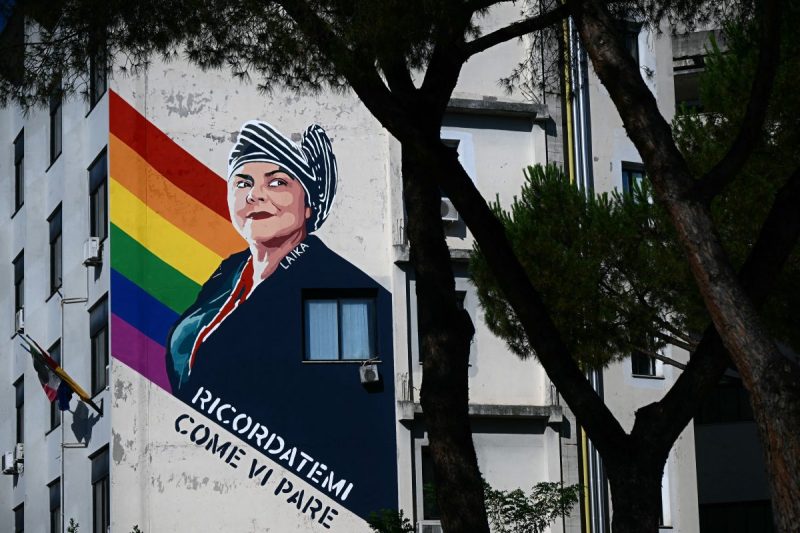
The Bellonci Foundation opened the statement branding as «incompatible with the spirit of the Prize» the derogatory expressions, seemed on the verge of expelling the favorite, then backtracked explaining that the prize is «a competition between works» and that the regulations do not allow exclusions, and who are we to disregard them; closing with the wish that «the word returns to literature». Donatella Di Pietrantonio, who won the Strega in 2024, called those words serious. Lidia Ravera expressed her sadness. Others defended Mari as one defends a monument from pigeons. Around the name of Murgia, both in life and in death, there is never a quiet discussion: one takes a stand, and quickly. This was seen when the artist Laika dedicated a mural to her in Rome and a portion of Fratelli d’Italia and the Pro Vita committees rose up against a drawing on a wall — a drawing of a dead woman. There are people who still fight against Murgia as if she were to run in the next elections.
In life, for many, she was unbearable, and pretending otherwise now would be the surest way to understand nothing. She was for the certainties, for the frequency with which she distributed the label of fascist — to the Meloni government, to the «natural family» branded in Dare la vita as «the most fascist thing that exists», to an entire country that with Istruzioni per diventare fascisti, in 2018, had tried to dismantle voice by voice, thus becoming the perfect target for those who sought that target. She was for the omnipresence: television, radio, the podcast Morgana, the column in Espresso renamed L’antitaliana, the stages, Instagram. She was, above all, for the queer family displayed in May 2023 during the announcement of the illness, the photographs of the chosen family presented to the public with the reasoning that «telling it is an increasingly political necessity», and for that marriage in articulo mortis with Lorenzo Terenzi, celebrated for legal reasons and then multiplied in a geometry of ties that drove half of Italy crazy. She did not ask for permission to do anything she thought and wrote, in a country where permission is the first rule of intellectual etiquette, not asking for it is the unforgivable sin.
Her death should have closed the case but it reopened it. Because it transformed Murgia into what she was not yet entirely in life: an icon, a figure that is no longer discussed without being accused of profanation. And here the Strega has a long memory that is worth interrogating, because the discomfort with death entering the judgment on the work is as old as the prize itself. In 1995, when Maria Teresa Di Lascia won it posthumously, having passed away at forty from cancer, Luigi Malerba — who had already refused to compete in ’87 — denounced «an editorial operation» and a wave of emotion that would guide the jurors’ hands: the dramatic story of a young writer who died, he essentially said, could not fail to impress and influence the vote. Thirty years later, the accusation is the same, only reversed in sign and shifted to the body: no longer «you were moved and awarded a mediocre book», but «you were moved and made a person untouchable». The suspicion that biography contaminates merit is the original sin of every literary prize, and Murgia, who had made her biography a separate work, excites it like few still do today.
Mari is not just any writer placed there by chance to say the wrong thing. He is the purest embodiment of a writer’s idea. Son of designer Enzo Mari and illustrator Iela Mari — the aristocracy of design and sign in 20th century Milan, a home where the word “art” was almost a blasphemy and comics were only read in Linus — he taught Italian literature at the Statale, someone will remember with the intransigence related to Murgia, lives between Milan and Rome, and for forty years has been crafting a highly worked prose, in the line that goes from Gadda through Landolfi, Manganelli, Bufalino. He is called “the last great solitary” of Italian letters, and the compliment contains the key to everything: Mari is the almost unique case of a writer of enormous success and zero presence, the man who does not go on television, does not take sides, does not post, is not there. In Leggenda privata, the 2017 autobiography, he dissected his parents with the coldness of an entomologist — the father “on the border between Moses and John Huston,” the mother “the saddest and most devastated person” he had ever known, the alcoholic decline, the miseries of the body — demonstrating an ability to look at human ruin without averting his gaze and without mercy, even towards the closest people who perhaps deserved at least a more indulgent look. One who has made his absence a poetics, and who at his first real appearance in the chronicles presents himself like this. For many, yet another masterpiece.
Murgia was the exact opposite. She was the writer who became a public body, a permanent presence, an integral fusion of life, work, and politics pushed to make her illness a manifesto and her funeral an event. She had taken literature and dragged it out of the private sphere — on TV, on social media, in emotional rallies — contaminating it with everything that the tradition of the solitary considered impure: the present, opinion, chronicle, militancy, the face in public. The clash between Mari and Murgia, then, is not a man against a woman; it is also one idea of literature against another. Style as the only value against presence as value. The text that speaks for itself against the author who speaks on every stage. And the formula with which the Bellonci Foundation tried to close the case — “writers express themselves essentially through their books” — is not a neutral position: it is the profession of faith of an entire literary Italy, one for which the page matters and everything else, including the person, is noise to be kept out the door or buried under the carpet. It is exactly the doctrine that Murgia spent her life dismantling. The trouble for the guardians of the page is that on the cultural weight level, they lost that match: the center of gravity has shifted, and such a defeat, for those who have always presided over the noble planes of literature, is not experienced as a change of taste but as an invasion, a betrayal.
That the world of Italian culture fights dirty is not new: it is its most solid tradition. In 1952, Carlo Emilio Gadda shouted about the “conspiracy” when Moravia won the Strega. In ’59, the year of The Leopard awarded posthumously after the rejections from Mondadori and Einaudi, it is said that Moravia, to push Pasolini, threatened to stop greeting anyone who cheered for Tomasi di Lampedusa; Pasolini came in third and never won the Strega. The backstabbing, in this environment, has always been present. The novelty of the minibus is another.
The master of form, the man who exists in language and for language, when cornered would not have spoken of form. He would have spoken of body. He would have reduced the ideas of a writer — the intransigence, the civil anger, the positions — to an anatomical defect that explains and therefore cancels them. It is the least literary gesture that exists, one learned in the schoolyard: short on arguments, one attacks the physique. The most refined syntax in Italy that, under pressure, reveals itself to function as a locker room insult. And the circle closes in an even tighter point, because in the days of the case, an audio resurfaced in which Murgia recounted the Campiello of 2010, the year of Accabadora: live, according to her account, Bruno Vespa asked the director to frame Silvia Avallone’s cleavage, and when she denounced the gesture, no one stood up to support her, rather someone insinuated that she was jealous because no one had framed her décolleté. Fifteen years later, a deceased writer who spent her career precisely describing that mechanism — reducing a woman to her body to avoid listening to her words — becomes, in death, the textbook case.
The most sophisticated defense remains, one that has even divided well-meaning people and which Corrado Augias summarized in Repubblica with the usual tested formula: distinguish the work from the author, in private one says what they want, in public the books matter. It seems like common sense. It is, in reality, an entire theory of culture: it presupposes that there exists a backstage where true opinions live, separate and protected from the stage on which the work is performed, and that between the two there is a curtain that no one has the right to part. The writer as a double being — the text in front, the man behind. Convenient, even noble from a certain angle, but above all old .
The entire project of Murgia consisted of denying that such a backstage existed: that what is said when one believes they are not being listened to is what is truly thought, that the curtain between the man and the author is an alibi and not a distinction. Essentially, she argued the exact opposite of what the Foundation invoked to extinguish the fire . And the geography of the episode proved her right better than any of her books, because a minivan with the finalists, the colleague interviewing them, and twenty public stops is not a private place: it is the behind-the-scenes of an entirely public operation, the backstage of a show that exists to be seen. The curtain was already parted from the start. The Strega, after all, has always been won in the corridors, in the salons, in the offhand conversations — the margin, here, is the true center, and every now and then someone forgets it and says it out loud. In 2016, Feltrinelli boycotted the prize in protest against the hegemony of the large groups: even then, it was pretended to suddenly discover that the game is not decided only on the books.
Not by chance, around the minivan, the entire geography of the Italian cultural world was reassembled in three days, each in their own box. Those who cried scandal and those who cried intention trial; those, from the right, who raised the issue of double standards — if the same sentence had been pronounced by an irregular, an “right-wing” author, would the same help have been triggered? — transforming the episode into yet another episode of the permanent civil war between the two Italies airing every evening on Rete 4. Everyone, however, around the same woman, like planets around a mass that keeps them in orbit while being, formally, disappeared.
The question we started with — why a writer who has been dead for three years still derails Italian literature — finds no answer in any of the words attributed to Mari. It finds it in the fact that Murgia has dissolved the membrane on which that world maintains its authority: the one that separates work and life, text and presence, sacred word and noisy body. The case of the minibus is the attempt, conducted with the most meager means imaginable, to reconstruct that membrane and put everything back in its place: the writer enclosed in the book, the opinion confined to the private, the body outside the discourse. It has failed, and it had to fail, because the coarseness of the gesture demonstrates the thesis it wanted to refute. It wanted to prove that a woman’s ideas were the symptom of her body, and it has shown that a man’s ideas, under pressure, can be reduced to an offense against a body. The solitary one broke forty years of silence to say the most stupid, childish, and at the same time most ancient thing there is.