The heatwave has been a disaster for independent music festivals, which were already struggling.
Just last weekend there were half a dozen concert cancellations and festivals that were called off. Some may never return.

On June 20, the latest issue of the print magazine was released, and today the website will no longer be updated. We spoke with the people who have led Wired over these 17 years to tell its story and legacy.
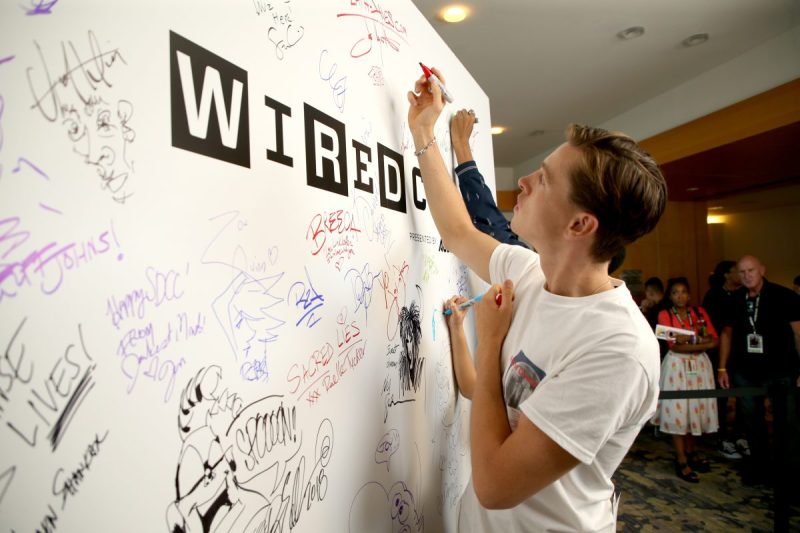
On April 16, more than two months ago, the CEO of Condé Nast, Roger Lynch, published a note announcing the closure of Wired Italia. The reason: the publication represented just over 1% of the group’s total revenue and had not grown like other editions of Wired around the world. The news was met with both surprise and outrage from readers and industry professionals: until then, there had been no warning of such a decision, nor had there been any internal communications. The following day, April 17, a petition was launched on Change.org to, quote, “save Wired Italia.” So far, 12,376 signatures have been collected (data updated as of June 28, ndr), but there has been no response from the American publisher. At this point, it is important to try to retrace the history of Wired Italia: from its launch in 2009, about seventeen years ago, to its last issue. We have gathered the voices of the journalists who directed it and those who worked on it until the end, putting together the magazine you now find on newsstands, dedicated to the leaders of the future, and managing the website.
Stefano Priolo, the magazine’s head, has worked at Wired Italia since the beginning. He says the news of the closure came “like a bolt from the blue”: “None of us had imagined such a thing. First of all, because there were no premises for it. According to the CEO of Condé Nast, we represent just over 1% of the group’s total revenue: but how many other publications represent 1% or less of total revenue? In our small way, we were certainly not in a disastrous situation. The website was doing well, it was growing. And I challenge anyone to find a newspaper that has sold the same number of copies since 2016: for heaven’s sake, we are talking about a limited number, but it is a number that has remained constant over time.”
The last print magazine of Wired had been designed some time ago. When the announcement of the closure arrived, it was only partially reworked, replacing some content with others. We are talking about issue 117. “At first, we really stopped, because we thought it wouldn’t be published anymore,” says Priolo. “Then, instead, we were told to proceed. And at that point, we contacted the contributors again and kept the core, so to speak, of the issue: the leaders of the future. Instead of the translated or more current pieces, we decided to include some tributes to Wired Italia: two comic stories, the account of the awards we won; the interview with the cover author.”
The decision to close Wired, Priolo emphasizes, comes from the United States and there was no room for negotiation for the Italian publisher. “In my opinion, no one would have wanted to close Wired. Everyone expressed surprise and solidarity here in Italy. It was an arbitrary choice made in the United States. And I have no way to contextualize or explain it.” Priolo, as we said, has been at Wired since day one. And, more precisely, since the first issue of the print magazine. “I was able to follow the evolution of the newspaper,” he recounts. “We are talking about a publication that has changed a lot and has always been quite unique within the Italian landscape.” Wired Italia, Priolo explains, “anticipated a lot of things”: “When it was born, it was a very rich monthly magazine, characterized by revolutionary graphics and full of articles of all kinds, addressing different themes.” Over the years, there has been a sort of transformation. First, there was the succession of various directors, then new initiatives were developed, such as the Wired Next Fest, an event that has always centered on the idea of innovation, hosting experts, industry professionals, and figures from entertainment and culture. Finally, videos and podcasts arrived, and the magazine changed its face: it became a quarterly.
“The closure of Wired leaves me with great sadness and a void, which I believe involves the entire sector,” says Priolo. “I can’t say now if anyone will be able to fill it. I have always liked this magazine. And that is also the reason why I stayed. It was nice to write the big pieces at the beginning, traveling the world, in America. But it was also nice afterward, working on the website. The last magazine, in its form, was a very interesting experiment, almost a monograph dedicated to important, current themes, but framed according to Wired’s editorial line.” In Italy, Priolo concludes, there are many talented journalists; what is lacking are publishers and resources: “The goal should be, as we tried to do at Wired, to anticipate the times, not to be overwhelmed by current events. It is necessary to delve deeper, especially at a time like this, when anyone can use their phone to reach an audience. The challenge is to maintain authority and credibility. The way you do it depends on the system you operate in.”
Let’s take a step back. The first director of Wired Italia was Riccardo Luna, and many aspects of the magazine are due to him. It was Luna, in fact, who understood the importance of gathering a community around the publication, even before thinking about how to structure the print magazine. And it was also Luna who involved authoritative names, who somehow represented innovation in Italy. His term lasted for two years: from 2009, with the founding of the magazine, to 2011. Immediately after him, Carlo Antonelli was appointed, who further revolutionized the publication, giving it a more pop and generalist cut. “Wired Italia has always been a gamble,” says Antonelli. “From the very first moment, it was a rather bizarre idea, which then worked. I was involved by Carlo Verdelli even though I knew nothing, or almost nothing, about technology.”
Wired Italia arrived at a particular time, in some ways quite extraordinary. “At the time, the CEO of Condé Nast was Giampaolo Grandi, who turned out to be a superstar of publishing. The idea of transforming Vanity Fair into a weekly was his, an idea that many considered madness, but which the numbers vindicated: Vanity Fair had become the best-selling magazine of the group. It was at that point that the intuition to create Wired here was born: there were no other publications to launch, and Wired was the last brand left. However, one must say one thing. Wired was only present in the United States and the United Kingdom, where the idea of technology and that of innovation were deeply rooted. In Italy, it made little sense. And then this decision was also born from a vision almost like a movie, between Trading Placesand Succession.”
According to Antonelli, Wired was born as a bet among gentlemen: if we managed to do Vanity Fair this way, as a weekly, then it would also be possible to launch a vertical publication like Wired. “It was clear that it did not have a possible economic impact, and even the current justification for its closure, which was worth just over 1% of the group’s total revenue, is ridiculous.” Why? “Because this has always been the situation.” The point, Antonelli continues, is another: “It is not having managed to build an internal multiplier, and it is the quality of the work. The magazine had been entrusted to Riccardo Luna, who did very well; he called Davide Moretti, the art director from Rolling Stone , who years later went to work for the American Wired . From a purely paper perspective, Wired was magnificent.” But? “But there was a problem: Riccardo did a great job on what could be innovation in Italy from a more technical point of view, and involved interesting, prominent names. He understood perfectly how Wired positioned itself in this country.” Antonelli was called in afterward.
At the beginning, Antonelli says, it was difficult to find his place within a magazine like Wired. “After years in rooms where I was one of those who knew the most, suddenly I found myself in a room where I clearly knew less. It was very difficult for me to say what to name. What I tried to do was to take up an idea, namely to build Wired a bit like it was the Rolling Stone of the 90s, a magazine I knew well. I noticed that there were things wrong. First of all, I tried to replace the word technology with the word innovation. By doing so, the advertising market opened up. Everyone was doing or wanting to do innovation. After long discussions, fashion came in. I tried to aim for another readership, one different from nerds. And for this, I ended up at the center of several shitstorms on social media. I didn’t see Wired as a niche magazine; I saw it as a popular magazine that dealt with what interested everyone.”
In America, Antonelli continues, they had not understood the potential of the faces of Silicon Valley: “They were real rockstars, and they had never made it to the cover. They kept hammering on the same topic: innovation for the sake of innovation, something completely self-serving.” As for Wired Italia, he says, there were two turning points. “The first was the cover with Steve Jobs, which coincided with his death: it was reprinted three times. The second, however, was the Fest, the live event. Over time, perhaps, this ability to play with various topics was lost. And with the cut in investments, it became increasingly difficult to remain relevant. Today there are accounts on Substack, completely autonomous, that have a huge following.” The closure of Wired, Antonelli concludes, “is not a news of mourning”: “It is the news of something that perhaps should never have happened. When it did happen, however, it was successful. And it was successful especially when it understood that it did not have to investigate technology but human evolution.”
In July 2013, Carlo Antonelli was replaced by Massimo Russo, now editorial director of Hearst Italia. His direction came at a particular moment for Wired Italia: that of editorial consolidation and the opening to live events. “In my opinion, the winning intuition of Wired Italia was to talk about digital at a time when digital, and more specifically digital transformation, had just begun to establish itself as the culture of our time: a culture that, precisely because of its pervasiveness, collided first with economic power and then with political power.” Russo refers to the early 2000s, when the Internet bubble burst and everything seemed to be “smoke.” “In reality, only the financial exposure was smoke,” he continues. “By the end of that decade, the Internet had become a daily practice, and with the release of the iPhone in 2007, it had become a ubiquitous practice. The clash that arose between technology, politics, and economics created an extremely interesting space for journalism and, more generally, for the storytelling and exposure of phenomena.”
Returning to the experience of Wired, Russo reiterates the magazine’s ability, between 2013 and 2015, to anticipate certain events, even in national politics: “We were among the first to tell what the Five Star Movement could become. We predicted the results of the 2013 elections, surprising ourselves. I remember the investigation we did on fraudulent advertisements; I remember the explosion of the Internet as a geopolitical theme and the interview we did with Edward Snowden. In hindsight, it is evident how important and present these things have become in every area of our lives. I also remember the more pop part of the magazine: the Wired of that time was one of the first magazines to dedicate a cover to Zerocalcare; we are talking about 2013. And then we brought 30,000 people to the Giardini Montanelli in Milan for the concert of Giorgio Moroder. We sent Jovanotti to interview Daniel Ek, the founder of Spotify.”
In short, Russo emphasizes, at that time Wired Italia could talk to anyone about anything. “We could dialogue with scientists from CERN, have dance music, host new cartoonists and the culture of comics, and have a confrontation with large corporations. When I worked at Wired, Condé Nast Italia was another reality, with another awareness and another structure. It was indeed a multinational, but the local imprint was very strong. I was fortunate to be profoundly free, and this was because we were in a publishing house that dealt with other things, fashion and lifestyle. We were a bit of a free zone that was not so central to internal balances and moved in a realm that others did not understand much. All this with the support of a publisher like Giampaolo Grandi, who believed a lot in the product and in magazines that had their own soul, with the limits and compromises that a CEO must make.”
As in Carlo Antonelli’s memory, Giampaolo Grandi also assumes a central importance in Russo’s account: “He would call you on August 15th, and you would go to his office, more or less deserted, and find him grappling with the zero issue of a magazine he had imagined. He was the man who transformed Vanity Fair into a phenomenon by entrusting it to Carlo Verdelli, who came from Gazzetta dello Sport. These are things from another time, when there were people with a strong entrepreneurial nature and enormous passion. Giampaolo Grandi was among the publishers and financiers of Cuore by Michele Serra. He did it not with an entrepreneurial aim: he did it because he thought it could be fun and useful, and he wanted to contribute.”
What has changed, Russo says, are the times. And consequently, “the attitude of the publishing house towards its products and its publications has also changed”: “When publications become a means to pass solely from point A to point B and the goal is to go elsewhere, you need to change the means. Obviously, other elements are also involved, such as the crisis that has overwhelmed publishing.” The decision to close Wired Italia, Russo continues, must be contextualized within the same memo circulated by Roger Lynch: “A global reorganization is underway, and in this global reorganization, the value of Wired, which is identified with just over 1% of the group’s total revenue, is a minimal, irrelevant value. And it is the hallmark of those who make their decisions based solely on the profit and loss statement. It means that they have no interest in what the intangible heritage that a newspaper like Wired has acquired, and also for the impact and relevance in society. There has been a shift from a vision in which the local market had weight and importance to a vision in which everything is centralized, and closing or opening a newspaper, anywhere in the world, is the same thing: there is no difference between Milan, Bangalore, or Kuala Lumpur.”
Spaces, Russo explains, tend to fill up. And the same will probably happen with the void left by Wired Italia. “Carola Frediani has just passed away, and we think of the extraordinary work she has done over the years, with other forms and other subjects, like Guerre di Rete. It’s as if you were observing a mutation in nature: some animals disappear, and new subjects emerge. Subjects that may be lighter, less structured, with fewer resources, but that can still do an excellent job. The space that was occupied by Wired, perhaps, will not be filled by another magazine like Wired; but it is a space that will still be covered. Over time, many imitations of that kind of language have appeared. What I would like to see is the same kind of ambition from somewhat stronger and larger subjects. We managed to do the first interview with Gianroberto Casaleggio because we entrusted it to Bruce Sterling. Today, this might not happen. Wired was invited to be part of the commission that drafted the Charter of Internet Rights, under the supervision of Stefano Rodotà. Right now, there is a much stronger fragmentation, where some large subjects survive and smaller subjects move, like the excellent Guerre di Rete.”
The longest-serving director of Wired Italia was Federico Ferrazza, who led the magazine from June 2015 to December 2024. Almost ten years. Today Ferrazza is the director of Italian Tech and Green and Blue, the GEDI group’s verticals dedicated respectively to technology and the environment. When he talks about his time at Wired Italia, Ferrazza describes it as a “very beautiful period of transformation, a period in which Wired was a great experiment for Italy, not only for the themes it dealt with that had to focus on the changing world but for the way we tried to make a magazine and manage a brand, bringing together all possible platforms, from social media to the website to events.” At the beginning of his direction, Ferrazza says, “we had a blank slate and we redid Wired. It was an extremely fun and creative period, in which the editorial team followed me in everything. And it went quite well.”
The digital aspect, he continues, has always been the main and most constant point of contact with the community of readers. There has never been a sort of competition with print. Rather, there has been the idea of being able to build anything: “At Wired we tried to make the most of the best space to talk about a particular topic.” And this was also possible thanks to the relationship Ferrazza had with the publisher, Condé Nast Italia. “They always allowed me to do what I wanted. From a content perspective, there were never clashes; indeed, perhaps there weren’t even real confrontations. Editorially, I was free: we dealt with very different topics over the years. The confrontation with the publisher was about the container. So how do we package these things? Events were born, and the magazine became a quarterly. In general, I think identifying a brand with a single product is wrong. Wired produced a periodical, but it was not a periodical. Newspapers work with a community made up of readers, journalists, and advertisers. And depending on your needs and the people you want to engage with, you develop different products that are effective from an economic point of view.”
Ferrazza admits he does not know the reasons that led the American publisher to decide to close Wired Italia. “What I can say is that the work of Luca Zorloni and the rest of the editorial team was of a high level, that such a decision can only be made if one is unaware of the situation of the Italian market and that this risks putting other Condé Nast brands in difficulty because Wired allowed for dialogue with a certain type of advertisers. And then I can say that it is a decision made within a global reorganization, with Condé Nast US at the center and the other local brands following its decisions. In this specific case, Condé Nast Italia is not involved.” Wired, says Ferrazza, “was a unique entity for the Italian market. It was a generalist that spoke of innovation, and it was a hallmark that we built over time. With the products I see today, it does not seem possible to replicate such an experience. And I also say another thing: this dimension that Wired had assumed in Italy was not understood by the Americans.”
Luca Zorloni began working with Wired between April and May 2016, as an external collaborator. At the time, he recounts, he mainly dealt with economics. Previously, he had been at Giorno. His reference editor at Wired was Stefano Priolo. After almost two years of collaboration, in January 2018, Zorloni was hired and joined the editorial team, specifically handling the economics desk. Before starting his journey at Wired, he had been a reader and subscriber of the magazine. And he had followed live events for other publications. Over the years, he recounts, he was able to follow the evolution of the magazine. First of all, regarding what the offering was. “Along with the magazine, there was the website; alongside the website, there were events and other content, such as videos and podcasts. The events, in particular, allowed Wired to reach an audience that did not coincide solely with its readers but with all those interested in a particular topic or theme.” The other thing that Wired has always done very well, Zorloni continues, “has been not to have a static approach to the storytelling of technology and innovation. And not only for its ability to identify the most important and relevant themes, which is fundamental for journalistic work. It has also been able to do this using other languages, paying attention to what was happening in the rest of the world.”
Zorloni says that Wired Italia was not in crisis; or at least, there were no such serious problems. “We were a publication perfectly in line with ongoing projects, a publication that knew how to do and did a lot, a publication capable of understanding what to focus on to stay in the market. And this is thanks to the teams that were part of Wired. I succeeded Federico Ferrazza, but I already knew certain paths, as I was part of the editorial team.” Condé Nast, he continues, is an international publisher that operates in multiple territories: “Publishers like this make decisions based on their economic availability and their objectives. The decision that affected Wired was obviously sudden and completely unexpected; from that moment on, we tried to understand how to arrive at the closure of the magazine, remembering and celebrating its history.” And there was, Zorloni says, a strange conjunction: “We were imagining an issue that celebrated the leaders of the future. It was supposed to be the second issue of 2026, and we wanted to take advantage of the 80th anniversary of the Italian Republic. We wanted to reflect on what we were and what we are today, and on the elements that make up the society we are in and those we would like to find in the society of tomorrow. We thought of doing interviews, and we identified some voices, among science, innovation, and research, to hear. When this issue became the last, it took on additional weight and value because it remains as our letter to the future, on what to bet on and what deserves to be defended.”
The site of Wired ends its publications today, June 30, “when all editorial activities of the publication will stop.” “From what we understand,” says Zorloni, “the site will remain online for a few months. It will then be up to the publisher to decide what to do, whether to take it down or keep it active without updating it or integrating it under some other umbrella.” With the closure of Wired Italia, Zorloni continues, “a platform capable of aggregating a series of themes that, at first glance, might have seemed discordant and distant, and which in reality had many things in common, is lost. Wired Italia has always told pop culture, which has often influenced and fed the reflections of the technology world. We lose a platform capable of bringing together very skilled professionals in their work of processing, analyzing, and scouting news.” What is it that does not get lost, instead? “The people. The greatest gift we leave is precisely this pool of knowledge and talents. Italy is a country that, in these seventeen years, has changed. We have gone from a moment when the iPhone was still a novelty and there was very little talk of AI to a phase where it has become clear to everyone that this kind of storytelling is necessary. A microphone turns off, but the voices remain. What is needed now is a new microphone.”
It is difficult to imagine a unique situation, with a single direction, capable of replacing Wired in everything. Zorloni is sure that other realities will emerge, more fragmented, in which certain discussions will be carried forward. For his part, he does not yet know what he will do in the future. “I discovered that closing things, closing them well, is even more difficult than starting them. On April 17, we did not throw in the towel; we worked hard to celebrate the history of Wired. Especially after the petition that was created online and collected almost 13,000 signatures. In a moment like this, when there is great distrust of newspapers, it is a very important demonstration of affection. We wanted to do the best possible job to say goodbye. I will think about what to do next only from July 1st onward.”
In seventeen years, Wired Italia has been able to gather a community of readers and industry professionals on its website, with its print magazine and live events. It has served as a prototype for many different ideas. Its closure represents yet another blow to the heart of journalism and Italian publishing. As Russo and Ferrazza have said, it is evident that the vision of Condé Nast America is based on different elements, especially economic ones, that do not take into account either the experience of Wired in Italy or the heritage that a newspaper like this leaves behind. There have been covers that have made history, and it is not an exaggeration. Some have been mentioned in this article. Wired Italia has managed to serve as a crossroads for different topics and themes, holding together both the specificity of in-depth coverage on innovation and a broader, as Antonelli defined it, generalist coverage. The birth of a new Wired now seems unlikely. There will be other realities, the offering will fragment even more, and voices of varying sizes, more or less authoritative, will emerge in spaces that, until seventeen years ago, did not even exist. One thing is undeniable, however. If today in Italy we talk about technology, and we talk about it this way, it is also, and perhaps especially, thanks to Wired.