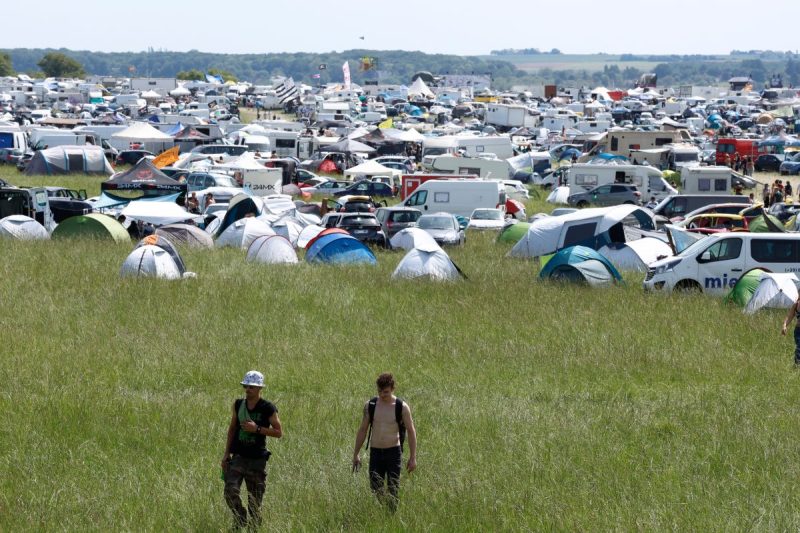
The heatwave has been a disaster for independent music festivals, which were already struggling.
Just last weekend there were half a dozen concert cancellations and festivals that were called off. Some may never return.

In the same year that the UK's "monstrous" festival is halted as scheduled, another 20 independent venues, small temples of live music, are closing.
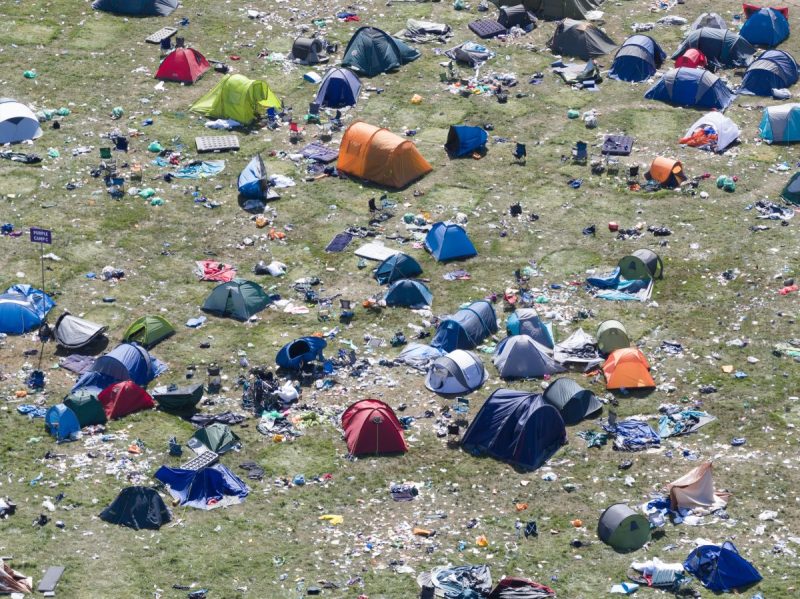
In the official shop of Glastonbury you can buy the festival t-shirt for twenty-five pounds, a festival that this year, will not take place. On the front is the Pyramid Stage, on the back a fake poster dedicated to the fallow year, the year of fallow to allow the fields to regenerate in view of the 2027 edition, already scheduled for June 23-27. One fifth of the profits from this unusual merchandising will go to the Somerset Wildlife Trust, the charity that protects the wildlife and natural habitats of this county in the southwest of England. Even the flat calm and grazing cows at Worthy Farm can be converted into merch, an unmistakable sign of the transformation that Glastonbury has brought to this area. But from June 26 to 28 this year, the farm will remain just a farm. No stages, no camps, especially no “invasion” from the two hundred thousand people who in recent years regularly managed to get a pass for the event: “The cows will be able to stay in the fields longer”, says Emily Eavis, who, along with her father Michael, leads Glastonbury.
The bucolic image of Worthy Farm clashes with a new annus horribilis for live music in the UK. For every Glastonbury that chooses to stop, there are dozens of festivals announcing postponements, suspensions, and cancellations. In some cases after already finalizing agreements with suppliers, advertising artist lineups, selling thousands of tickets. On June 10 of this year, theAssociation of Independent Festivals (Aif), which represents the UK independent circuit, counted twenty cancellations, postponements, or pauses. Among the list is Womad Glasgow, which would have brought the historic world music festival founded by Peter Gabrielto Scotland for the first time, canceled because advance sales were below expectations. There is the smaller Lochaber Live in Fort William, a traditional music event that returned to the Highlands only two years ago after thirty years of suspension and is already stopped again. And there is the Red Rooster, a blues, country, and soul festival organized for twelve editions in the Suffolk countryside, whose company has gone into liquidation. But the figure is even positive when considering previous years. In 2025, the events that failed to take place were 43; in 2024, 78. A snapshot of a crisis that has been ongoing for years.
“For those organizing an independent festival, risk is part of the daily bread”, explained to the GuardianJon Collins, CEO of Live, the association representing the UK live music industry. Even before opening, every organizing committee must commit a large part of the overall budget to bring in artists, set up stages and facilities, provide necessary services, and think about safety and logistics. All steps that involve payments or deposits to be made even before understanding how many tickets will be sold. A leap into the dark that those in the industry have been facing for years.
In 2024, the Riverside Festival in Glasgow canceled its edition less than a month before opening, after already selling about eight thousand of the ten thousand available tickets. In other sectors, eighty percent capacity occupied might resemble success. For an independent festival, the two thousand unsold tickets were enough to make it too risky to wait until the opening day. “The gamble had become too big”, one of the directors, Dave Clarke, told DJ Mag . Attendees got their money back but, to refund them, Riverside consumed the reserves accumulated from previous editions. And all the necessary work for dismantling spared no one. Clarke explained that dismantling a festival even before its debut required “almost the same effort” needed to realize it: dissolving agreements with artists, negotiating with suppliers, recovering deposits, organizing refunds.
The fragility also depends on the fact that the demand and supply of events like this are based on completely different timings. Before buying a ticket, the audience can wait until the last weeks, check the weather forecasts, compare lineups, and decide which expense to undertake. Organizers must move many months in advance. The few artists capable of selling thousands of tickets are booked further and further ahead, and according to John Rostron, director of the Aif, in five or six years their fees have increased between 60 and 70 percent. A large group can lose money on one event and recover it through ticketing, arenas, sponsorships, or other scheduled events. An independent festival, on the other hand, must rely almost entirely on a single weekend for its financial sustainability.
It is under these conditions that Lochaber Live returned to Fort William in 2024, thirty years after the last edition, only to stop again after just two summers. It was brought back to the Highlands by Gary Innes, a musician and host of BBC Radio Scotland, who had played there at the age of twelve in 1994. In the years without the festival, Fort William had become one of the main gateways to sports and nature tourism in the Highlands: chains had multiplied in the center, from Wetherspoon to Costa, from KFC to B&M. Lochaber Live tried to propose in that context a roots music.
Even the logo told a local story without resorting to flags or slogans. Under the profile of Ben Nevis, the highest mountain in the UK, some red bows appeared: they were those that Aonghas Grant, a central figure in traditional Highland music, would give to students when he deemed them good enough to tie them to the violin. In more than fifty years, he had trained hundreds. At the first edition, about seven thousand peopleattended; on stage, groups from the western Highlands and bands that had participated in the festival back in the nineties alternated. The following year Lochaber Live returned, with a free day dedicated to traditional dances and music. Then a single phrase appeared on the site: in 2026 the festival “will take a break.”
In Suffolk, however, the end of Red Rooster has already taken on the more definitive form of liquidation. The festival had twelve years to become a recognizable event: at the end of May, it brought blues, country, soul, and rock’n’roll to the meadows of Euston Hall estate. In June 2025, it seemed far from closing. David Vass, who had covered the edition for eFestivals, a specialized UK site, described it as having returned “stronger than ever” and even went so far as to call it “almost perfect” . It was the judgment of an observer present on site, not an assessment of the accounts; however, it showed how vital Red Rooster still appeared and how it had managed to build itself a precise identity.
In the meadows of the estate, the blues and country of the southern United States had found a very English version: American musicians, families camping in the Suffolk countryside, cowboy boots and hats worn with a seriousness that ended up becoming comical. Gill Landry, an American singer-songwriter and former member of Old Crow Medicine Show, had noticed it from the stage: “I finally realize a lifelong ambition: to play in front of a crowd of Englishmen in cowboy hats”. The joke reflected what Red Rooster had become: a small recognizable world, capable of making that improbable piece of America transplanted into the English countryside feel natural for a weekend.
Less than a year later, instead of the new program, the notice of liquidation appeared. The organizers cited declining sales, rising fuel, transport, and supply costs, and reduced economic availability of the public. They had sought investors and cut expenses, failing to save the edition scheduled for May. The company did not even have the money necessary to refund tickets.
A couple recounted online that they had advanced about 750 pounds and bought early bird tickets every year just to “support the festival.” It is also on this trust that independent events manage to pay artists and suppliers in advance: the audience hands over their money many months before entering. When the Red Rooster company went into liquidation, the festival’s most loyal attendees found themselves on the same list as other creditors.
Where It All Began: there is no more ill-fated name for a launching festival than this. Because the counter-concert with which the creators of this “Not-for-Profit Festival Concept”, as they like to define it, had to clash with the bitter truth of the balance sheet. Set to launch this year, it was conceived as a project capable of bringing together locals, promoters, and independent music organizations with the aim of creating, in the countryside northwest of Cambridge, a non-profit festival, less expensive and less dependent on the race for big names. The communication insisted on everything that Glastonbury and other major events had ceased to be: the initial deposit of twenty-five pounds required from participants was compared to the “price of a pizza at Glastonbury”; the “nine-pound pints” or the “sad fifteen-pound kebabs” were abolished; great attention was paid to the working conditions of all participants, from artists to behind-the-scenes workers.
The fundraising reached 180 thousand pounds, but advance sales were insufficient. A few weeks before opening, the organizers calculated that proceeding would result in a loss between 60 and 80 thousand pounds and they postponed the debut to 2027. The festival born to demonstrate that another model was possible crashed against a financial dimension from which it could not escape.
The fields of Worthy Farm will therefore not be the only empty ones this summer, even if the stakes are very different. And it is the same that the data on money spent in the UK for live music tells. 2024 was a record year, with 6.68 billion pounds, almost 10 percent more than the previous year. But, while concerts grew by 12.2 percent, festivals only by 1.9. A sign that the audience has not stopped spending; they are increasingly doing so for events that do not question that on-demand approach that, whether we like it or not, we have projected into every area of our lives. But for festivals, creatures that base their survival on programming and building a collective identity, this is a demand that is too demanding. Or perhaps, simply, one for which it is no longer worth continuing the party.